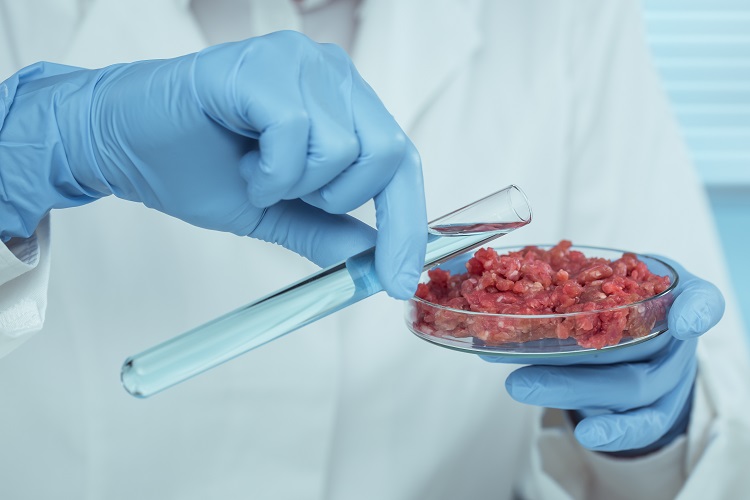
The UK’s progress in the sustainable proteins sector is highlighted in a report, which emphasizes the need for increased investment in public research and development (R&D) as well as creating an environment conducive to private investment. The country has seen success in the plant-based market, with a well-established industry. In the realm of cultivated meat, the UK ranks third in attracting investment, after the US and Israel. Notably, UK companies garnered more private investments in 2022 than the rest of Europe combined. Additionally, the UK boasts numerous sustainable protein companies, including 100 in plant-based, 23 in cultivated meat, and 15 in fermentation.
In terms of support for sustainable protein R&D, UK Research and Innovation (UKRI) has invested £43m (€50m) since 2012, with a majority of this funding allocated between January 2022 and May 2023. The funding has predominantly focused on cultivated meat, which received £20m, including the newly established £12m cultivated meat hub. However, the report highlights a neglect in public research aimed at improving plant-based products, despite the UK having the second largest market for plant-based foods in Europe.
Furthermore, the UK has not made significant progress in developing its precision fermentation sector compared to competitors such as the US and Israel, which have effectively produced animal-free proteins via microorganisms like yeast. The report also suggests that the UK has not fully utilized its potential in fields like mycology, stem cell biology, and bioprocess engineering.
To boost the sustainable protein sector and enhance the UK’s competitiveness globally, the report recommends collective investments of £245m between 2025 and 2030 (or £49m annually) by UKRI, the Department for Environment, Food and Rural Affairs (Defra), and the Department for Science, Innovation and Technology (DSIT). To truly compete internationally, an investment of £390m (£78m annually) is suggested.
The report proposes various actions, including a review of sustainable protein infrastructure by Defra and DSIT, making regulations more favorable for novel foods by the Food Standards Agency (FSA), and removing restrictions on dairy terminology from EU laws. It also suggests providing financial support through the Chancellor of the Exchequer and ensuring budget growth for the sustainable protein sector in the next Comprehensive Spending Review. Additionally, the report underscores the importance of utilizing the upcoming Engineering Biology Action Plan to gather evidence and inform policy decisions related to the sector.
Implementing these recommendations has the potential to significantly benefit the UK, with projections indicating the creation of 25,000 jobs and a £6.4bn boost to the economy by 2035 in the sustainable protein sector. Linus Pardoe, the UK policy manager at GFI Europe, emphasized the need for the government to fulfill its promise of keeping the UK at the forefront of this sector by investing £390m in research and providing necessary resources to the FSA.
The report recognizes the UK’s achievements in sustainable proteins but highlights areas that require attention and increased investment. By taking the suggested actions, the UK can establish a globally competitive sustainable protein industry, reducing emissions, creating green jobs, and reducing dependence on imports.