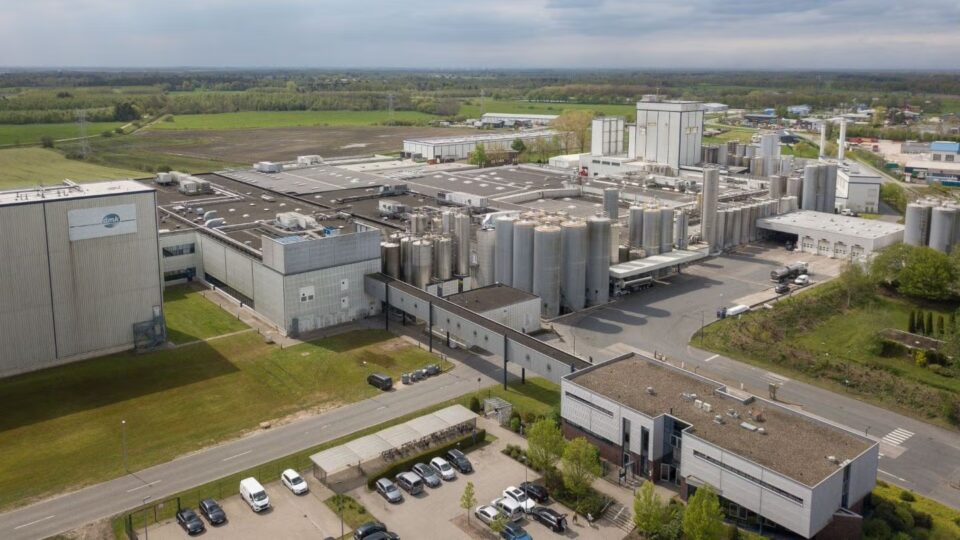
DMK Group is investing approximately €55 million ($64 million) to significantly enhance its dairy facility in Edewecht, Germany, which reflects the company’s commitment to food and beverage industry trends.
In a statement released on May 26, the Germany-based dairy cooperative announced it will allocate around €26 million towards constructing a new whey protein concentrate 80 (WPC80) facility. This new facility is expected to process up to 7,000 tonnes of cheese whey, thus enabling DMK to concentrate more on high-growth international markets focused on high-quality milk proteins.
Additionally, the company plans to invest €15 million in expanding its packaging and logistics operations at the site. Another €15 million will be dedicated to refurbishing an existing drying tower and implementing energy and emissions-reduction initiatives such as electrification, heat-pump technology, and waste-heat recovery.
DMK’s CEO, Ingo Müller, has connected this substantial investment with the company’s long-term strategy and its anticipated merger with dairy peer Arla. He stated, “Through investments in modern production capacity, the expansion of our packaging operations, and energy and resource efficiency, we are actively shaping our vision of the dairy of the future.” He further emphasized that these strategic steps demonstrate their capabilities, positioning them as ideal partners in the food and drink business.
In April of last year, Arla and DMK announced plans to merge into what they referred to as Europe’s “largest” dairy cooperative, which will unite over 12,000 farmers from seven countries. As of April 15, DMK disclosed that the merger remains under regulatory review, with completion anticipated in the first half of 2026.
Regarding the latest investment, Petra Knetemann, the Mayor of Edewecht, remarked, “The DMK Group is a key employer for our community. The investments secure jobs, create future prospects, and make an important contribution to the economic strength of our region.”
In its 2025 results, DMK reported revenues of €5.3 billion, an increase from €5.1 billion the previous year, although net profit dipped by 2.4% to €24 million. The company’s brands, which include Milram, Oldenburger, Uniekaas, Alete Bewusst, and Humana, reflect its diverse portfolio in the food and drink consumer trends.
Earlier this month, DMK also launched a €25 million lactoferrin facility in Altentreptow, marking its entry into the milk-protein segment, targeting the nutrition, health, and pharmaceutical markets. The official launch of lactoferrin powder is scheduled for this autumn, as noted in a statement from May 6.
In summary, DMK Group’s strategic investments not only align with current consumer trends in the food and beverage industry but also strengthen its position as a leading player in the global market.