

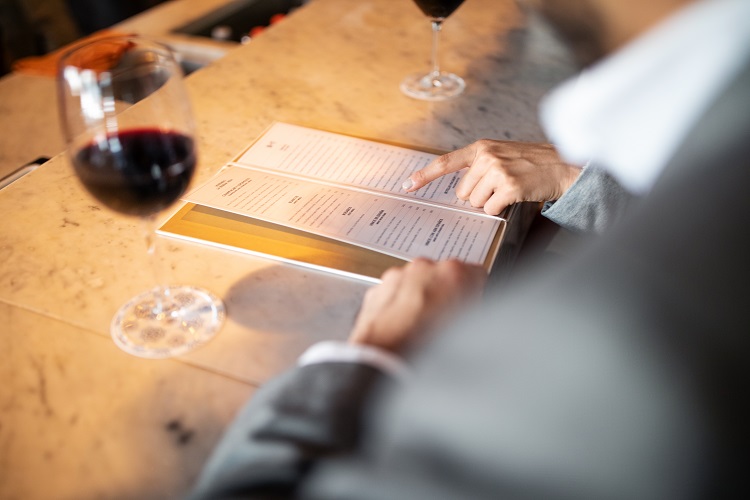
The food and beverage industry is constantly evolving, with trends in food manufacturing, food processing technology, and food distribution shaping the way people make their eating choices. A recent study published in the International Journal of Hospitality Management explores how typographical techniques on menus can influence consumers’ decisions when it comes to restaurant food.
Previous research has shown that explicit references to health can sometimes have unintended consequences. In some cases, consumers react negatively to health-related messages, indulging in unhealthy choices due to a perception that healthiness means sacrificing quality. This effect is particularly pronounced when consumers are not actively seeking healthy options.
To influence consumers’ decisions, the study employed the numerical stroop effect (NSE), which explores how numbers’ sizes relative to their magnitudes affect the mind. The NSE slows down cognitive processing and focuses attention when numbers and their sizes don’t match, similar to when words are written in conflicting colors. By utilizing larger numbers for lower-calorie options, the study discovered that menus can subtly guide individuals towards making healthier choices.
Time pressure plays a significant role in food choices made in restaurants. Making the numbers larger allows individuals to quickly notice them, but also slows them down and increases their focus on the numerical information. “When restaurants use a larger font size for the calorie content of healthy foods, even though the number itself has a smaller value, it will increase consumers’ preference to order the healthier item,” emphasizes Ruiying Cai, the lead researcher of the study.
During the experiment, participants were presented with a menu and asked to select between healthier options such as a grilled chicken sandwich or less healthy options such as a smoked beef burger. The participants were divided into two groups, with only one group receiving menus featuring the lower calorie counts prominently displayed in larger font sizes. The researchers found that those in the group with altered font sizes were more likely to choose healthier options than those without the visual cue.
Interestingly, the study also revealed that individuals who were more health-conscious were less influenced by the font size manipulation. This could be attributed to their clearly defined dietary objectives, making them less swayed by visual cues. Nonetheless, this research suggests that altering font sizes on menus offers a promising method for restaurants to encourage healthier eating choices without triggering resistance from consumers.
Ruiying Cai suggests that this subtle approach can help restaurants position healthy food items as profitable options. She remarks, “Healthy food items could be profitable for restaurants, but whenever a ‘healthy’ label is attached, people may assume it does not taste good. We’re trying to provide restaurants with subtle cues, rather than saying it out loud.”
In conclusion, the food and beverage industry continually seeks innovative ways to promote healthier eating habits. By incorporating typographical techniques into menus, such as making calorie counts larger for lower-calorie options, restaurants can subtly influence consumers’ decisions. This approach allows for a more seamless integration of healthy choices into individuals’ dining experiences, avoiding potential backlash and resistance. As the industry continues to evolve, understanding consumer trends and preferences remains crucial for food and drink businesses.

