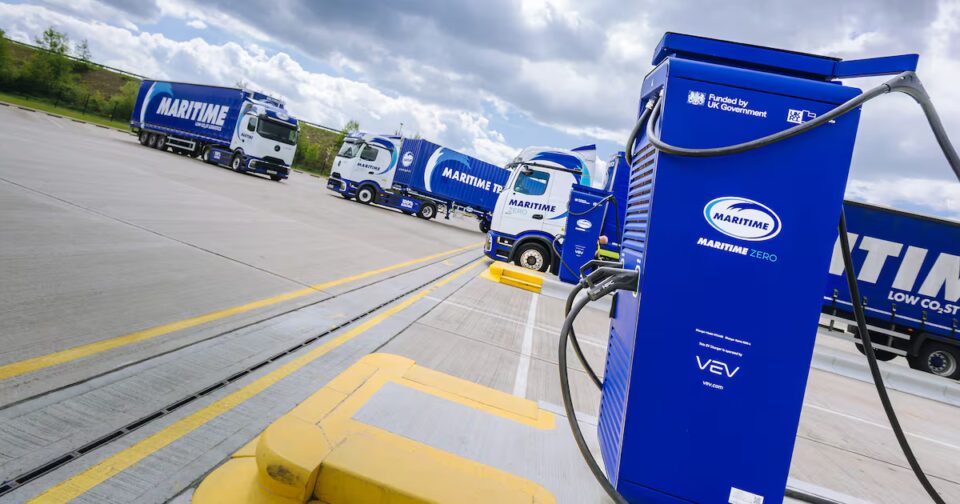
The initiative aims to showcase the feasibility of using electric heavy goods vehicles (eHGVs) for delivering soft drink products, presenting what CCEP refers to as a “practical roadmap” for reducing carbon footprints within the UK soft drinks sector.
The Mercedes-Benz eActros 600 is currently in service at CCEP’s Wakefield facility, recognized as Europe’s largest soft drinks manufacturing site. The vehicle is actively engaged in multi-drop deliveries to convenience stores and wholesale clients as part of an ongoing pilot program.
Since it began operations in January, the eHGV has logged over 7,000 miles. Maritime Transport and CCEP jointly report that it has resulted in an estimated reduction of 12.43 tonnes of CO₂e compared to conventional diesel vehicles.
Nick Hayward, logistics director at CCEP, stated, “We’re continuing to invest across our operations to build a more sustainable and resilient supply chain, with initiatives like this playing an important role in how we deliver against our commitments.”
He added, “By working with expert partners like Maritime, we can strengthen our capabilities and make meaningful progress towards our long-term sustainability ambitions.”
This initial rollout is part of a broader strategy to introduce 56 electric HGVs throughout Maritime Transport’s network. Collaborations with CCEP will explore the larger-scale application of eHGVs.
The initiative will also receive support through the government-sponsored Zero Emission HGV and Infrastructure Demonstrator (ZEHID) program.
According to CCEP, this live trial heralds a new chapter in the enduring partnership between the two organizations, playing a pivotal role in their goals to mitigate emissions in the value chain within their sustainability action framework.
Furthermore, this effort aligns with Maritime’s commitment to advancing decarbonization in the road freight sector through Maritime ZERO, their zero-emission transport division.
Tom Williams, deputy chief executive at Maritime Transport, remarked, “This is an exciting next step in our relationship with CCEP. Having worked closely across both road and rail for several years, introducing an eHGV into live service is a natural progression.”
He continued, “Together, we’re very much focused on reducing emissions across the supply chain through a combination of modal shift, low-emission fuels and the adoption of new vehicle technologies.”
Williams also noted, “Having the Mercedes out on the road allows us to assess its performance in real operating conditions, understand where it delivers the greatest value and explore how it can support our wider decarbonization ambitions over time.”