

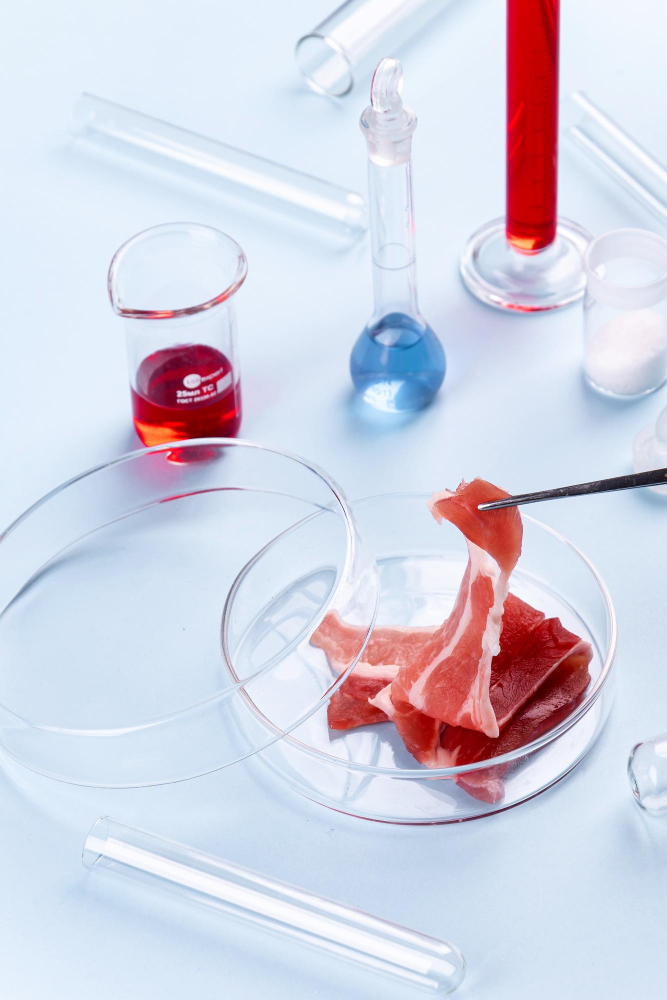
The UK Government has announced the establishment of a new regulatory sandbox for cultivated meat, aimed at enhancing innovation within this emerging sector. Notably, this will be the first regulatory sandbox for cultivated meat in Europe.
In its National Vision for Engineering Biology policy paper released last year, the Government indicated plans to create regulatory sandboxes focused on engineering biology, which encompasses alternative proteins. This newly introduced sandbox for cultivated meat will receive funding commitments totaling £1.6 million from the Engineering Biology Sandbox Fund (EBSF).
The Food Standards Agency (FSA) and Food Standards Scotland (FSS) will collaborate to assist companies in demonstrating that their products and processes comply with the UK’s novel food regulatory framework. This partnership aims to navigate the complexities of food and drink regulations effectively.
To support the sandbox initiative, new staff will be recruited to gather scientific evidence about cultivated meat products and the technologies employed in their production, thereby ensuring product safety. Furthermore, these professionals will aid companies preparing applications for cultivated meat while working closely with scientists to address key issues, such as cultivated meat labeling and hygiene protocols for production facilities.
The FSA is currently assessing at least four novel food applications for cultivated meat, which includes those from the French cultivated chicken company, Vital Meat. Additionally, the UK-based company Meatly, known for its cultivated pet food, recently became the first organization to receive approval for cultivated meat in Europe.
According to the FSA, the current regulated product system is under-resourced, leading to an average application authorization time of 2.5 years, significantly exceeding the department’s statutory goal of 17 months.
What is a regulatory sandbox?
A regulatory sandbox is a controlled environment, typically in place for a limited time, wherein businesses can trial new products under the supervision of a regulator.
While the FSA’s regulatory sandbox for cultivated meat is the first of its kind in Europe, it follows South Korea’s innovation zone dedicated to novel food and cultivated meat production.
The primary objective of the sandbox is to facilitate faster processing of cultivated meat applications. Moreover, the assessment methodologies employed in this sandbox may also be applicable to other innovative foods, as suggested by the FSA.
“Ensuring consumers can trust the safety of new foods is one of our most crucial responsibilities. The cell cultivated products sandbox program will enable safe innovation and allow us to keep pace with new technologies being used by the food industry to ultimately provide consumers with a wider choice of safe foods,” stated Professor Robin May, the FSA’s chief scientific advisor.
Novel food approval: UK vs. EU
Many aspects of the UK’s novel food process remain aligned with EU standards due to its historical membership. The UK retains the requirements specified in EU regulations and guidance from the European Food Standards Agency (EFSA) that were published prior to Brexit.
However, the UK does not utilize the Food Additives Intake Model (FAIM) tool employed by the EFSA to estimate consumer exposure to novel foods. Instead, the National Diet and Nutrition Surveys are used. The FSA and FSS are required to evaluate application dossiers that include three homogeneous replicates of novel food ingredient batches, differing from the five replicates mandated by the EFSA.

