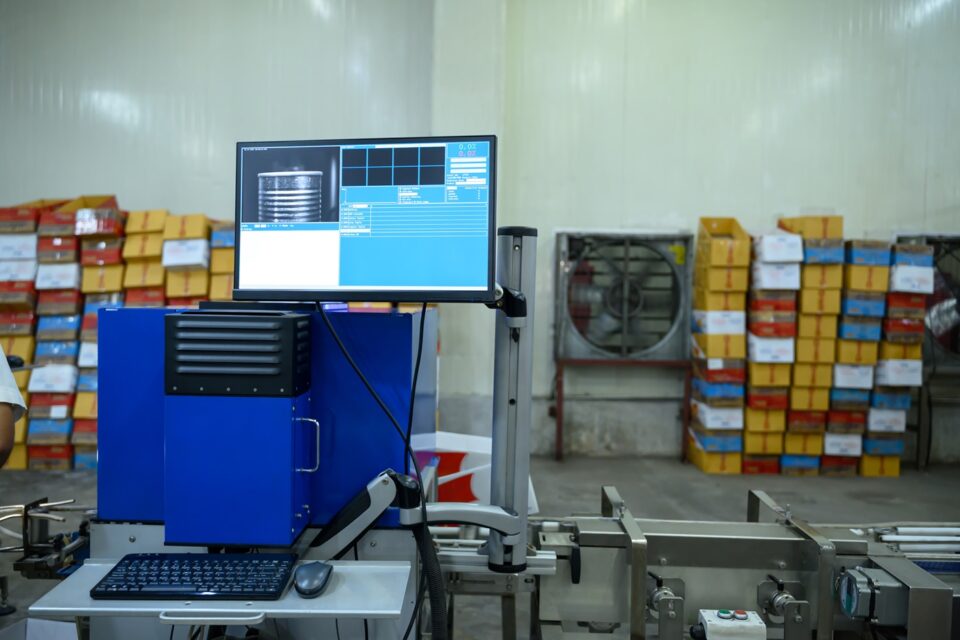
Food recalls cost companies an average of £8–10 million in direct expenses, not counting reputational damage. In such a high-stakes environment, the margin for error is almost non-existent. For food and beverage producers, the answer isn’t more human inspectors — it’s smarter eyes: Artificial Intelligence and machine vision. These technologies are transforming quality control from a defensive process into a proactive strategy that protects safety, cuts waste, and improves efficiency across the supply chain.
The Evolution of Quality Control
Human inspection has always been vital, but the complexity of modern processing and the speed of production lines demand something more robust. Machine vision, powered by AI, now provides that capability. High-resolution cameras and sensors capture product images, while deep learning algorithms interpret them in real time. Unlike rule-based systems of the past, today’s AI continuously learns, improving its accuracy and adapting to new defects and product variations without explicit reprogramming.
The result is a system that doesn’t just keep pace with production — it gets smarter with every batch.
Smarter Detection, Smarter Decisions
The advantages of AI-powered vision go far beyond spotting surface defects. Systems can now detect discolouration signalling spoilage, microscopic cracks in packaging, or foreign bodies invisible to the naked eye. On a high-speed line, AI can process thousands of items per minute, providing consistency that even the most experienced inspectors cannot match.
Beyond inspection, the technology feeds data back into production, enabling predictive maintenance, real-time optimisation, and smarter resource use. In short, AI is not only keeping food safe but also making factories leaner and more sustainable.
New Frontiers: Technologies Shaping 2025
The field has moved fast since 2024. Several innovations are pushing the boundaries of what’s possible:
-
Generative AI for synthetic data: Training AI models requires thousands of defect images — but serious hazards like glass shards are rare. Generative AI can now create photorealistic defect scenarios, giving models the robustness to detect even the rarest problems without ever risking contamination on the line.
-
Explainable AI (XAI): One barrier to adoption is the “black box” nature of AI. XAI highlights exactly why a product was flagged, for example circling a discoloured patch or a hairline crack in packaging. This builds trust with operators and satisfies auditors under strict compliance regimes.
-
Edge computing: Instead of sending data to the cloud, AI processing increasingly happens directly on the camera or a small PC at the line. This reduces latency, improves cybersecurity, and ensures operations continue even if connectivity drops.
-
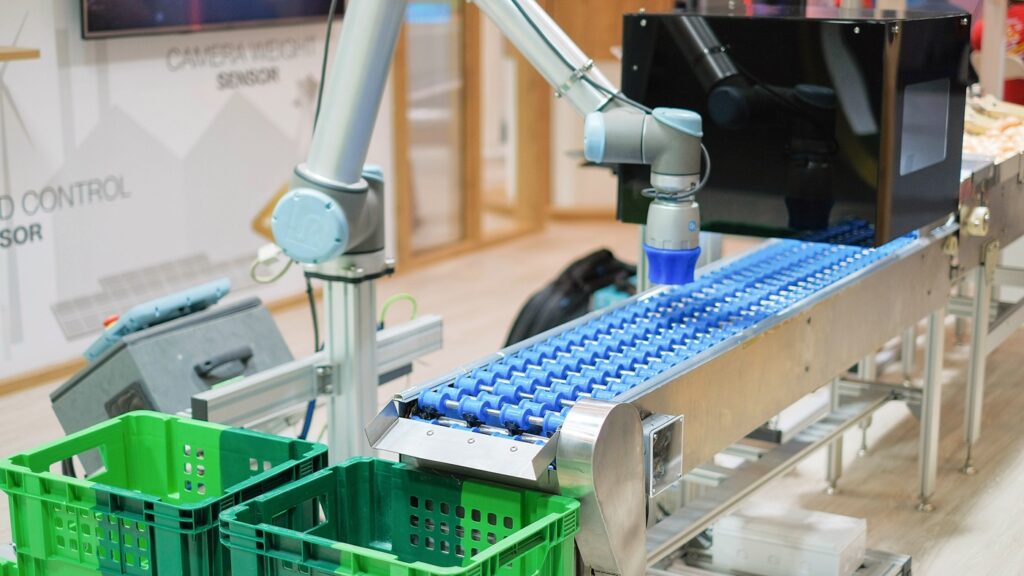
Multi-modal AI: Vision is now being combined with other sensors — such as X-ray, checkweighers, or acoustic data — to build a holistic picture of product integrity. A sealed drink bottle, for instance, can be validated by combining a visual inspection, weight check, and the audio “click” of the cap.
The Human Element: Augmentation, Not Replacement
A common misconception is that AI replaces people. In reality, it augments them. Manual inspection roles are shifting towards higher-value positions such as system supervisors, data analysts, and quality optimisation specialists.
Upskilling is vital: operators must be trained to understand AI outputs, spot anomalies in system performance, and apply root-cause analysis. Change management is equally important. Transparent communication and staff involvement in implementation help build trust, ensuring technology is seen as a tool rather than a threat.
Regulation: Compliance as Well as Capability
Adoption is no longer just a technical decision — it’s a regulatory one. The EU AI Act, beginning to take effect, classifies vision systems used in food safety as “high-risk” AI. This means strict requirements around transparency, data governance, and human oversight. Companies must be able to explain how decisions are made, ensure data quality, and guarantee that humans can intervene at any stage.
By contrast, the UK’s pro-innovation framework is principles-based, leaving regulators such as the Food Standards Agency to oversee safety and fairness without imposing one centralised law. For UK manufacturers, this flexibility could speed up deployment while still maintaining consumer protection.
Case Studies: Results in Practice
-
Bakery chain: By deploying AI vision, one bakery group cut rejection rates by 72% in six months, saving 15 tonnes of bread annually from being discarded for minor cosmetic flaws.
-
Meat processor: Using 3D imaging, a UK processor achieved 99.9% detection of bone fragments as small as 2mm. The move virtually eliminated choking hazards and prevented a potential recall worth millions.
-
Beverage manufacturer: A major drinks producer integrated vision systems to monitor fill levels. Within a year, underfills dropped by 85%, reducing customer complaints and saving an estimated £1.2 million in product giveaway.
These figures underline the commercial as well as safety benefits of AI adoption.
Sustainability and Competitive Edge
Machine vision also plays a crucial role in sustainability. By optimising water and energy use, ensuring accurate portioning, and minimising waste, AI enables producers to meet ESG goals without compromising profitability. Combined with consumer trust in safe, consistent products, this positions early adopters as leaders in both innovation and responsibility.
Looking Ahead
AI and vision are no longer optional extras — they are becoming standard infrastructure for the food and beverage industry. The future will bring greater automation, continuous optimisation, and a stronger focus on explainability and compliance. For companies that invest now, the payoff will be more than safer food: it will be resilient operations, reduced costs, and a brand reputation built on trust.