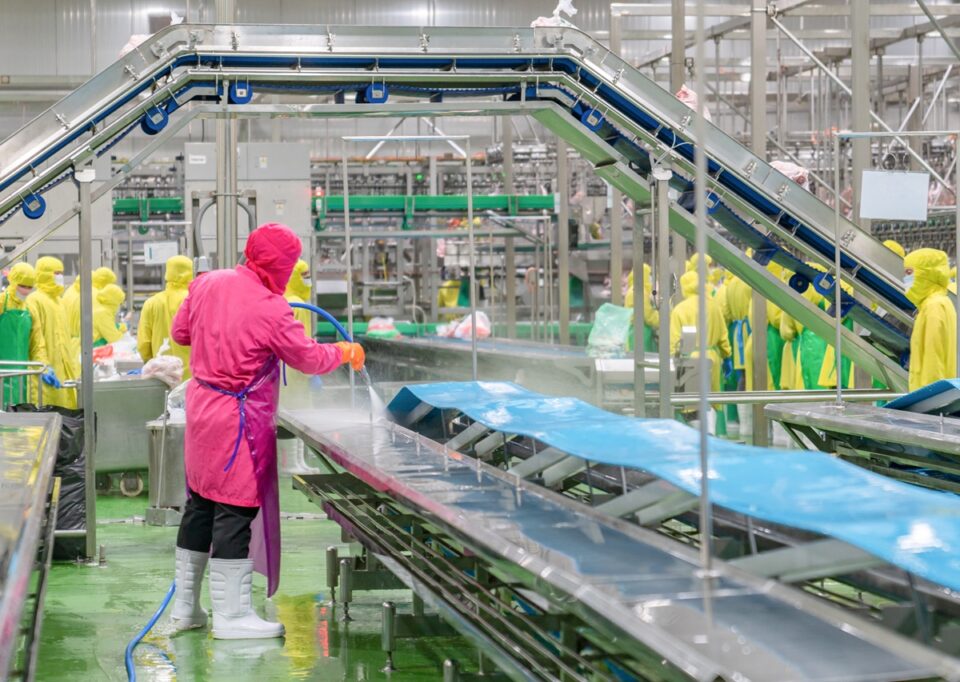
Industry Insight: Cleaning and maintenance in food manufacturing have evolved from routine housekeeping into digitally-verified, strategically managed operations. In 2026, the integration of AI-enhanced cleaning, predictive maintenance sensors, and automated compliance logs allows manufacturers to treat hygiene as a core performance metric that drives uptime, sustainability, and legal “due diligence.”
In food and beverage manufacturing, cleaning and maintenance have always underpinned safe and efficient production. But in 2026, their strategic importance has grown significantly. Rising regulatory scrutiny, labour shortages, tightening sustainability targets and increasing retailer expectations are pushing hygiene and asset care higher up the operational agenda.
What was once viewed as a support function is now a core performance metric. For manufacturers balancing food safety, uptime and cost control, cleaning and maintenance are no longer reactive disciplines. They are becoming data-led, predictive and increasingly automated.
Hygiene Beyond Visual Inspection
The days of relying solely on visual checks and paper cleaning logs are fading fast. Modern food factories are under growing pressure to prove—not merely assume—that cleaning procedures are effective.
ATP swabbing remains widely used for rapid hygiene verification, but manufacturers are increasingly supplementing this with digital monitoring tools that create auditable records of every sanitation cycle. Time-stamped verification data, automated reporting and cloud-connected hygiene platforms are helping businesses strengthen due diligence while reducing paperwork and manual administration.
For operations supplying major retailers or export markets, digitally recorded sanitation data is quickly becoming an expectation rather than a differentiator.
AI-Enhanced Cleaning in Place
Cleaning-in-place (CIP) technology continues to advance rapidly. Traditional fixed-time CIP cycles often overuse water, chemicals and energy because they run for predetermined durations regardless of actual cleanliness.
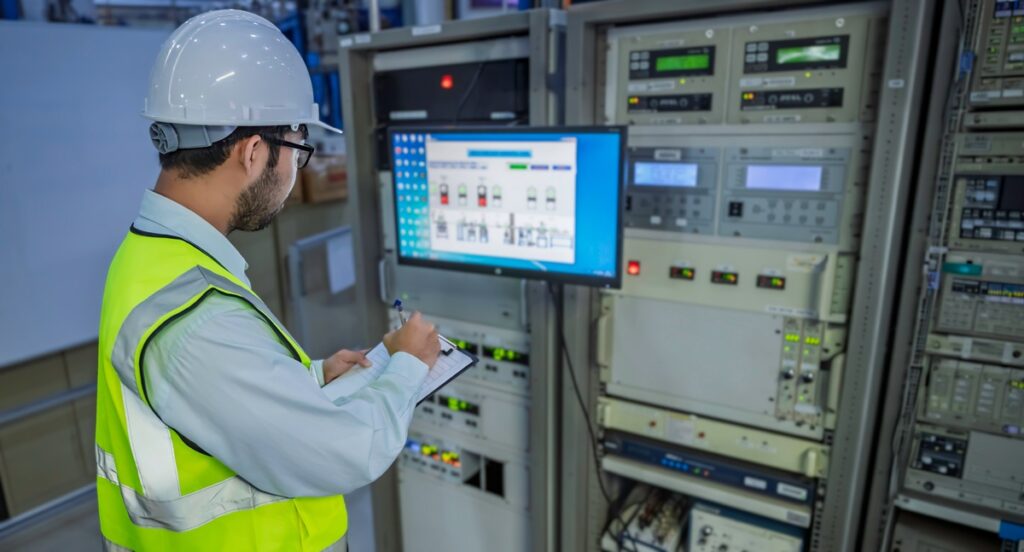
New sensor-driven CIP systems now monitor turbidity, conductivity, chemical concentration and rinse-water quality in real time. Some platforms use AI algorithms to determine precisely when equipment is clean enough to end the cycle, rather than defaulting to preset wash durations.
The result is reduced water and chemical consumption, shorter downtime between production runs and more consistent cleaning validation—particularly valuable for high-throughput liquid and semi-liquid processing environments.
Predictive Maintenance Replaces Calendar-Based Servicing
Maintenance strategies are also evolving beyond scheduled preventive servicing.
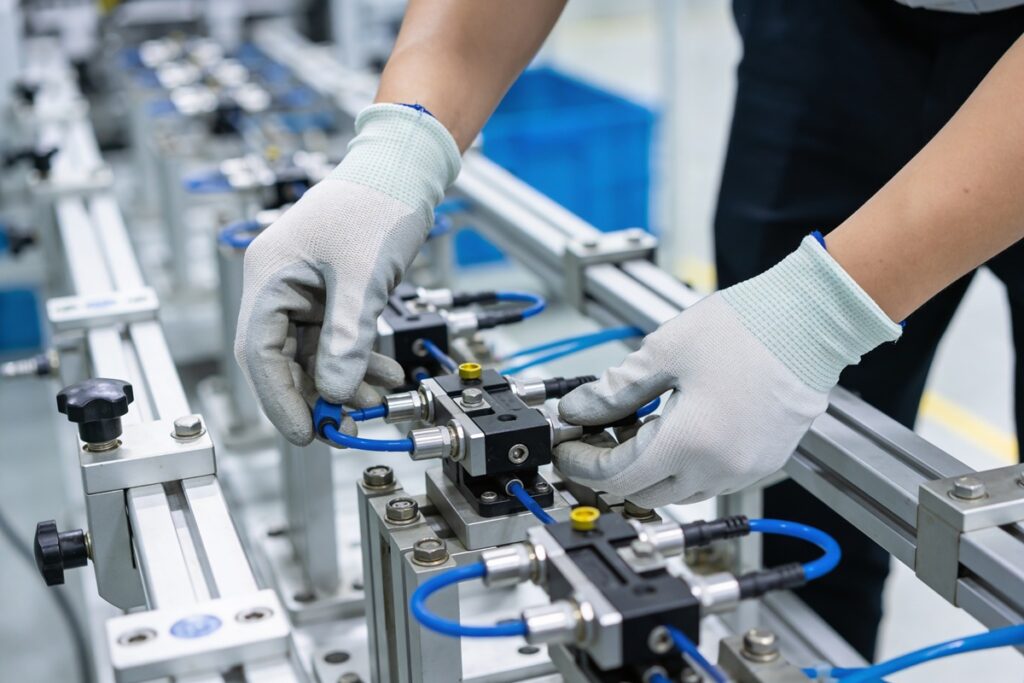
Instead of replacing components at fixed intervals, manufacturers are increasingly using condition-monitoring sensors to assess real-time equipment health. Vibration analysis, acoustic monitoring and thermal imaging can now detect early signs of wear in motors, bearings, pumps and conveyors before failures occur.
This predictive approach reduces unplanned downtime while also supporting food safety by identifying mechanical degradation before it creates contamination risks such as lubricant leaks, metal wear or component failure.
As margins tighten and uptime becomes more valuable, predictive maintenance is moving from ‘nice to have’ to operational necessity.
Robotics Enters the Washdown Zone
Cleaning automation is gaining traction across larger and more advanced food production sites.
Autonomous mobile cleaning units and hygienic-design collaborative robots are increasingly being deployed for repetitive sanitation tasks, particularly in high-risk or difficult-to-access areas. These systems can execute programmed cleaning routes consistently, reduce manual labour dependency and improve repeatability.
For labour-constrained operations struggling to recruit sanitation staff, robotic cleaning offers a route to maintaining standards while reducing workforce pressure.
Allergen Control Demands Greater Precision
As manufacturers continue reformulating products and expanding SKUs to meet HFSS, health and private-label demands, allergen complexity within factories is increasing.
This is driving stronger focus on cleaning validation and targeted sanitation chemistry. Enzyme-based cleaning agents designed to break down specific proteins are becoming more common in allergen-sensitive environments, offering improved removal of difficult residues compared with conventional caustic detergents.
With cross-contamination incidents capable of triggering recalls, reputational damage and legal action, allergen cleaning validation remains one of the most critical areas of sanitation management.
Sustainability Pressures Reach Sanitation Operations
Water, energy and chemical use during cleaning are under increasing scrutiny as manufacturers seek to reduce environmental impact.
Low-water CIP systems, chemical recovery loops, foam-optimised cleaning systems and heat-recapture technologies are helping plants reduce sanitation-related utility consumption without compromising hygiene.
For businesses reporting against ESG targets or retailer sustainability frameworks, sanitation efficiency is becoming a measurable contributor to broader environmental performance.
Digital Records Become the New Compliance Standard
The overarching trend is clear: hygiene and maintenance are becoming fully integrated into the digital factory ecosystem.
Rather than existing as isolated manual processes, sanitation records, maintenance logs, sensor alerts and verification data are increasingly feeding into central manufacturing execution and quality management systems.
This gives operations teams a real-time view of hygiene performance, maintenance status and compliance readiness—while creating the digital audit trail regulators, customers and certification bodies increasingly expect.
The Strategic Imperative
In 2026, cleaning and maintenance are no longer simply about passing audits or keeping machinery operational.
They are central to uptime, product quality, labour efficiency, sustainability and risk management.
Manufacturers that modernise these functions with predictive technologies, digital verification and intelligent automation will be better positioned to reduce costs, strengthen compliance and build more resilient operations.
Because in modern food manufacturing, cleanliness is no longer just visible. It is measurable.
What is predictive maintenance in food manufacturing?
It is the use of real-time sensor data (vibration, heat, sound) to service machinery based on its actual condition, preventing both unplanned downtime and physical contamination risks.
How does AI improve CIP systems?
AI analyzes live rinse-water data to stop cleaning cycles the moment a surface is chemically clean, reducing water, energy, and chemical waste by up to 30%.
Is digital cleaning verification legally required?
While not always a strict legal "must," it is rapidly becoming the standard for satisfying "Due Diligence" requirements in audits by major retailers and global safety bodies.
What is the main barrier to adopting these technologies?
The primary challenge is interoperability—ensuring that new smart sensors and robots can feed data directly into existing factory management software (MES/ERP) for a single "source of truth."
How can cleaning operations support sustainability goals?
Optimised CIP, water recovery systems, low-chemical cleaning methods and heat recapture technologies help reduce sanitation-related water, energy and chemical consumption.