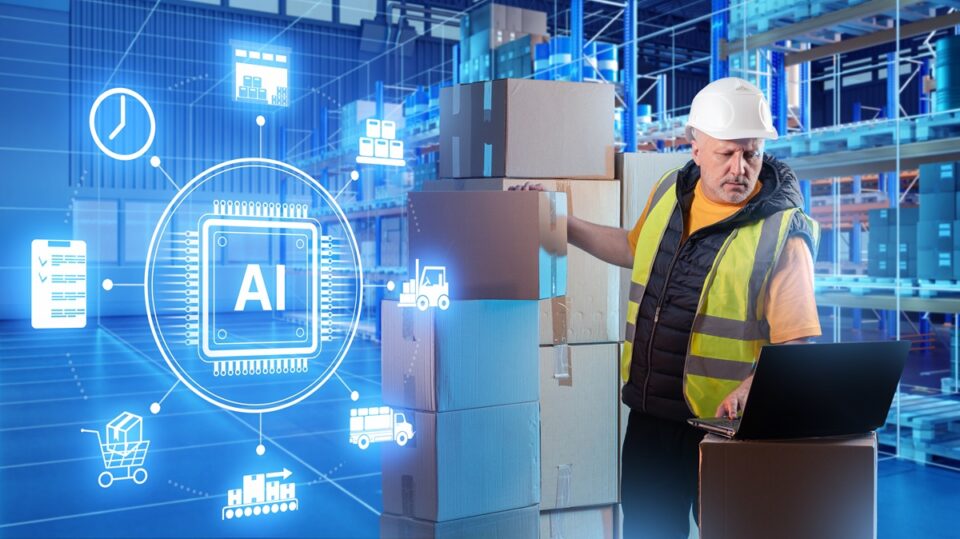
Industry Insight: Modern food and beverage warehouses are no longer judged purely on storage capacity or picking speed. In 2026, warehousing and distribution operations are becoming strategic compliance and data hubs, balancing automation, traceability, sustainability reporting and temperature integrity while helping manufacturers reduce risk, control costs and improve supply chain resilience.
For food and beverage manufacturers, the warehouse has evolved far beyond its traditional role as a storage and dispatch point. In 2026, distribution centres are increasingly viewed as strategic operational assets—critical not only for inventory flow, but for regulatory compliance, traceability, sustainability reporting and customer service performance.
Rising retailer expectations, tighter legislation and persistent labour shortages are forcing manufacturers to rethink what an effective warehouse operation looks like. Speed still matters, but precision, visibility and resilience now matter more.
The result is a sector-wide shift from simply moving stock efficiently to building warehousing networks capable of supporting compliance, reducing waste and protecting margins.
From Storage Space to Strategic Infrastructure
Historically, warehouse strategy focused heavily on location, floor space and throughput. While those fundamentals remain important, manufacturers are increasingly redesigning distribution operations around flexibility and risk mitigation.
The rise of multi-channel fulfilment, retailer-specific requirements and fragmented distribution routes means static warehousing models are becoming less effective. Many manufacturers are moving toward hybrid networks combining regional hubs, temperature-controlled satellite depots and specialist third-party logistics partners.
This approach improves service levels while helping firms respond faster to disruption, whether from transport bottlenecks, labour shortages or sudden shifts in demand.
Automation Moves Beyond Conveyors
Warehouse automation has matured rapidly over the past 12 months. Traditional conveyor and palletising systems are now being supplemented by smarter, more adaptable technologies.
Autonomous mobile robots (AMRs) are increasingly deployed for picking, replenishment and pallet transport, reducing walking time for operatives while improving consistency. Collaborative robots are also helping manufacturers offset labour shortages by automating repetitive tasks without requiring full warehouse redesigns.
For many operations, the biggest gains now come from selective automation rather than wholesale replacement—targeting bottlenecks such as case picking, pallet build optimisation or stretch wrapping.
AI Drives the Next Efficiency Gains
Artificial intelligence is becoming a key differentiator in modern warehouse performance.
Advanced warehouse management systems can now use AI to analyse order patterns, SKU velocity and seasonal demand, dynamically re-slotting products to optimise picking routes. This reduces travel time, improves labour productivity and increases dispatch speed without physical expansion.
AI is also supporting transport planning by continuously recalculating outbound routes based on traffic, customer priority and vehicle utilisation—helping reduce mileage, fuel consumption and delivery costs.
For manufacturers under pressure to improve margins, these incremental efficiencies are becoming increasingly valuable.
Traceability Is Reshaping Warehouse Design
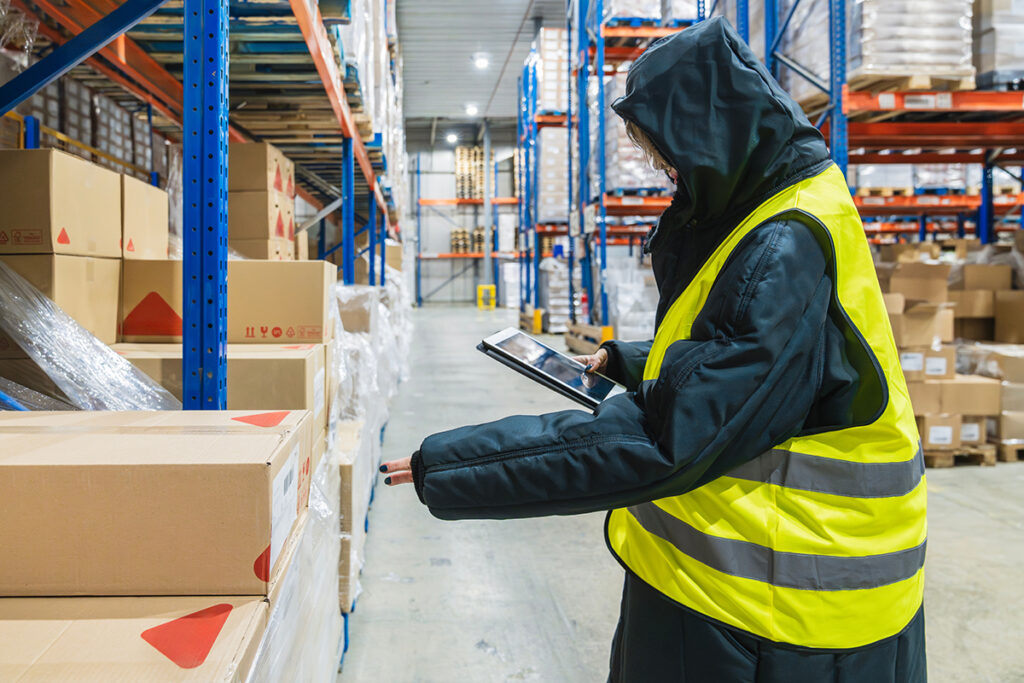
Food traceability requirements continue to intensify, and warehouses are now central to compliance strategy.
Manufacturers must increasingly demonstrate not just where stock is, but exactly where it came from, how it has moved and under what conditions it has been stored. This is being driven by retailer demands, recall preparedness and emerging regulations such as the EU Deforestation Regulation and wider supply chain due diligence frameworks.
As a result, warehouses are adopting more sophisticated digital traceability platforms, integrating WMS, ERP and supplier systems into unified data environments.
Some larger operators are also implementing digital twins—virtual warehouse replicas used to model inventory flows, disruption scenarios and recall simulations.
Cold Chain Intelligence Reduces Risk
For chilled and frozen food producers, temperature control remains one of the most critical warehouse priorities.
However, the industry is moving beyond simple monitoring toward predictive cold chain management. IoT-enabled sensors now provide real-time visibility across cold stores, dock doors, loading bays and vehicles, feeding data into AI systems that can predict refrigeration failures before they occur.
This allows maintenance teams to intervene before stock is compromised—reducing spoilage, protecting food safety and preventing catastrophic losses.
For operators handling high-value chilled goods, predictive cold chain monitoring is increasingly viewed as essential rather than optional.
Sustainability Pressures Reach the Warehouse Floor
Environmental reporting requirements are pushing warehousing higher up the corporate agenda.
Large food manufacturers now need increasingly granular Scope 3 emissions data, meaning warehouse energy use, transport efficiency and packaging waste are under far greater scrutiny. Distribution centres are therefore being redesigned around sustainability as well as throughput.
This includes:
* Solar-integrated warehouse roofs
* Battery storage systems
* Electric MHE fleets
* Smart LED and occupancy-based lighting
* AI-powered HVAC optimisation
Packaging operations within warehouses are also changing, with right-sizing systems reducing corrugated usage and dimensional shipping costs by tailoring boxes to order size.
Waste Management Becomes Operational Priority
Mandatory food waste separation requirements have added another layer of operational complexity.
Warehouses handling short-life, chilled or returned goods must now segregate food waste streams more carefully, with dedicated processes for redistribution, anaerobic digestion or compliant disposal.
This is accelerating the adoption of reverse logistics models, where warehouses act not just as outbound fulfilment hubs but as centres for returns processing, packaging recovery and reusable transit asset management.
The New Warehouse Mandate
The modern warehouse is no longer simply about storing more stock or dispatching faster.
It is becoming a control tower for compliance, sustainability, data visibility and operational resilience.
Manufacturers that continue treating warehousing as a downstream cost centre risk falling behind competitors who are using distribution strategy to improve traceability, reduce waste, strengthen retailer relationships and future-proof operations.
In 2026, the strategic warehouse advantage is no longer about square footage.
It is about intelligence, integration and control.
Why is traceability influencing warehouse design?
Manufacturers need faster, more accurate product tracking during recalls and audits, requiring tighter digital integration between warehouse, ERP and supplier systems.
How do sustainability rules affect warehouse operations?
Warehouses must now contribute data for Scope 3 emissions reporting, reduce packaging waste, improve transport efficiency and lower operational energy use.
What warehouse technologies are growing fastest in 2026?
Autonomous mobile robots, predictive cold chain monitoring, IoT sensors, AI-driven WMS platforms and digital twin modelling are among the fastest-growing technologies.
Why are warehouses becoming more important in food manufacturing?
Warehouses now play a central role in traceability, compliance, sustainability reporting and fulfilment performance, making them strategic operational assets rather than simple storage facilities.
How is AI being used in warehouse operations?
AI supports dynamic slotting, inventory forecasting, labour planning and route optimisation, helping manufacturers improve efficiency and reduce costs.