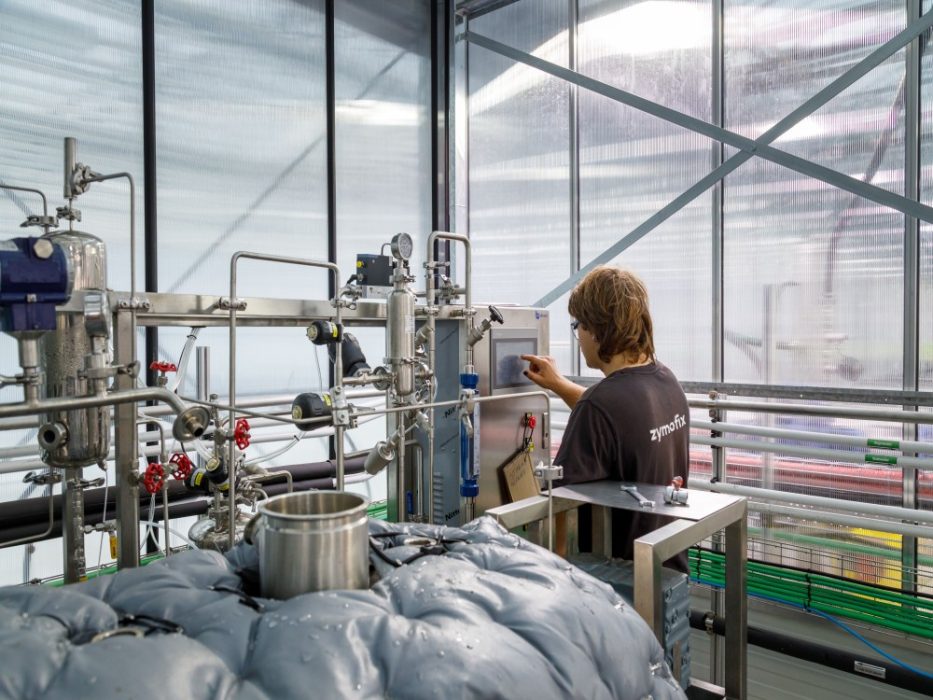
Ghent-based Zymofix is investing €6 million in a flagship manufacturing facility in Deinze after securing Series A funding led by First Imagine!. The project marks the company’s transition from early production activity to full industrial manufacturing.
As agriculture seeks more sustainable solutions, microbial products are attracting growing interest. However, many of these products have struggled to achieve broad farm adoption because producing their microorganisms economically and at commercial volumes remains challenging.
Zymofix aims to address that barrier through its Zyft platform. Instead of cultivating bacteria, fungi and yeasts in liquid fermentation tanks, the technology grows them on solid substrates derived from biomass residues.
The company’s customer base has already expanded beyond the capacity of its current facilities. Zymofix now serves more than 15 customers, most of them multinational agricultural-input businesses, and demand continues to exceed available supply.
Scheduled to begin production in the fourth quarter of 2027, the Deinze facility will initially manufacture 300 tonnes annually. That output could support treatment across roughly 1 million hectares. Following commissioning, a proposed €25 million expansion in 2028 would increase annual capacity to 2,000 tonnes, equivalent to approximately 10 million hectares.
Emile Redant, Zymofix co-founder and CEO, said identifying an effective microorganism represents only one stage of the development process.
“The harder part is manufacturing it consistently, efficiently and at the volumes the market requires,” he said. “Solid-state fermentation has significant potential, but historically it has been difficult to scale.”
Over the last four years, Zymofix has developed Zyft to overcome those production constraints. The company believes the platform can help bring microbial solutions to market more efficiently as food manufacturing trends, food processing technology and wider food and drink industry innovation continue to emphasize resource efficiency.
“Having successfully validated the platform at pilot scale, the new facility in Deinze allows us to take the next step into industrial production,” said Redant, highlighting the importance of moving beyond pilot operations.
For food and beverage manufacturers, Zyft’s use of biomass residues as fermentation substrates also reflects broader food and drink sustainability priorities. Converting side streams into useful inputs could support emerging food and beverage industry trends while aligning with evolving food and drink regulations, food and drink packaging expectations, food and drink marketing strategies and food and drink consumer trends. It may also influence future food distribution trends by encouraging more resource-efficient production systems.