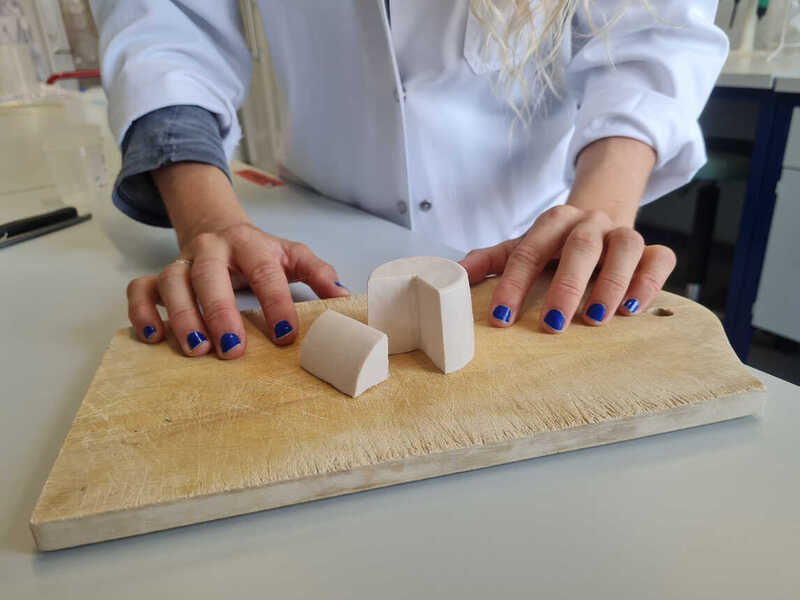
A researcher from the Department of Food Science at the University of Copenhagen has successfully enhanced the taste and texture of a plant-based cheese made from yellow peas. Carmen Masiá utilized the traditional fermentation process with bacteria, similar to that used in milk-based cheeses for centuries, to create a new generation of plant cheeses that possess the same delicious properties.
“Fermentation is a powerful tool for developing flavor and texture in plant-based cheeses,” explains Carmen Masiá. “In this study, I have demonstrated that bacteria can rapidly create a solid texture in a plant-based cheese and reduce the bean-like aroma from yellow peas, which serve as the protein source.”
This breakthrough builds upon a previous research finding by Carmen Masiá, which revealed that yellow peas are an excellent protein base for plant-based cheese production. In the current study, the researcher examined 24 different bacterial compositions sourced from Chr. Hansen, a biotech company where Carmen Masiá is currently an industrial Ph.D. candidate.
“The primary objective of this study was to discover bacterial compositions that are suitable for fermenting plant-based materials, allowing for the development of taste and texture. All of the bacterial compositions met this goal,” notes the researcher.
To study the bacterial action, the scientist mixed them with a protein base made from yellow peas in a bucket. After fermenting for seven days, a firm “cheese gel” with a taste and texture reminiscent of white fresh cheese was observed after just eight hours.
“All of the mixtures produced solid gels, indicating that fermentation can replace the use of palm fat, starch, or coconut oil. From a taste perspective, my goals were to reduce the yellow pea flavor and achieve milky notes. Some bacteria were better at reducing the pea taste than others, but overall, all the mixtures successfully achieved this, which is a positive outcome. Additionally, each mixture had varying degrees of milky notes,” explains Carmen Masiá.
The researcher acknowledges that there is still work to be done to refine plant-based cheese production. The development of optimal plant-based cheese will require new bacterial compositions and cultures specifically tailored for this purpose. Additionally, maturation time is essential for plant-based cheese to develop flavor and character, much like traditional milk-based cheeses.
“The biggest challenge at present is that although many people want to consume plant-based cheese, they often find the taste unsatisfactory. Ultimately, no matter how sustainable or nutritious a product is, its success in the market relies on its taste,” says Carmen Masiá. “It’s crucial to remember that cheese production using milk has evolved over thousands of years, so we cannot expect to replicate its quality overnight. Nevertheless, I am hopeful that in the coming years, we can make significant progress in creating plant cheeses that truly appeal to our taste buds.”
This study was a collaborative effort between the Department of Food Science and Chr. Hansen, an enzyme company that produces ingredients for the food and pharmaceutical industries.