

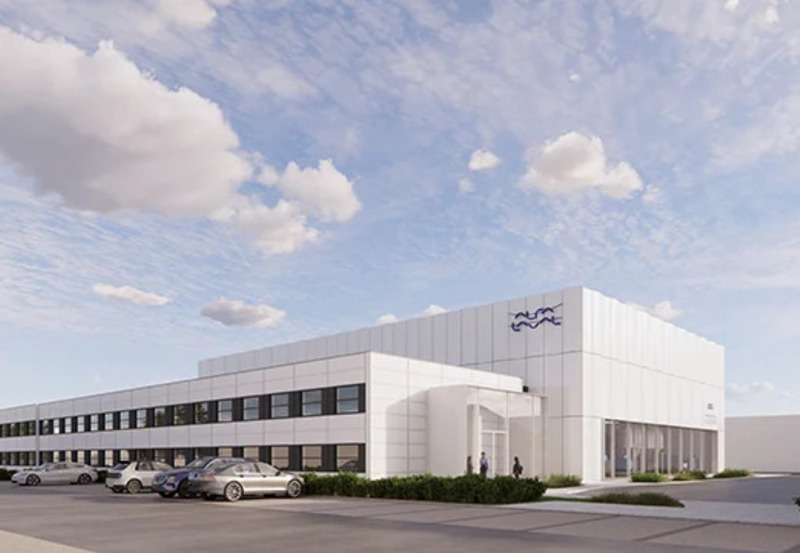
Alfa Laval’s new state-of-the-art Food Innovation Centre is set to empower clients in the food manufacturing and beverage industries. This facility will provide an opportunity to develop innovative food products while effectively minimizing the environmental impact of food production.
“With our range of technologies, solutions and competences, Alfa Laval is in a strong position to enable food and beverage producers to take a much bigger responsibility in their supply chain. We believe this is needed in our effort to enable the global food system to feed and nourish a growing global population within the planetary boundaries,” says Lars Dithmer, president of Alfa Laval’s business unit food systems.
Construction of the new Food Innovation Centre in Copenhagen, Denmark, has already commenced. The facility will be strategically located at the headquarters of Alfa Laval’s Food and Water businesses, with plans to be completed in 2027. It will cover approximately 1,200 m2 and will include a dedicated visitor centre.
This prime location situates the facility within Denmark’s dynamic bio-solutions landscape, supported by a robust academic base from the Copenhagen and Southern Sweden regions. It complements Alfa Laval’s existing test facilities in Denmark and Sweden, enhancing its capacity for innovation.
The Food Innovation Centre will not only showcase Alfa Laval’s advanced technologies and solutions, but will also focus on developing new methods to produce more nutritious food. Importantly, the facility will prioritize the evolution of existing processes to ensure sustainability and efficiency while incorporating digital solutions that leverage the power of artificial intelligence.
The facility’s efforts will specifically concentrate on two primary areas:
- Conventional foods, ingredients, and beverages: Improving processes and technologies to create more nutritious food with higher yields, while minimizing energy, water, and raw material usage, all while recovering and upcycling resources from waste streams.
- Next-generation food: Innovating processes and technologies for plant-based and fermentation-based foods, ranging from proof of concept to industrial-scale production, aimed at achieving a significantly reduced environmental footprint.
According to Johan Agrell, vice-president of next-generation food within the food & water division, the centre will serve as a world-class test and development arena, addressing both current and future food supply challenges.
“It will represent an opportunity to partner across the entire ecosystem of food innovation with companies and organizations of all sizes – from start-ups to global food corporations to academia – and work with them in various capacities,” Agrell emphasizes. “The set-up is also intended to help accelerate the regulatory approval process.”
The facility will be equipped with full food processing lines, allowing for flexible testing and development to understand capacities and performance levels. “We will be able to transform concepts and ideas into scalable solutions through the latest technologies,” states Johan Agrell.
The testing and development initiatives will also pave the way for pioneering approaches and facilitate the upskilling of individuals in the industry. “A crucial aspect of the big food transformation is to empower bright minds with new insights to act. The facility will be a key place to learn and train, significantly contributing to the development of the innovators and experts of the future.”
Protein represents the most pressing challenge the industry currently faces, as it is deemed the single-largest barrier to securing sufficient and nutritious food to sustainably feed the global population by 2050 (FAO, 2024).
“When operations commence, our initial focus will be on protein processing,” confirms Johan Agrell. “We aim to develop new and more efficient methods for extracting proteins from plant-based sources and fermentation-based processes, ultimately producing healthier foods while utilizing less water and energy from fewer raw materials.”
“In parallel, the facility will also concentrate on meat and fish-based processing,” Agrell adds. “We understand that animal-based proteins significantly impact the environment. However, these proteins will be necessary for feeding the world’s population for years to come. Therefore, our mission is to optimize animal protein production while minimizing its environmental footprint.”
Alfa Laval is committed to leveraging this facility to address these challenges holistically. The focus will be on innovation and enhancing conventional production methods, improving yields, conserving energy and water, and ensuring that all resources from waste streams are effectively recovered and upcycled.

