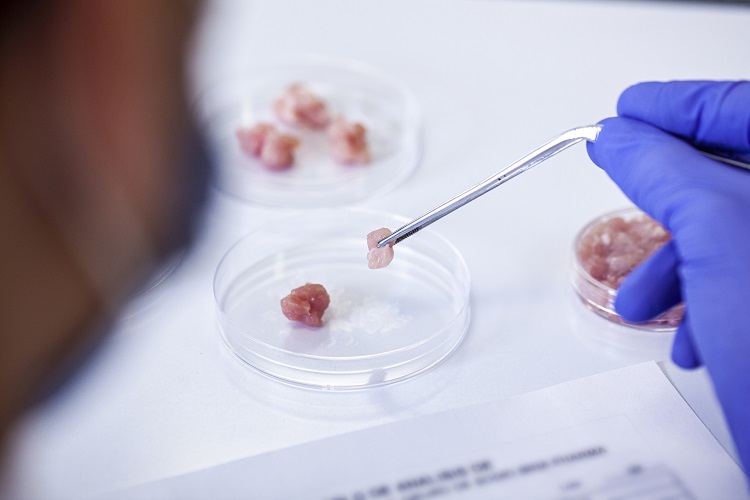
A new study conducted by researchers at the University of California, Davis has challenged the notion that cultivated meat is a more environmentally sustainable alternative to conventional meat production. Despite being considered a greener option compared to intensively produced meat, global livestock production still contributes an estimated 18% of anthropogenic greenhouse gas emissions, a major contributor to water stress, and a key driver of deforestation. However, results from a cradle-to-grave life cycle assessment of animal cell-based meat suggest that production based on purified growth medium components leads to a greater global warming potential (kg of carbon dioxide equivalent [CO2e]) than beef. The study indicates that cultivated meat may be more resource-intensive than most meat production systems according to the researchers’ analysis.
The findings of the UC Davis study are at odds with some previous research investigating the environmental sustainability of cultivated meat production. A group of international researchers predicted that the ex-ante LCA of commercial-scale cultivated meat production in 2030 is relatively low in land use, and nitrogen-related and air pollutions emissions associated with cultivated meat are also lower than its conventional counterparts. However, both pieces of research indicate that cultivated meat production is energy-intensive, using renewable energy to produce it being a sustainable alternative to all conventional meats.
The UC Davis study has received criticism from supporters of cultivated meat. International non-profit, the Good Food Institute (GFI), argued that several key assumptions in the UC Davis study do not align with the ‘current or expected’ practices for sourcing and purification of cell culture media ingredients. The GFI believes that cultivated meat companies are aware of these challenges and have been progressively improving media input supply chain for use in food production.
The UC Davis researchers’ findings may not necessarily reflect the reality as the study has not yet been through a full peer-review process, meaning that the study’s assumptions and conclusions are subject to change. However, the study authors aim to provide additional critical environmental examination of new food and agriculture technologies to influence future research in this field.
In conclusion, both industry and academia must critically examine the environmental impact of different food production practices to develop greener, cleaner, and sustainable solutions for the future.