

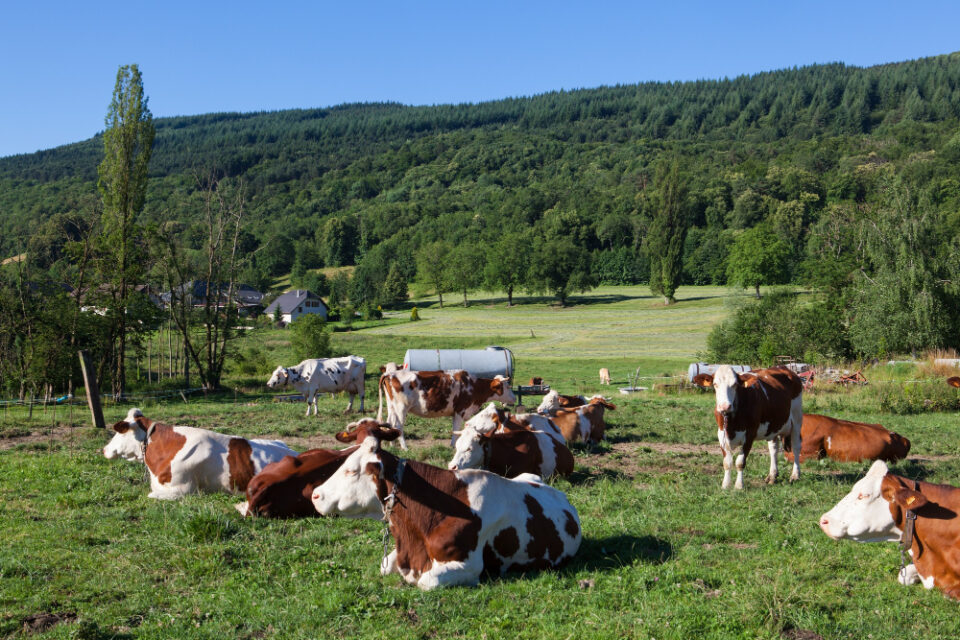
New Zealand has revised its methane emissions targets from agriculture. This change has been met with criticism from Greenpeace while receiving a supportive response from local farming organizations.
Prime Minister Christopher Luxon’s government announced a new framework for biogenic methane emissions—those emitted by meat and dairy livestock. The updated goal aims for a reduction of 14-24% by 2050 from 2017 levels.
Previously, the government aimed for a reduction of 24-47% in biogenic methane emissions by the same target year. Still, the 10% reduction goal by 2030, relative to 2017 levels, remains unchanged.
Importantly, New Zealand continues to pursue a net-zero target for greenhouse gas emissions—specifically CO2 and nitrous oxide—by 2050, excluding biogenic methane.
Greenpeace has labeled the new target as “full-blown climate denial.”
The Changing Markets Foundation, an NGO focused on environmental issues, highlights that methane significantly contributes to global warming—0.5°C according to 2023 data from the Intergovernmental Panel on Climate Change—compared to 0.8°C for CO2.
Amanda Larsson, a climate campaigner with Greenpeace Aotearoa, stated that New Zealand’s choice is “truly astounding.”
She asserted: “Luxon has gone full-on Trump. He’s choosing climate denial and corporate profits over our kids’ future.”
Larsson warned that as “the world’s biggest dairy exporter,” New Zealand’s hesitation to cut emissions could encourage other major livestock-producing nations to follow suit, jeopardizing global climate efforts.
Conversely, Wayne Langford, president of Federated Farmers of New Zealand, described the government’s reversal as “long overdue,” deeming it a “practical step” supporting farmers.
He contended that the previous target range of 24-47% lacked credible scientific underpinnings and posed a severe risk to local agriculture.
“Kiwi farmers have been burdened by unscientific, unaffordable, and unrealistic climate policies for too long,” he suggested, emphasizing the irrationality of creating policies that potentially threaten farm viability, production, and the broader economy.
Langford asserted that New Zealand’s meat and dairy farmers are among the “most climate-friendly” globally.
He also indicated: “This new target aligns New Zealand’s climate policy with research that accurately reflects the necessary measures to prevent further warming due to Kiwi farmers.”
Langford expressed concern that a methane tax would have counteracted its intended goals, possibly leading to farm closures, increased foreign production, and heightened global emissions.
Under the Climate Change Response Act, New Zealand’s government must review its 2050 targets every five years to ensure their suitability. The administration confirmed that the next examination of the 2050 biogenic methane goal will occur in 2040.
In a “split-gas” approach, the government differentiates biogenic methane emissions from CO2 since methane is classified as a “short-lived greenhouse gas.” The government asserts confidence in achieving both the net-zero emissions target and the reduction of methane emissions by 24% by 2050, although it acknowledged the inherent uncertainty related to future projections.

