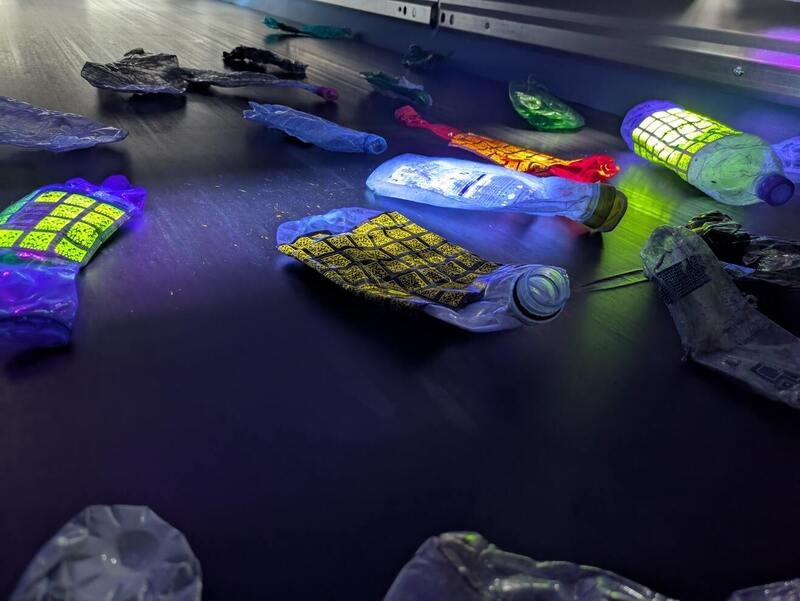
Polytag, the North Wales-based specialist in data capture and recycling technology, has received global recognition after its invisible ultraviolet tagging system was selected for TIME magazine’s Best Inventions of 2026.
Established in 2018, Polytag has built an international reputation for improving traceability throughout the packaging lifecycle. Its technology supports growing demands across food and beverage industry trends, including stronger accountability, improved recycling outcomes, and greater transparency in food and drink sustainability.
The company prints invisible UV markers directly onto product packaging with food-safe fluorescent ink. Although the tags cannot be seen by consumers, specialist optical scanners at participating recycling facilities identify them when packaging enters the waste and recovery system.
TIME described the technology’s sustainability benefits as follows: “Printed on packaging with food-safe fluorescent ink that’s discernible only to optical scanners at recycling facilities, they can store information about packaging material, composition, and origins. This helps manufacturers verify sustainability claims and helps recycling facilities accurately sort materials.”
Closing the recycling data shortfall
As consumer brands adopt more recyclable formats to meet environmental commitments, many still struggle to establish what happens to packaging after it is discarded. Polytag addresses this challenge by recording detailed information as tagged items move through material recovery and sorting facilities.
Polytag reports that its detection network now extends across facilities processing more than 40% of plastic collected through UK kerbside recycling schemes. Independent testing conducted in live operational environments also recorded a 100% detection rate. The resulting data gives major retailers and consumer goods producers—including Ocado, Waitrose, Marks & Spencer, and Kraft Heinz—clearer visibility of recycling performance and the eventual destination of post-consumer packaging.
This approach reflects wider food manufacturing trends and advances in food processing technology, where data is increasingly used to validate sustainability claims and improve operational decision-making. It also complements developments in food distribution trends, food and drink packaging, and food and drink marketing, where brands face growing pressure to demonstrate measurable environmental progress.
Supporting businesses as regulation develops
Food and drink regulations are placing greater responsibility on producers to manage packaging waste. Extended Producer Responsibility (EPR), in particular, requires companies to understand recovery outcomes and take greater ownership of the materials they introduce to the market. Polytag’s data enables businesses to assess recycling performance, identify weaknesses, and inform the design of future packaging.
Polytag CEO Alice Rackley said the TIME listing represents a significant milestone for both the company and the wider sector: “Being recognised by TIME is a huge achievement for Polytag, but it is also recognition of what can happen when businesses are willing to back new technology and put it to work in the real world. Working with retailers and brands like Kraft Heinz, Ocado and Waitrose is helping us demonstrate how recycling infrastructure can become a source of valuable packaging data. Technology such as Polytag’s Ecotrace Programme can make packaging lifecycle traceability the norm, rather than the exception, across the recycling system.”
The recognition follows several earlier achievements, including digital deposit return scheme trials and Polytag’s RECOUP innovation award. The company is now preparing to extend its UV detection and sorting capabilities across the UK and into European markets, supporting continued food and drink industry innovation while responding to changing food and drink consumer trends.