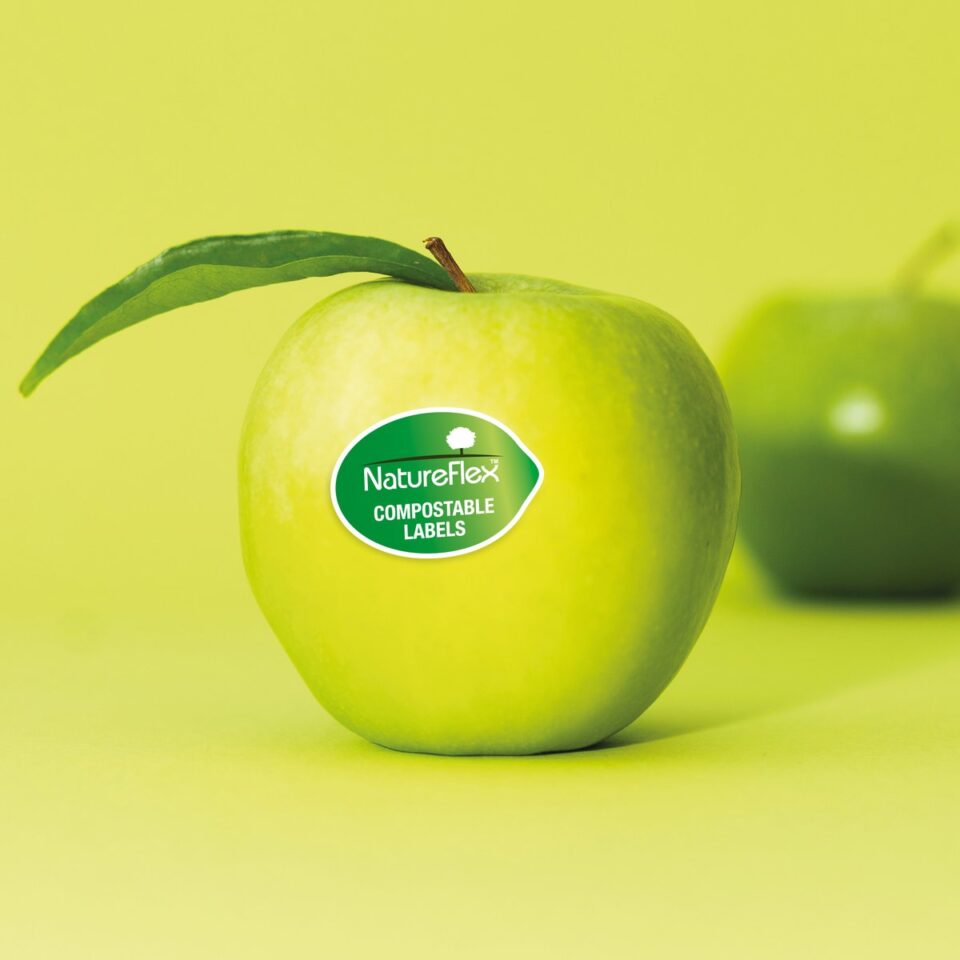
UK film manufacturer Futamura and Dutch labelstock specialist Bio4life have introduced a certified home and industrial compostable pressure-sensitive adhesive (PSA) label for fresh fruit and vegetables. The solution is designed to help retailers and packers replace conventional plastic stickers. Futamura contributes the home-compostable NatureFlex™ cellulose film facestock, while Bio4life supplies the certified home-compostable adhesive technology. Together, these components create a renewable, food-safe, high-performance label suitable for both home and industrial composting. The label can be used on a variety of fresh produce, including apples, citrus fruit, avocados and kiwis.
Conventional PSA labels typically contain fossil-derived plastics and non-compostable adhesives. When consumers discard these stickers with fruit and vegetable peelings, they can enter organic waste and anaerobic digestion streams. Because the labels are too small to remove efficiently, they may contaminate the resulting digestate. Conventional plastics and other non-degradable materials also fail to break down effectively in anaerobic conditions.
By contrast, NatureFlex™ films are compatible with anaerobic digestion and decompose during the process, helping to reduce contamination risks. This capability supports broader food and drink sustainability objectives and responds to changing food and drink consumer trends.
The combined compostable PSA label addresses the growing demand for responsible packaging across the food and beverage industry. Bio4life’s certified home and industrial compostable labelstock is engineered to maintain performance, print quality and efficient application. Made from renewable cellulose derived from responsibly managed wood pulp, NatureFlex™ films are available in clear, white and metallised formats to meet different brand and packaging requirements.
The films offer the mechanical strength required for reliable die-cutting and dispensing. Their greater stiffness compared with many other bio-based compostable materials enables thinner gauges without sacrificing machinability. They also deliver strong print performance for premium decorative finishes and provide effective adhesive anchorage. In addition, the cellulose structure is naturally anti-static, supporting smooth film handling during conversion. High resistance to oils and chemicals helps prevent migration through the label and protects its appearance and performance throughout its service life.
These developments reflect wider food manufacturing trends, food processing technology advances and food and drink industry innovation, as manufacturers seek practical alternatives to conventional plastics. They also align with emerging food distribution trends and evolving expectations around food and drink packaging.
The Packaging and Packaging Waste Regulation (PPWR) is scheduled to take effect on 12 February 2028, increasing pressure on the fresh produce sector to adopt compliant compostable labels. With only one harvest cycle remaining for trials and validation, producers, packers, retailers and suppliers must work closely to qualify solutions before the regulation applies. Early collaboration will be essential for meeting food and drink regulations while maintaining efficient operations and consistent product presentation.
Gerard Benthem, Sales Manager at Futamura commented: “compostable fruit and vegetable labels are a great innovation that supports a truly circular economy. Bio4life and Futamura have a shared vision for the future of labelling, and we hope to help brands and retailers’ transition away from conventional plastics to renewable and compostable label materials.”
Marcel de Oude, Co-owner of Bio4life states: “Our home compostable adhesive technology BioTAK® is designed to work hand-in-hand with renewable home compostable substrates like NatureFlex™. This partnership showcases how collaboration can accelerate the shift toward packaging that supports a circular economy. We’re proud to bring this innovation to market with Futamura.”
Effective communication of these advances will also support food and drink marketing strategies, enabling brands to demonstrate measurable progress in packaging sustainability while responding to retailer requirements and consumer expectations.