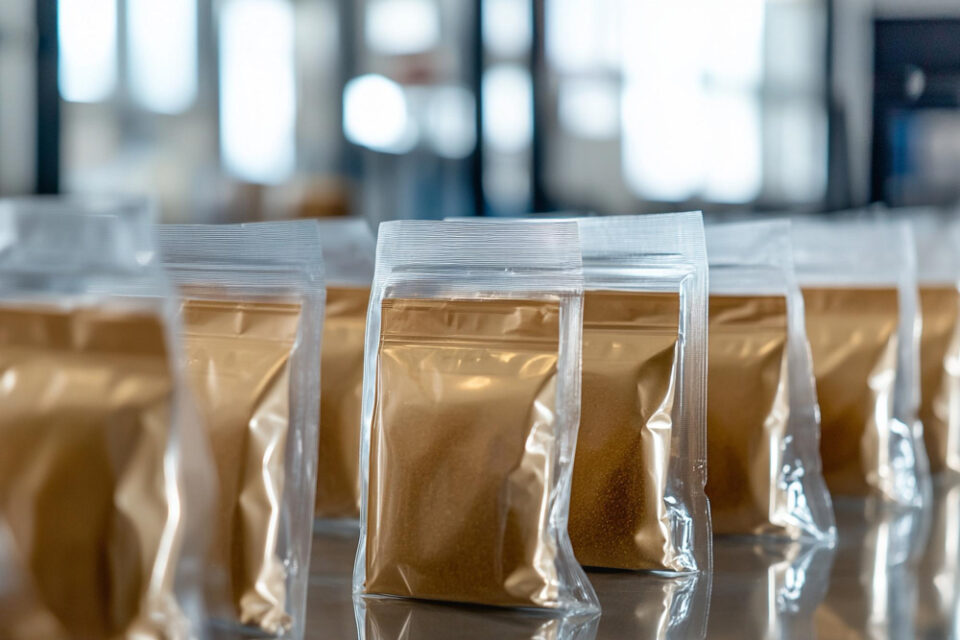
Organised by the Ellen MacArthur Foundation with support from (RE)SET, the consortium will target regions where flexible packaging is extensively used but inadequate collection and recycling infrastructure leaves it at risk of entering the environment.
The initiative aims to create new packaging formats that are compatible with future recycling systems and capable of biodegrading if they are accidentally discarded as litter.
Members will jointly develop, finance and conduct trials covering innovations including biodegradable coatings and other solutions designed to maintain product protection, extend shelf life and support consumer convenience. The group will also investigate ways to improve the performance of paper-based packaging on existing production lines.
Through shared R&D, the partners intend to bring ‘promising’ technologies to commercial scale more quickly and at a reduced cost, enabling consumers to access new packaging options sooner.
Although the work is collaborative, each company will establish its own approach and retain independent control over its packaging choices, based on its individual priorities and interests.
“Responsible paper-based flexible packaging solutions don’t yet exist at the performance, scale and cost required,” says Sander Defruyt, strategy lead for Plastics at the Ellen MacArthur Foundation. “This consortium signals strong demand for them – and real ambition from six consumer goods companies to help scale them.
“We’re inviting other FMCG companies, innovators, suppliers and investors to get involved now – the faster we develop such solutions, the sooner they reach the markets that need them most.”
“Our track record in running R&D consortia shows how they can speed up the path to solutions,” continues (RE)SET co-founder and CEO Frank Gana. “While participation in this consortium is voluntary and each member makes its own packaging decisions, this approach lets us develop and scale solutions faster and at lower cost – benefiting consumers, the environment, and the entire industry.”
Gilles Demaurex, head of Global Packaging Development at Nestlé, comments: “Nestlé believes that paper-based flexible packaging can play a valuable role in addressing virgin plastic reduction and minimising flexible packaging waste and pollution. By joining our efforts under the PaperFlex Consortium, promising paper innovations will be developed and deployed responsibly at scale faster and at lower cost.”
Allison Lin, global VP of Healthy Planet and Chief Circularity Officer at Mars, says: “The consortium challenges the traditional mindset of innovating on our own, demonstrating that partnership – structured with legal oversight, clear guardrails on permissible topics, and an independent third-party convenor – can accelerate the development of more sustainable packaging in ways that no single company could achieve alone.”
Pablo Costa, head of Packaging, Digital and Transformation, R&D at Unilever, adds: “At Unilever, we have made significant investments in packaging innovation. Our dedicated teams are accelerating the development of next-generation paper-based packaging that can be scaled while delivering the experience consumers expect.
“Through the consortium, we are helping bring together the expertise, investment and shared learning needed to accelerate innovation and support a responsible transition at scale.”
A recent Ellen MacArthur Foundation report identifies sachets, pouches, wrappers and similar plastic flexible packaging as the world’s fastest-expanding plastic category. It also describes these formats as a significant source of pollution, particularly in countries where formal waste collection and recycling infrastructure remains limited.
Small flexible packs, used across product categories including snack foods and shampoo, are identified as a systemic obstacle in the Foundation’s 2030 Plastics Agenda for Business.
According to the Foundation, paper-based packaging alternatives can ‘more easily’ be engineered for both recycling and biodegradability. That could make them particularly useful in markets where discarded flexible packaging is more likely to reach the natural environment.
Separately, BIOWRAP, an international consortium and EU flagship project, was recently established to commercialise the ‘first’ fully paper-based bubble wrap. Its objectives include replacing more than 100 million square metres of plastic bubble wrap within five years after the project ends and achieving a paper recycling material recovery rate of at least 90%.