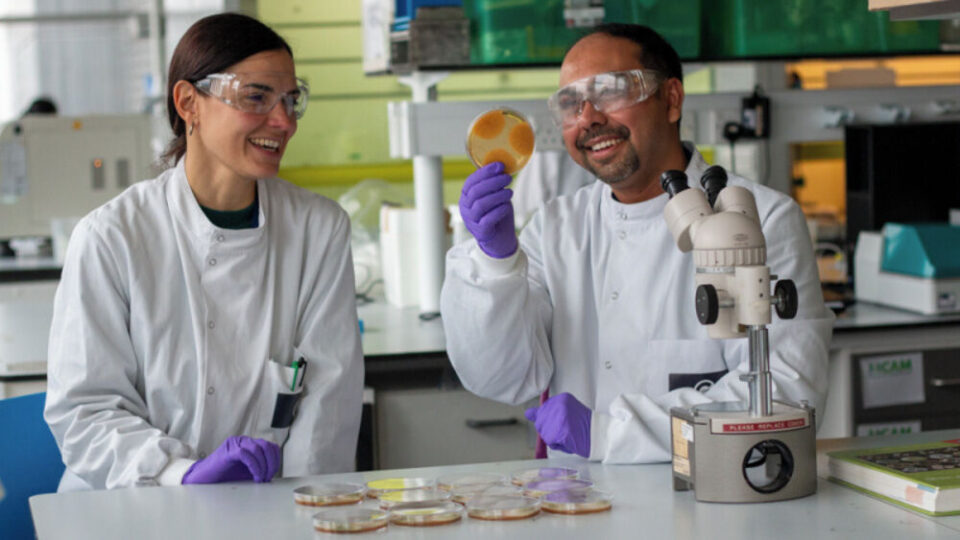
Researchers at Cranfield University are examining whether naturally occurring fungi could make ovotransferrin, a high-value egg protein, without using chickens. The proof-of-concept study is intended to support a more secure and sustainable source of the ingredient.
Addressing supply challenges
Ovotransferrin occurs naturally in egg whites. Cranfield describes it as a protein with antimicrobial and iron-binding capabilities, making it valuable in applications including functional foods and dietary supplements.
At present, manufacturers obtain ovotransferrin from chicken eggs. Consequently, availability can be disrupted by avian flu, higher production costs and growing environmental pressures. Developing alternative methods could work alongside conventional farming and strengthen ingredient supply resilience.
The research reflects several food and beverage industry trends, including the search for dependable protein sources, more sustainable production models and advances in food manufacturing trends. It also demonstrates how food processing technology is expanding beyond traditional agricultural supply chains.
Using fungi for protein production
The team is focusing on filamentous fungi, microorganisms already established in biotechnology for producing commercially useful compounds. Working with specially engineered strains, the researchers will assess whether the fungi can generate ovotransferrin through precision fermentation.
Inside controlled fermentation tanks, the organisms are expected to function as “tiny protein factories”, producing the target protein without chickens. The initial objective is to validate the process and create a platform that could eventually support larger-scale production and commercialisation.
Collaboration across research and industry
The National Alternative Protein Innovation Centre (NAPIC) is funding the work. The partnership includes specialists from Cranfield University’s Magan Centre of Applied Mycology (MCAM) and biotechnology business HyphaPro.
Dr Abhishek Baghela, a senior lecturer at Cranfield University, is leading the project. Dr Carla Cervini, also a Cranfield lecturer, is supporting the research alongside Dr Andrew J. Foster, director of HyphaPro.
Dr Baghela said: “As demand grows for sustainable ingredients, we need to explore new ways to produce valuable proteins without putting additional pressure on our traditional food systems.”
He added: “Through this project we aim to demonstrate the potential of fungal precision fermentation to manufacture high-value functional ingredients. It’s an exciting opportunity to bring together fungal biotechnology and food sciences to develop new approaches for the alternative protein sector.”
Building a more resilient supply chain
For producers of supplements and functional foods, a key benefit of the research is the possibility of reducing exposure to disruptions in the egg supply chain. Bird flu, rising input costs and environmental concerns can all affect conventional production, whereas fermentation would produce ovotransferrin without depending on poultry. Cranfield presents the technology as an additional option for the sector, not as a substitute for established farming.
A successful proof of concept could lead to further process development, scale-up and commercial applications. The platform may also be adaptable to other high-value proteins, increasing its potential impact across the food and drink industry innovation landscape.
Such developments align with wider food distribution trends and food and drink sustainability priorities by creating more flexible routes to essential ingredients. As food and drink consumer trends evolve, manufacturers will also need to consider food and drink regulations, food and drink packaging requirements, and the role of food and drink marketing in communicating new production methods. Together, these considerations will shape how precision-fermented ingredients enter the market.