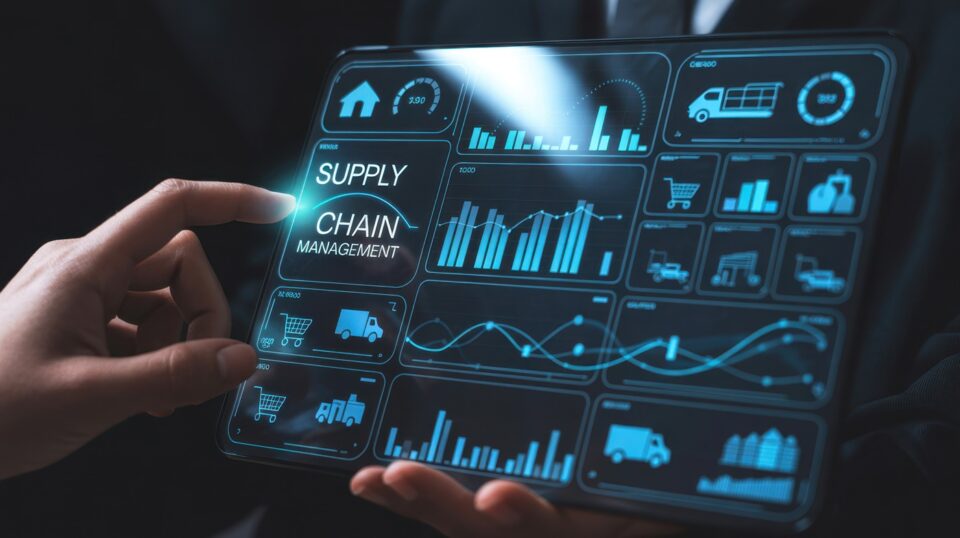
Industry Insight: As of 2026, food manufacturers must operate supply chains that can deliver verified traceability data within 24 hours, meet new EU packaging rules from August 2026, and prove deforestation-free sourcing for key commodities. Supply chain performance is no longer judged by speed alone, but by compliance, visibility and resilience.
Global food and beverage supply chains have entered a new phase. Disruption has not disappeared—but it is no longer the defining challenge. Instead, 2026 marks the point where regulation, digital integration and structural cost pressures have become the dominant forces shaping how goods move from source to shelf.
For manufacturers, the shift is profound. Supply chains are no longer simply logistical networks—they are now data-driven compliance systems.
From Disruption to Structural Cost Pressure
Over the past two years, tariffs and geopolitical instability have embedded themselves into the cost base of global trade. What was once seen as temporary volatility is now a permanent feature of the market.
Ongoing disruption to critical routes, including the Strait of Hormuz, continues to influence fuel and fertiliser costs, with knock-on effects across food production and distribution. At the same time, global tariff structures are beginning to fully materialise in pricing, with 2026 expected to be the year these costs are passed more visibly through the supply chain.
For food and beverage manufacturers, this creates a new operational reality: cost predictability is decreasing, while cost exposure is increasing.

Regulation Moves to the Centre of the Supply Chain
The most significant shift in 2026 is the transition from regulatory awareness to regulatory enforcement.
The EU Packaging and Packaging Waste Regulation (PPWR) is now firmly in focus, with major obligations beginning in August 2026. Harmonised labelling requirements will require packaging formats to carry consistent material identification across all EU member states, placing new pressure on packaging design, production and data systems.
At the same time, the EU Deforestation Regulation (EUDR) is transforming sourcing requirements. Manufacturers placing products linked to commodities such as palm oil, cocoa, soy and coffee on the EU market must now demonstrate that these goods are deforestation-free and fully traceable to their origin. This introduces a level of supply chain transparency that requires not only documentation, but verifiable geolocation data.
For exporters to the United States, the Food Safety Modernization Act (FSMA) Rule 204 has introduced equally stringent demands. The requirement to provide traceability data within 24 hours fundamentally changes how information is captured and stored. Manual processes and disconnected systems are no longer viable—compliance now depends on digitally integrated supply chains.
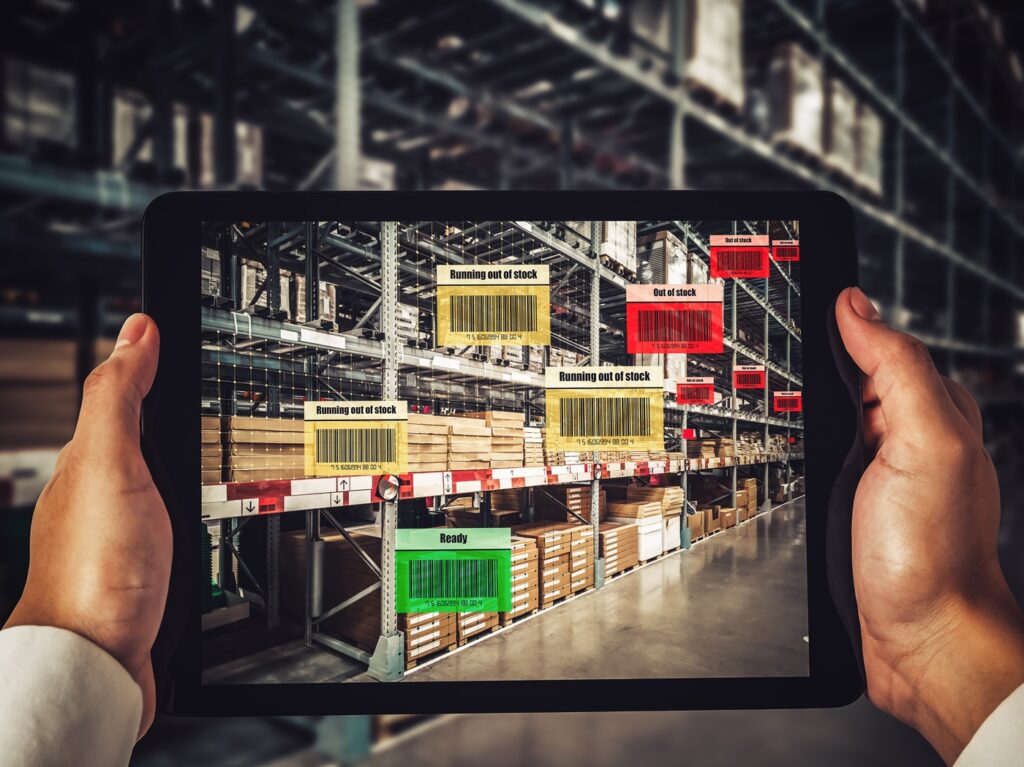
From Visibility to Autonomous Orchestration
While previous supply chain strategies focused on visibility—tracking shipments and monitoring conditions—the current shift is towards automation and orchestration.
Artificial intelligence is now embedded directly into ERP platforms such as Microsoft Dynamics 365 and Aptean, allowing businesses to connect logistics, finance and quality data in real time.
This integration enables systems to automatically respond to disruption. For example, if a refrigerated shipment deviates from its required temperature, IoT sensor data can trigger alerts, adjust inventory allocations and even initiate insurance or compliance workflows without manual intervention.
Digital twins are also becoming a critical tool. By modelling supply chains in a virtual environment, manufacturers can simulate disruption scenarios—such as port closures or transport delays—and understand their impact before they occur. This allows for proactive decision-making, including inventory buffering and supplier switching, rather than reactive rerouting.
At the same time, autonomous order management platforms are streamlining the flow of goods by automatically validating incoming orders, flagging discrepancies and reducing delays at key handover points.
Sustainability Becomes a Cost Lever
Sustainability is no longer a parallel objective—it is now embedded within financial performance.
Mechanisms such as carbon border adjustment policies are beginning to link emissions directly to import costs, while extended producer responsibility schemes continue to shift the financial burden of packaging waste onto manufacturers. In the UK, upcoming pEPR reforms will further reinforce this trend by linking packaging design to cost through recyclability ratings.
For supply chains, this means efficiency is no longer just operational—it is economic. Optimised transport routes, energy-efficient cold chain systems and reduced product waste all directly contribute to cost control.
Packaging is playing an increasingly active role in this shift. Smart and active packaging technologies are enabling real-time monitoring of temperature, humidity and product integrity, helping to reduce spoilage and improve traceability. For perishable goods, this provides an additional layer of protection against both financial loss and compliance risk.
The Rise of Regional Supply Chain Strategies
Alongside regulatory and technological change, there is a clear structural shift in how supply chains are configured.
The traditional model of global, just-in-time sourcing is giving way to more regionalised networks. Manufacturers are investing in distribution hubs closer to key markets, reducing reliance on long-haul transport and improving responsiveness to disruption.
This “just-in-case” approach reflects a growing recognition that resilience carries value. While regionalisation may increase certain costs, it reduces exposure to delays, shortages and compliance failures.
The Next Phase: Intelligent, Connected Supply Chains
Looking ahead, the future of food and beverage logistics will not be defined by faster transport or larger warehouses, but by smarter systems.
Supply chains are becoming intelligent ecosystems, where data flows seamlessly between suppliers, manufacturers, logistics providers and regulators. Decisions are increasingly automated, risks are modelled in advance and compliance is built into every stage of the process.
For manufacturers, the priority is clear. Investment in digital infrastructure, traceability systems and integrated platforms is no longer optional—it is essential for maintaining competitiveness in a regulated, cost-sensitive and disruption-prone environment.
Can we still use manual spreadsheets for FSMA 204?
Technically yes, but practically no. With the 24-hour response mandate, manual retrieval across global partners usually fails the timeframe, leading to immediate compliance risks.
What is the biggest supply chain challenge for food manufacturers in 2026?
The biggest challenge is meeting strict regulatory requirements while managing rising costs and ongoing disruption, particularly around traceability, sustainability and global trade complexity.
What is PPWR and why does it matter?
The EU Packaging and Packaging Waste Regulation introduces harmonised labelling and recyclability requirements, with major obligations starting in August 2026, directly impacting packaging design and compliance.
How does FSMA Rule 204 affect supply chains?
FSMA Rule 204 requires companies to provide traceability data within 24 hours, forcing a shift towards fully digital, integrated record-keeping systems.
What is the EU Deforestation Regulation (EUDR)?
EUDR requires companies to prove that certain commodities are deforestation-free and traceable to origin, significantly increasing supply chain transparency requirements.
How is AI being used in food supply chains?
AI is now used to automate logistics decisions, predict disruptions, manage orders and integrate supply chain data across ERP systems in real time.