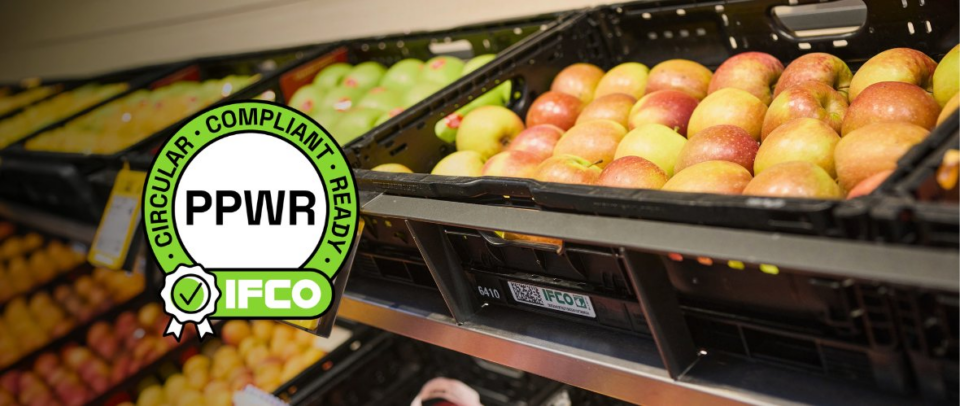
IFCO stands out as a prominent global provider of reusable packaging containers (RPCs) and packaging solutions, helping retailers, producers, and growers navigate the EU Packaging and Packaging Waste Regulation (PPWR) alongside essential food-contact and chemical-safety standards.
Starting from 12 August 2026, all manufacturers will be required to have a written Declaration of Conformity for each type of packaging they introduce into the EU market. IFCO’s Declaration of Conformity offers vital technical information and assertions to assist customers and pooling partners in adhering to the PPWR compliance processes.
Robust Circular Infrastructure in Action
Since 1992, IFCO has championed a model focused on share, reuse, and recycling. In 2025 alone, the company registered over 1.9 billion cycles in Europe, demonstrated by RPC scans at its service centers. This trajectory confirms that large-scale, high-volume circular reuse is a practical business operation rather than a future aspiration.
“PPWR sets mandatory targets for diminishing packaging waste across Europe and signifies a crucial advancement toward a more circular packaging framework. While regulations may introduce complexities for some, for IFCO’s clients, this validates the direction we’ve been pursuing for years: substituting single-use packaging with reusable options. We already possess the scalable infrastructure necessary for a sustainable fresh grocery supply chain,” stated Mike Pooley, CEO of IFCO.
Opting for IFCO’s reusable packaging containers provides several key advantages:
- Recycled Content: By the year 2040, the PPWR necessitates that certain plastic packaging types contain a minimum of 25% post-consumer recycled (PCR) content. In 2025, IFCO crates boasted an average of 39% recycled material, sourced from a verified closed-loop system and processed in accredited facilities utilizing a mass-balance methodology. Through the IFCO SmartCycle, RPCs are designed for durability, allowing for up to 120 uses. Upon removal from service, these RPCs are completely remanufactured into new, high-quality crates with zero waste ending up in landfills.
- Chemical Safety Assurance: IFCO’s RPCs comply with REACH regulations and are free from per- and polyfluoroalkyl substances (PFAS). Notably, IFCO’s European Lift Lock RPCs received a recertification in 2026, attaining the Cradle to Cradle Certified® Full Scope Silver designation. This certification highlights performance across pivotal sustainability dimensions, including material safety, circularity, and social fairness.
- Food Safety and Hygiene: To align with hygiene and food-contact requirements, IFCO RPCs undergo an industrial washing and disinfection process, supported by rigorous quality controls and validated by third-party auditors. This process ensures effective eradication of microbiological contaminants, averting the transfer of harmful residues to fresh produce.
IFCO’s value proposition extends beyond mere regulatory compliance and a sustainable reuse system, combining independently confirmed environmental performance with cutting-edge digital capabilities.
Verified Environmental Benefits
Peer-reviewed Life Cycle Assessments (LCA) and distinct food waste studies have scientifically established the environmental advantages of the IFCO SmartCycle. Compared to single-use cardboard packaging, IFCO RPCs can potentially generate up to 62% less CO₂e, use up to 80% less water, consume 64% less energy, and create up to 96% less waste.
A 2025 study conducted by Fraunhofer IML indicated that adopting reusable packaging containers could reduce damage to fresh produce by as much as 98%, presenting substantial cost-saving and waste reduction opportunities in the fruit and vegetable sectors.
Incorporating Digital Traceability
The PPWR mandates that reusable packaging systems must facilitate collection, necessary reconditioning, and reintegration into circulation. IFCO’s pooling model adheres to these standards by meticulously documenting reuse cycles and packaging movements within the fresh grocery supply chain.
Beyond ensuring compliance, IFCO’s digital capabilities add additional value and operational insight. Through a Tracking-as-a-Service (TaaS) approach, IFCO integrates permanent digital identities—like BLE tags, RFID, and GRAIs—into its assets. This digital enhancement grants partners enhanced oversight throughout the supply chain, enabling them to monitor temperature, track transit times, identify inefficiencies, and optimize order management without necessitating costly scanners or complex infrastructures on their end.
“The EU PPWR targets should not be considered an obstacle, but rather a driving force for meaningful supply chain transformation,” remarked Íñigo Canalejo, Chief Sustainability Officer at IFCO. “What makes the IFCO SmartCycle model particularly effective is its simplicity: blending reusable packaging, circular infrastructure, traceability, and operational scalability into one cohesive system. Partnering with IFCO enables businesses to achieve regulatory compliance, advance sustainability objectives, and reduce supply chain expenses without facing operational disruptions or complicated infrastructure alterations.”
For further information, visit www.ifco.com or connect with us on LinkedIn @IFCO SYSTEMS.