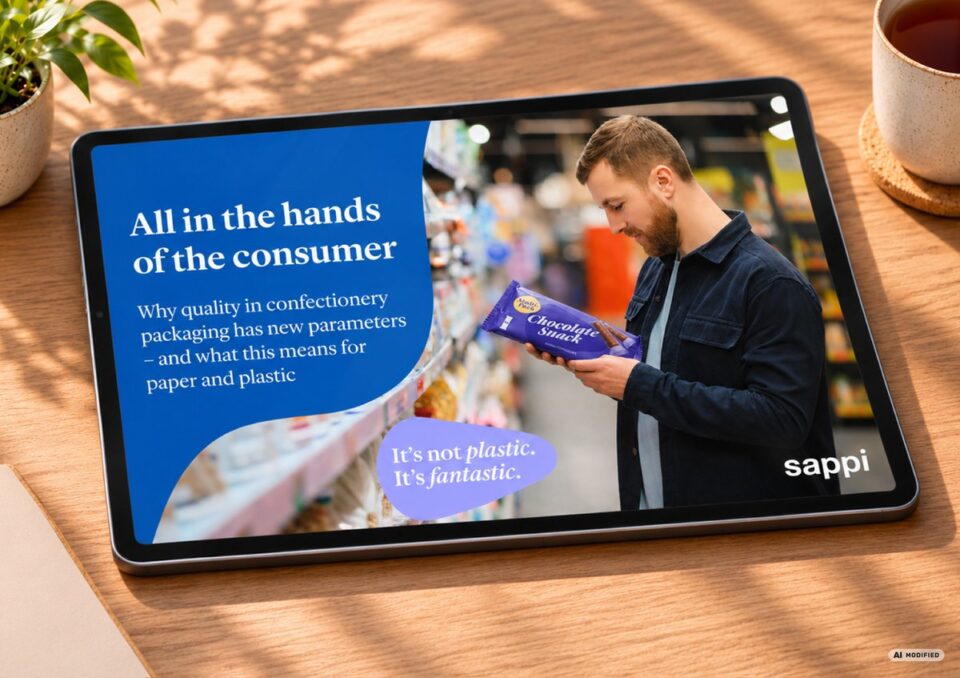
For confectionery brands, packaging material can significantly influence how consumers judge product quality. Research indicates that paper-based packs are often associated with premium products. Sappi’s new white paper, All in the hands of the consumer, explores how this perception can create brand value while addressing the technical, environmental and regulatory factors behind packaging decisions.
Packaging shapes the product experience
Consumers encounter a chocolate bar’s packaging before they taste what is inside. Colour, surface texture and finish establish expectations, and these visual and tactile signals can affect the overall eating experience. Research conducted by the University of Melbourne found that participants perceived identical chocolate differently when it was presented in different wrappers.
Sappi’s white paper identifies another important connection: shoppers are increasingly using the packaging material itself as an indicator of product quality.
In research from Aarhus University, participants rated identical products more highly when they appeared in paper packaging instead of plastic. Their view of paper as a more sustainable option influenced their perception of the product contained within it.
For confectionery manufacturers, this creates a compelling reason to consider paper-based formats. Paper can support environmental positioning while also strengthening the premium appeal that remains central to chocolate and sugar confectionery brands.
Paper packaging does not have to look plain or understated. Current packaging papers can incorporate high-gloss finishes, metallic effects and tactile surfaces. As a result, brands can maintain distinctive visual identities while progressing towards recyclable packaging solutions and responding to wider food and drink packaging expectations.
Sustainability is becoming part of perceived quality
Consumers now assess packaging beyond its appearance. After enjoying a product, they may consider whether the wrapper can be recycled, how easily it can be disposed of and whether it reflects the manufacturer’s environmental commitments. These considerations are increasingly connected to food and drink sustainability and broader food and drink consumer trends.
That shift forms the basis of Sappi’s new white paper, All in the hands of the consumer. The report considers how sustainability has joined product protection and shelf appeal as a defining element of high-quality confectionery packaging.
Consumer expectations are already affecting brand choice. Pro Carton’s 2026 European Consumer Packaging Perceptions Survey reported that more than one-third of shoppers had changed brands because of packaging-related concerns. The proportion increased to 54% among consumers aged 18 to 29.
At the same time, shoppers are becoming more cautious about unsubstantiated environmental messaging. Attractive design and general sustainability statements are no longer sufficient. Brands require packaging materials and technical solutions that enable specific, transparent and credible recyclability claims—an increasingly important consideration across food and drink marketing.
Turning expectations into reliable packaging performance
Meeting consumer demand presents practical requirements for confectionery producers.
Chocolate packaging must preserve freshness, flavour and product integrity. Twist-wrapped sweets need a substrate that protects the confectionery and retains its form. In every case, the selected material must operate consistently on existing or adapted packaging equipment.
Moving from plastic or waxed structures to paper is therefore not a simple one-for-one substitution. Manufacturers must identify the protection requirements of each product and confirm that the finished pack performs throughout manufacturing, distribution and its intended shelf life. These decisions reflect wider food manufacturing trends, where material efficiency and product performance must advance together.
Functional barrier papers can help meet these demands. Sappi has more than 15 years of experience in developing such materials and collaborates with brand owners, converters and machinery manufacturers to tailor paper solutions to individual applications. This combination of material expertise and food processing technology support can help reduce risk during packaging transitions.
For example, Sappi’s Guard Twist paper provides grease resistance and a glossy surface for twist-wrapped confectionery. It offers a recyclable alternative to traditional waxed papers and plastic-based constructions while retaining the premium appearance expected by chocolate and sweets brands.
Nevertheless, successful implementation depends on thorough validation. Sappi’s Step by step guide explains that moving to fibre-based flexible packaging generally takes between 12 and 24 months. Manufacturers use this period to assess materials, refine machine settings and verify product protection, line performance and recyclability.
PPWR and evolving regulation add another layer to packaging value
The financial case for paper packaging involves more than the purchase price of the material. The EU’s Packaging and Packaging Waste Regulation (PPWR) is now in application, while other markets continue to introduce or develop their own requirements. Confectionery producers must therefore evaluate changing recyclability obligations alongside recycling fees, compliance costs and manufacturing efficiency.
Assessing the total cost of ownership rather than comparing price per square metre alone can produce a different result when paper is measured against conventional plastic structures. This broader evaluation is increasingly relevant as food and drink regulations influence packaging design, sourcing and end-of-life outcomes.
Confectionery brands must balance several priorities at once. Packaging needs to protect the product, attract shoppers and perform efficiently, while also meeting stronger expectations around sustainability and recyclability. As All in the hands of the consumer demonstrates, these objectives are becoming closely linked. With suitable paper technology and expert technical support, manufacturers can adapt to changing food and beverage industry trends without compromising the protection, presentation or quality that consumers expect.
Download the White Paper here and contact us to learn more.