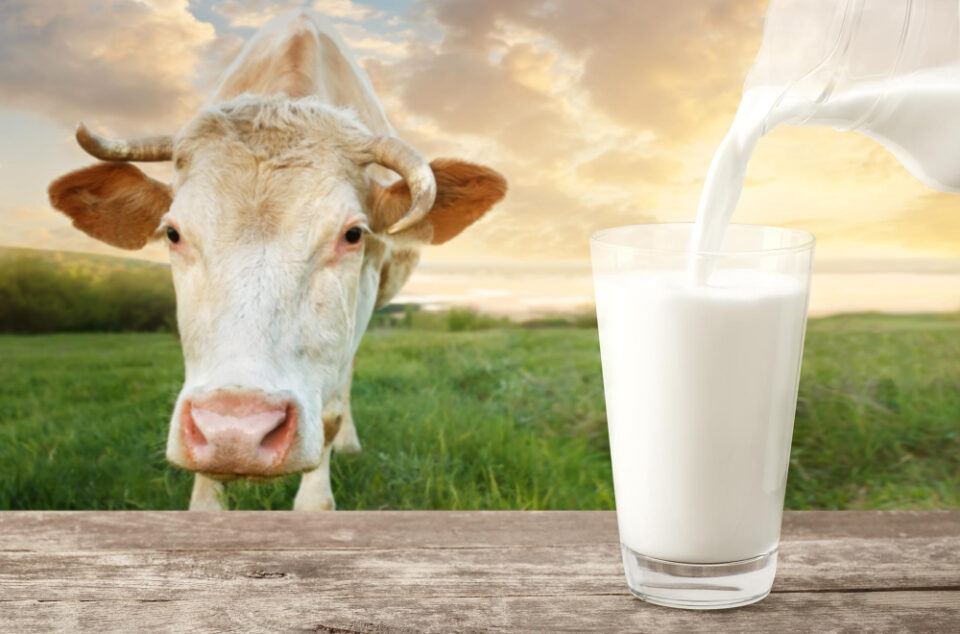
Cows’ milk volumes have returned to growth for the first time in over three years, according to new AHDB retail data. The figures indicate that dairy is strengthening its position across supermarkets, led by younger shoppers and consumers seeking health-oriented yoghurt products.
Milk moves back into positive territory
In the 12 weeks to 31 October 2026, volumes across cows’ dairy increased by 1.1% compared with the same period a year earlier. Gains in milk, cheese, yoghurt and cream outweighed a decline in butter, while total spending on cows’ dairy rose by 1.5%.
Milk delivered the most significant development. Volumes grew by 0.2% year on year, bringing an end to more than three years of sustained decline. Although the increase remains limited, it represents an important shift for a category that has experienced prolonged contraction.
Whole milk continued to perform particularly well, with volumes rising 3.6%.
Younger shoppers support whole milk growth
Consumers aged under 35 made a notable contribution to the result, purchasing almost seven million additional litres of whole milk compared with the previous year.
Paul Flanagan, AHDB dairy sector director, said: “These figures are really encouraging for our dairy levy payers. Seeing overall dairy volumes growing and, importantly, milk returning to growth after more than three years shows there is still strong consumer appetite for dairy products.
“The increase among younger shoppers is especially encouraging and reinforces why AHDB is investing levy payer funds in reaching this audience through our ‘Milk Every Moment’ campaign. Aimed at students and the wider Gen Z audience, it positions milk as an affordable, natural source of high-quality protein that can support an active lifestyle.”
The findings reflect wider food and drink consumer trends, with affordability, nutrition and protein increasingly influencing purchasing decisions. They also provide useful direction for food and drink marketing strategies aimed at younger audiences.
Cheese remains resilient as yoghurt accelerates
Cheese maintained its upward trajectory, recording a 1.6% increase in volume. Cottage cheese, soft white cheese and grated cheese blends were among the strongest performers.
Yoghurt was the fastest-growing dairy category. Combined volumes for cows’ yoghurt, yoghurt drinks and fromage frais climbed 7.3%, while value sales rose 9.6%. Health-led products accounted for much of the expansion:
– Standard plain yoghurt increased by 22.5%.
– Healthy yoghurt grew by 15%.
– Fat-free yoghurt rose by 10.1%.
– Probiotic yoghurt advanced by 9.1%.
These results highlight how food manufacturing trends and food processing technology are supporting product development around wellness, convenience and functional nutrition. They also demonstrate how food and drink industry innovation is helping dairy brands respond to changing expectations.
Dairy price inflation begins to ease
The data suggests retail pricing is beginning to reflect developments elsewhere in the supply chain. Average prices paid for cows’ dairy products rose by only 0.4% year on year, marking the smallest increase in more than three years.
The moderation will be relevant to retailers, manufacturers and suppliers managing food distribution trends, while ongoing food and drink regulations, sustainability commitments and food and drink packaging requirements continue to shape costs throughout the category.
A modest increase with wider significance
A 0.2% rise in milk volume may appear marginal, but it carries considerable importance for a sector that has seen demand fall for more than three years. More meaningful indicators emerge from the detail: whole milk is growing at 3.6%, under-35s are driving part of that performance, and shoppers are increasingly choosing plain, healthy, probiotic and fat-free yoghurt products.
Together, these developments suggest that consumers are turning to dairy because of its perceived health, nutrition and protein benefits. That positioning closely supports the direction of AHDB’s Milk Every Moment campaign.
Flanagan framed the results as evidence of opportunity. “For levy payers, growing consumer demand matters,” he said. “These results underline the opportunities for dairy and the importance of AHDB’s work to understand changing consumer behaviour, identify where future demand lies and use those insights to help the sector build and protect demand for British dairy.”
Butter volumes remain under pressure, and milk’s return to growth is still at an early stage. The priority now is to convert this initial improvement into a lasting recovery, while aligning dairy production and promotion with broader food and drink sustainability priorities and evolving market demand.