

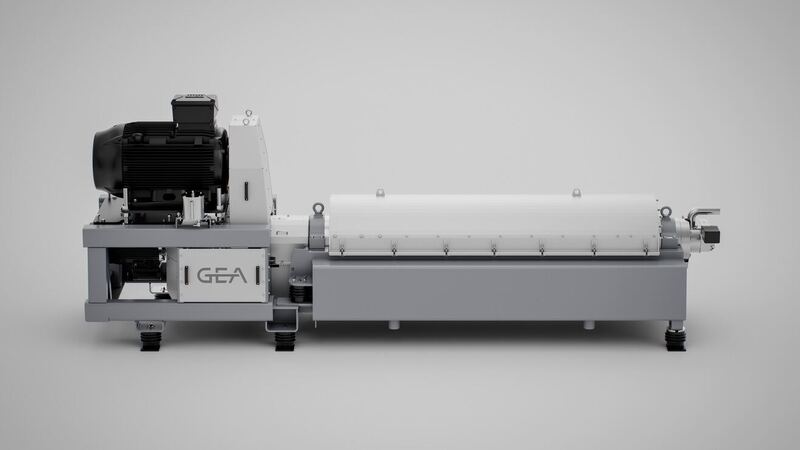
The system is available for all GEA decanters ranging from CF 3000 to CF 8000 and is suitable for both two-phase and three-phase processes, regardless of decanter size. Image: GEA
GEA has launched Varipond C, an innovative technical solution designed for decanter centrifuges. This system allows for straightforward, rapid, and precise adjustments of the separation zone and pond depth.
Varipond C ensures consistent separation results, offering high product yield and quality across various applications, including beverage, food, and edible oil production, as well as in refineries. Moreover, it contributes to a significant reduction in energy consumption by approximately 30% when compared to traditional centripetal pumps. This versatile system is compatible with all GEA decanters, specifically models CF 3000 to CF 8000, and accommodates both two-phase and three-phase processes. This adaptability is crucial for users addressing varying feed conditions, flow rates, or different starting materials.
Factors such as weather conditions and processing times influence the water, oil, and solids content. To maintain consistent separation results, the separation zone within the decanter requires continuous adjustment. With GEA Varipond C, users can perform this adjustment either manually or through automated processes during operation, ensuring production remains uninterrupted. As a result, pond depth and separation quality can be optimized at any time without sacrificing the yield and quality of solid and liquid phases.
With Varipond C, the pond depth and separation zone can be accurately fine-tuned using either a manual handwheel or an automatic servomotor. This feature allows for optimal adaptation of the separation process to varying operational conditions. Additionally, the system’s design minimizes energy consumption by about 30% in comparison to conventional centripetal pumps due to reduced friction. Its food-grade design facilitates full CIP cleaning of the Varipond chamber and employs food-grade lubricants, seals, and materials.
Varipond C can be paired with hydrohermetic sealing to inhibit oxygen intake, thereby reducing product oxidation and enhancing quality, particularly beneficial for the beverage industry.
Furthermore, integrated with a pre-installed IoT gateway and connected to GEA Cloud, Varipond C enables comprehensive process optimization. GEA Cloud Services gather process and machine data, offering dashboards for both real-time and historical analysis. This data allows for the optimization of Varipond C settings according to various feed conditions and enables users to store recipes and operational guidelines, ensuring optimal settings are easily reproducible.
The GEA Varipond C finds application in a broad array of processes requiring centripetal pumps within the food manufacturing landscape. Typical applications include:
- 2-phase / 3-phase wheat starch
- 2-phase / 3-phase animal fats and proteins
- 2-phase olive oil
- Vegetable-based drinks
- Fruit juice
- Oily water, sludge, and refinery oil water
Already, the system is successfully operational in the processing of starch, animal fats, and proteins.

