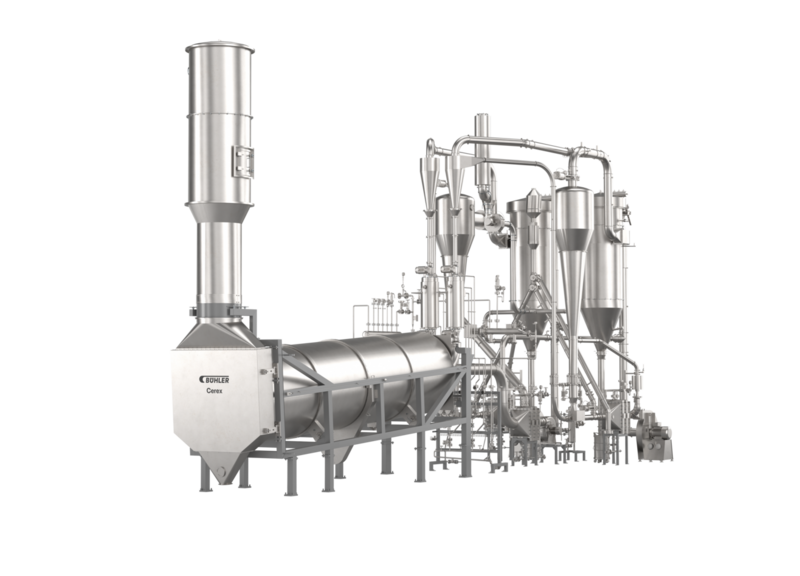
Cerex has sold puffing technology to Bühler, enhancing food manufacturing capabilities for feed, pet food, and various food applications. This strategic move aims to meet the increasing demand for healthier and more diverse food options.
“The puffing process is a game-changer in how we approach cereal and snack production, offering a broad range of recipe possibilities, including coatings and fillers across many product categories,” stated Christoph Vogel, head of business unit human nutrition at Bühler. “By integrating this technology into Bühler’s portfolio, we enhance our capacity to meet the evolving needs of our customers and foster ongoing innovation in recipe development.”
Recent trends show a significant increase in the demand for snacks, including bars, extruded snacks, nuts, seeds, popcorn, and plant-based alternatives like puffed oats. This growth is particularly evident among the working population and younger generations. The global ready-to-eat snack market is projected to expand at a compound annual growth rate (CAGR) of 9.7% from 2024 to 2031. With puffing technology, customers can swiftly adapt to these emerging consumer trends in food manufacturing.
Amid rising cocoa prices, the puffing technology enhances production efficiency by increasing volume and weight, reducing sugar content, and lowering production costs. Therefore, it supports customers in discovering new ways to optimize their processes while maintaining profitability, which is crucial for sustained business success.
Puffing is a hydrothermal process that applies heat and pressure to significantly expand the volume of raw materials. This method requires the material to contain 10-14% water and 65-75% starch, with protein and fat levels also influencing the outcome. The resultant puffed products offer various advantages. Their increased volume and porosity render them lighter and crispier—qualities highly sought after in snacks and cereals. Furthermore, the puffing process enhances digestibility by breaking down starches while improving shelf life, reducing moisture content, and preventing spoilage. It also enriches the nutritional profile, enabling easy fortification with vitamins, minerals, or proteins.
Puffed products are deemed healthy as they contain no added ingredients—only a single, natural component—and are available in white-label options. This technology is versatile, serving a wide range of products. In breakfast cereals, grains like rice, corn, wheat, or quinoa can be puffed to create expanded, crunchy textures that are ideal for morning meals.
In cereal bars, puffed grains contribute texture, visual appeal, and a distinctive crunch. Depending on the desired product structure, the grains may be mixed with melted chocolate or layered on top, providing an excellent balance of crunch and lightness. Additionally, puffing technology finds utility in dairy products, such as yogurt and ice cream, where puffed grains like quinoa, rice, or buckwheat serve as appealing crunchy toppings or mix-ins, enhancing both the eating experience and nutritional value.
The acquisition will not only bolster Bühler’s offerings but also improve the production efficiency and sustainability of its customers’ plants. Bühler’s Cerex puffing technology optimizes grain processing by achieving maximum yields of over 95%, thereby reducing waste while ensuring uniformity in puffing across all grain types. The system boasts remarkable energy efficiency, consuming 50% less energy compared to similar solutions—utilizing only 60 kilowatt-hours (kWh) per 100 kilograms (kg) of product instead of 120 kWh. Moreover, it guarantees a stable and industrial-grade puffing process compliant with stringent food safety regulations.
In April 2025, Bühler plans to inaugurate an Application & Training Center at its headquarters in Uzwil, Switzerland, dedicated to puffing technology. At this center, customers will have the opportunity to test new product recipes with ingredients such as pulses and develop innovative processes utilizing this technology.
“By incorporating advanced puffing technology, we confirm our commitment to innovation, addressing current market demands while anticipating future consumer trends,” remarked Christoph Vogel. “We are eager to engage with our customers about the extraordinary opportunities for integrating this solution into their facilities.”