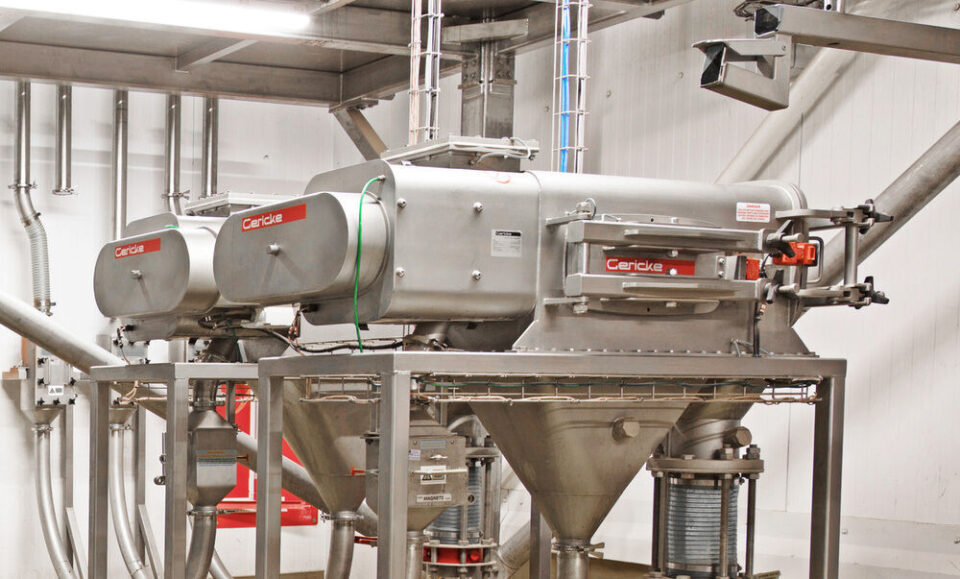
A recirculation and centrifugal sieving system can increase flour yield by more than 2%, reduce product waste, and strengthen ATEX-compliant safety across milling operations.
Approximately 200,000 industrial flour mills operate worldwide, with many facilities having served the market for decades. Together, these mills produce more than half a million tonnes of flour each year. Flour remains a fundamental ingredient in a broad range of products, including noodles, bread, cakes, custards, sauces, and many other food applications.
Flour milling operations must balance several priorities. Manufacturers need to maintain strict food quality standards, protect employees in environments where ATEX risks may exist, maximise production output, and maintain high processing speeds while limiting material losses. These priorities reflect wider food manufacturing trends, including the growing adoption of food processing technology that improves efficiency, traceability, and workplace safety.
Gericke has supported flour producers for decades and works with strategic partners to address the specific requirements of individual milling facilities. Recently, the Gericke UK team collaborated with a customer seeking to improve its flour production process. The existing line used multiple sifters, with oversized particles removed manually at approximately five grammes per batch per line. Although the quantity appeared small, the accumulated loss amounted to a truckload of flour every month.
After completing an engineering assessment and reviewing the process with the customer, Gericke proposed a simplified arrangement designed to increase throughput and return oversize material from the sifter to the production stream. The updated system also incorporated inspection magnets and dedicated chambers to support the investigation of foreign-body contamination and help identify its root cause.
The new redressing arrangement enabled the mill to use finer sieve hoses, improving finished-product quality and overall production efficiency. This approach also supports key food and beverage industry trends, including more effective resource utilisation and improved process control.
Following the process improvements and installation of the centrifugal sieve, the mill is saving more than 100 tonnes of product annually, while production yield has risen by over 2%. The system has also been fully configured for ATEX compliance and prepared for audit inspection. Improved safety performance comes partly from inspection chambers designed to make operation, access, and routine maintenance more ergonomic.
By reducing waste and recovering usable flour, the project supports food and drink sustainability while aligning with evolving food and drink regulations. It also demonstrates how practical food and drink industry innovation, alongside efficient food and drink packaging, distribution, marketing, and responses to changing food and drink consumer trends, can help manufacturers improve performance throughout the supply chain.