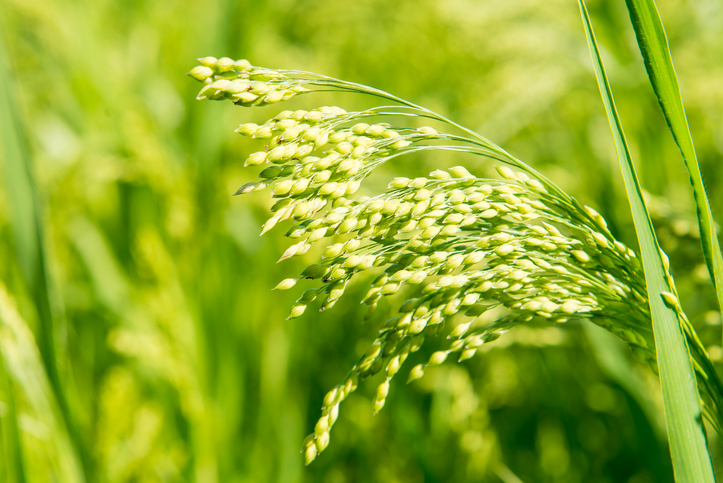
The Food & Agriculture Organisation (FAO) has declared 2023 as the year of the millets, highlighting the significance of these ancient grain varieties. Millets possess the unique ability to thrive in both poor and fertile soils, without depleting nutrients. This makes them an excellent option for countries aiming to enhance self-sufficiency and reduce reliance on imported cereal grains. Dr. Schär, a global gluten-free food producer, is actively responding to this call to action by investing in the development of VitaMi – Varietà Italiane di Miglio. This project aims to select new millet varieties that are well-suited to European soil and climatic conditions.
Millet, being naturally gluten-free, offers several health benefits. With its high fiber, calcium, and iron content, along with a relatively short growth cycle, millet provides a nutritious and sustainable food source. Additionally, millet exhibits tolerance to climatic stresses, such as heat and drought, as well as pests and diseases. These qualities not only make it an ideal choice for supporting diverse dietary needs but also present an opportunity for economic growth. Ombretta Polenghi, Director of Global Research & Innovation at Dr. Schär, explains that millet is a resilient crop that can adapt well to increasingly critical climatic conditions in Italy and Europe. Thus, VitaMi aims to develop new high-quality millet varieties that possess improved agronomic, technological, and nutritional characteristics, catering to both the changing environment and the dietary preferences of consumers adhering to gluten-free diets.
While millets offer numerous health benefits, they also contain antinutrients like phytic acid, which can hinder the absorption of other nutrients in the body. However, these antinutrients are mainly present in millet hulls, which are removed before human consumption. A person with a balanced diet is unlikely to experience adverse effects from consuming millets. Furthermore, Dr. Schär has selected proso millet, which has one of the lowest phytate contents, for its cultivation. Notably, proso millet is highly tolerant to drought conditions and heatwaves, making it particularly suitable for the increasingly frequent climatic challenges of Southern Europe.
So, why has millet regained the attention of growers? Millets’ ability to grow in both poor and fertile soils, while preserving soil nutrients, makes them valuable for reducing soil degradation, supporting biodiversity, and promoting sustainable land restoration. Furthermore, being naturally gluten-free with high fiber, calcium, and iron content, millets contribute to a nutritious and sustainable food source. Additionally, millets can be grown on marginal land without displacing other crops. In a world that aims for food security while facing grain shortages due to conflicts and climate change, millets can play a significant role in meeting these challenges.
Despite its recent decline in popularity, millet has a rich history. Consumed by humans for thousands of years, millets played a vital role in the development of multi-crop agriculture and settled farming societies, forming the foundation of human civilization. Silvano Ciani, Global R&I Manager at Dr. Schär, explains that proso millet was a part of the southern European diet until it was substituted by corn and maize in the early 1900s. Modern farming practices favored the increased productivity of corn and wheat, resulting in the abandonment of millet cultivation. Corn and wheat can yield up to 20 tonnes per hectare in the most productive environments, compared to only two tonnes per hectare of millet. To rectify this, Dr. Schär has initiated a breeding project to select new millet varieties that are well-adapted to their growing environments. The breeding project, which began in 2020 in Italy and Poland, is expected to significantly increase millet yields.
Currently, the project is in its initial stages of field trials, selection, and evaluation of the best millet lines. Approximately 6,000 millet lines from four different crosses have been cultivated, with 1,000 plants selected for further evaluation in the field. Over the next few years, a thorough and meticulous analysis process will be undertaken. The goal is to distribute the first seed to farmers by 2025 and make it a part of the supply chain by 2026.
Dr. Schär emphasizes the importance of preserving biodiversity, as 40% of plant species are currently at risk of extinction due to factors like rapid climate change, drought, deforestation, urbanization, pollution, and intensive monoculture. Hence, Dr. Schär, along with other large producers, is committed to protecting and promoting minor crops such as sorghum, buckwheat, and millet. Ultimately, the project aims to obtain new high-quality millet varieties that possess improved agronomic, technological, and nutritional characteristics, ensuring they can meet the demands of an ever-changing environment and contribute to the supply chain.