

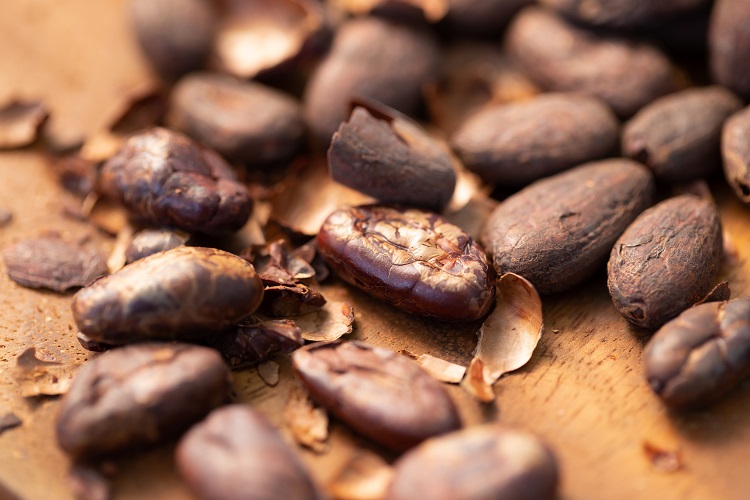
Fertilisers are extensively utilized in agriculture to enhance productivity, but they have a detrimental impact on the environment. Recent research suggests that the production and use of conventional fertilisers contribute to approximately 5% of global greenhouse gas emissions. In response to this issue, Nestlé UK & Ireland and agribusiness major Cargill, in collaboration with CCm Technologies, are spearheading a new project to revolutionize conventional fertiliser production using cocoa shells.
Cocoa shells, which are the main waste product of cocoa, are typically discarded or used as animal feed. However, research has shown that cocoa shells can be repurposed into valuable resources such as food additives, biofuels, and even fertilisers. In this innovative project, the mineral nitrogen found in traditional fertilisers is being replaced with naturally organic nitrogen levels derived from cocoa shells.
Cargill is supplying cocoa shells to CCm Technologies, based in Swindon, who have successfully processed and pelletised a trial volume of cocoa shells into fertiliser. Over the course of two years, Cargill and Nestlé will assess the impact of this low carbon fertiliser on crop production, soil health, and greenhouse gas emissions reduction.
The trials, overseen by Fera Science Ltd in York, are currently being conducted on arable farms in Suffolk and Northamptonshire that supply Nestlé with wheat. These trials will evaluate the effects on soil diversity and greenhouse gas emissions compared to conventional fertilisers used on the same farms.
If the trial proves successful, it is estimated that up to 7,000 tonnes of low carbon fertiliser could be produced and made available to farmers in Nestlé’s UK wheat supply chain, accounting for approximately 25% of Nestlé UK’s total fertiliser use for wheat.
Richard Ling, farm manager at Rookery Farm in Wortham, Norfolk, who supplies wheat to Nestlé’s pet food brand Purina, has already completed a season of wheat cultivation using the new fertiliser. He reported, “We’ve compared two parts of the field, one using the cocoa shell fertiliser and one using the conventional fertiliser, and there is no significant difference in the yield, so we can see it works. We are really reassured with the results and are looking at running further trials. It’s a step change to be able to use a fertiliser made from a waste stream and achieve the same results as using a conventional product.”
When asked if Nestlé plans to sell the low carbon fertiliser to other players outside its network, Ryan emphasized that the company’s supply chain will be given priority. However, they are also exploring opportunities to expand the project to other waste streams and potentially collaborate with additional partners to scale up the technology and make low carbon fertilisers accessible to a larger proportion of UK farmers.
In conclusion, this collaborative venture between Nestlé UK & Ireland, Cargill, and CCm Technologies aims to transform conventional fertiliser production by utilizing cocoa shells, a waste product that can be repurposed into valuable resources. Through extensive trials, the project seeks to establish the effectiveness of the low carbon fertiliser on crop production, soil health, and greenhouse gas emissions reduction. If successful, this initiative has the potential to significantly reduce Nestlé’s carbon footprint in its UK wheat supply chain and serve as a model for other waste stream projects in the future.

