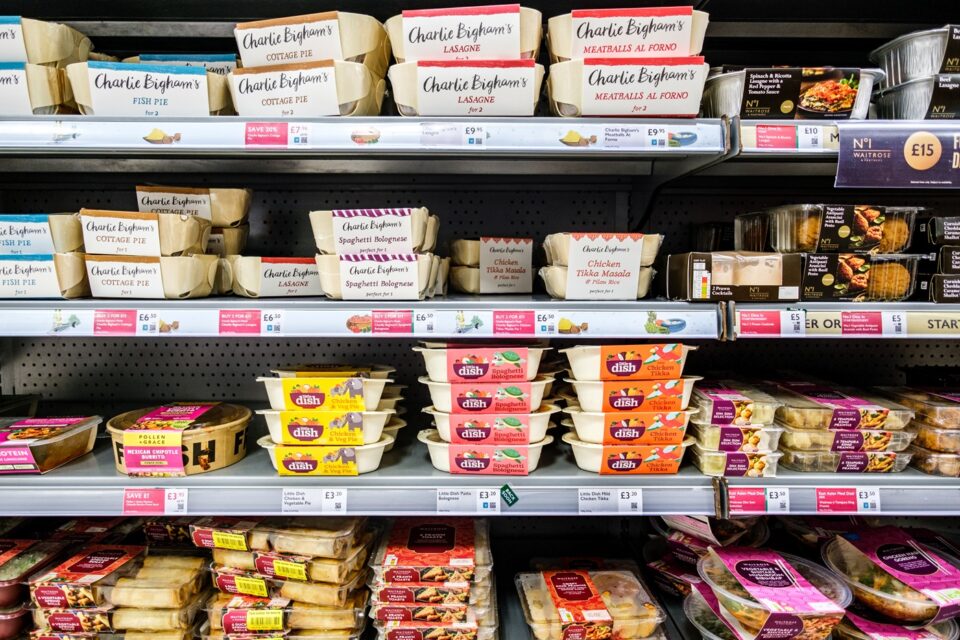
The ready meals sector has long been driven by one defining promise: convenience. But in 2025, convenience alone is no longer enough. The category is being reshaped by medical weight-loss drugs, intensifying scrutiny of ultra-processed foods (UPFs), tighter advertising regulation, and the commercial realities of labour shortages and sustainability legislation.
For manufacturers and packaging suppliers, the question is no longer what consumers want to eat, but how products must be reformulated, processed, packaged and automated to remain viable in a rapidly tightening market.
The future of ready meals is not just faster – it is smaller, denser, cleaner, and far more technically complex.
The GLP-1 Economy: A Structural Shift in Product Design
One of the most disruptive forces reshaping the ready meals market is the rapid uptake of GLP-1 weight-loss medications. Rather than a niche health trend, this represents a fundamental shift in eating behaviour that directly impacts portion size, formulation and packaging formats.
From a manufacturing perspective, GLP-1 users demand meals with high nutrient-to-calorie (HNC) ratios. These consumers eat significantly smaller portions but require higher protein density to avoid muscle loss, alongside fibre and gut-supporting ingredients to counter digestive side effects.
This creates immediate formulation challenges. Concentrating protein while maintaining moisture, texture and flavour in small-format meals is technically demanding, particularly when manufacturers are simultaneously under pressure to reduce salt, fat and additives. Protein sourcing is also becoming more complex, with increased reliance on premium whey, collagen and specialist plant isolates placing strain on procurement and pricing models.
Packaging formats are shifting accordingly. Smaller trays, premium finishes and functional health cues are replacing traditional “value” ready-meal aesthetics. For suppliers, this means redesigning tooling, portioning equipment and lidding solutions to suit lower fill weights without compromising line efficiency.
Packaging in the Air-Fryer Era
The rapid rise of air fryers has forced a quiet but significant rethink of ready-meal packaging materials. Meals designed solely for microwave reheating are increasingly seen as inferior, both in eating experience and perceived value.
For packaging manufacturers, this has accelerated the move away from standard CPET trays towards materials capable of withstanding higher convection heat without warping, off-gassing or degrading barrier performance. Tray geometry, surface coatings and heat distribution characteristics are now critical design considerations.
At the same time, sustainability pressures continue to intensify. Retailers still expect chilled ready meals to achieve 21–30 day shelf lives, yet manufacturers face mounting pressure to reduce plastic usage and improve recyclability.
This tension is driving innovation in mono-material barrier films and advanced lidding solutions that deliver high oxygen and moisture barriers while remaining compatible with recycling streams. In practice, design-for-recyclability is no longer a marketing exercise – it is a cost-control strategy as Extended Producer Responsibility (EPR) fees begin to penalise complex or non-recyclable formats.
Processing Technologies and the Push Back Against UPFs
Few issues now loom larger over the ready meals category than the ultra-processed food debate. While ready meals have historically been grouped within UPF classifications, manufacturers are increasingly fighting back through process innovation rather than branding.
High-Pressure Processing (HPP) has emerged as a key technology in this shift. By extending shelf life without thermal degradation, HPP enables chilled meals to achieve “fresh” sensory profiles using simpler ingredient lists. For B2B buyers, this is becoming a decisive factor in premium retail contracts.
The commercial advantage is clear: cleaner labels, reduced reliance on preservatives, and greater flexibility in salt and fat reduction strategies – all without sacrificing food safety or distribution efficiency.
From a formulation standpoint, this shift requires close collaboration between R&D teams, ingredient suppliers and process engineers. Moving away from stabilisers and emulsifiers places greater emphasis on raw material quality, particle size control and precision cooking parameters.
HFSS, Advertising Bans and Reformulation Strategy
Regulation is now one of the most powerful forces shaping the ready meals market. The UK’s forthcoming HFSS advertising restrictions – including the 9pm watershed and a near-total ban on paid online promotion – fundamentally change how products can be marketed.
For manufacturers, this means reformulation is no longer optional. Nutritional modelling is increasingly being used as a development tool, allowing teams to adjust recipes incrementally to move products into compliant categories and preserve marketing freedom.
Small reductions in salt, fat or portion size can be commercially decisive, shifting a product from restricted to promotable status. As a result, nutrition software, predictive modelling and early regulatory input are becoming embedded within product development workflows.
Volume promotion bans further complicate matters. With BOGOF offers disappearing for less healthy products, margins must be protected through premium positioning, operational efficiency and differentiated functionality rather than price-led growth.
Automation and the Economics of Labour
Rising labour costs and chronic skills shortages continue to push ready-meal manufacturers towards higher levels of automation. The most significant shift is towards component-based assembly, where proteins, carbohydrates and vegetables are prepared separately and combined using robotic systems.
This modular approach improves yield control, reduces waste and enables rapid SKU variation – a crucial advantage in a market increasingly driven by personalised nutrition and smaller production runs.
AI-driven vision systems are now being used to ensure portion accuracy and consistency at high speeds, while robotics reduce dependency on manual handling in hygiene-critical environments. For equipment suppliers, demand is growing for flexible, reconfigurable lines rather than single-product systems.

The Silver Economy: Designing for an Ageing Market
Demographic change is also reshaping ready meals at a structural level. Consumers over 65 already account for a substantial share of chilled ready-meal sales, particularly in red-meat and traditional formats.
For manufacturers, this creates a distinct technical challenge. Meals must balance high protein content with softer textures, easier digestion and intuitive packaging. Easy-open seals, legible labelling and portion control are no longer niche considerations – they are becoming mainstream requirements.
This segment also aligns closely with healthcare-driven nutrition, creating overlap with GLP-1-focused product development and reinforcing the shift towards functional, medically adjacent food solutions.
A Category Being Rebuilt, Not Rebranded
The ready meals market is no longer evolving at the surface level. It is being rebuilt from the inside out – through reformulation, new processing technologies, advanced packaging materials and automation-led manufacturing strategies.
For B2B professionals, the opportunity lies not in chasing consumer trends, but in building the infrastructure, technical capability and regulatory resilience needed to serve a market that is becoming smaller in portion, higher in value, and far more demanding in specification.
Convenience may have built the category. Engineering, compliance and precision will define its future.