

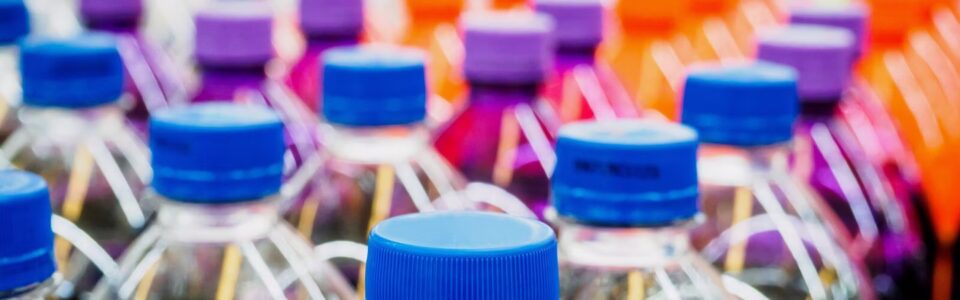
Food packaging increasingly depends on plastic due to its durability, versatility, and cost-effectiveness. This makes it an ideal choice for various food and drink packaging products, ranging from water bottles to disposable cutlery. However, the rising issue of plastic pollution compels manufacturers to seek sustainable packaging solutions while adhering to regulatory requirements.
Kevin Chiu, Senior Technical Development and Harmonization Manager, Connectivity & Products, SGS, examines the available solutions that balance safety, sustainability, and regulatory compliance in food and drink packaging.
The Organisation for Economic Co-operation and Development (OECD) forecasts a significant increase in yearly virgin plastic production over the next two decades. Specifically, this production is expected to soar by 70% by 2040, rising from 435 million tonnes (Mt) in 2020 to 736 Mt. Concurrently, inadequately disposed plastic waste is projected to grow from 81 Mt to 119 Mt during that period. Furthermore, plastic leakage into the environment could escalate by 50%.
Recycling plastic into new products must be a cornerstone in tackling this pressing issue. Not only will recycling mitigate the environmental impact associated with plastic production and waste, but it will also support global initiatives aimed at transitioning toward a circular economy.
Contamination Risks
The concept of “use, recycle, re-use” is appealing; however, several risks accompany the process of recycling plastics, especially for food contact materials. While traceability and contamination control are manageable with virgin plastic, they become significantly more challenging when incorporating recycled materials.
Employing recycled plastic in food contact materials presents notable contamination risks, such as:
- Inclusion of non-food-grade plastics in the recycling system
- Residual chemicals from prior uses (e.g., solvents, inks, adhesives)
- Microbiological contamination due to insufficient cleaning
- Heat-induced degradation of plastic products
Each cycle of recycling can exacerbate contamination risks; pollutants may accumulate with each reuse. Harmful substances, including endocrine disruptors and carcinogens, could migrate into food or beverages, potentially posing long-term health risks.
Regulatory Landscape
Governments worldwide are intensifying regulation of plastics in food contact materials while promoting circular economic models.
On October 10, 2022, the European Union (EU) implemented Regulation (EU) 2022/1616, which governs the use of recycled plastic materials intended for food contact. This regulation establishes criteria ensuring that recycled materials meet the same safety and quality standards as their virgin counterparts. Only approved recycling processes, such as post-consumer mechanical PET recycling, are permissible.
The authorization process involves:
- Pre-application submission
- Submission and completeness checks
- Required information from the European Food Safety Authority (EFSA), including:
- Administrative data
- Public summary of dossier
- Technical dossier, detailing the recycling process, challenge test results, decontamination efficiency, operational parameters, and self-evaluation
- Risk assessment
- Post-adoption, products must include a declaration of conformity (DoC) and adhere to labeling mandates
The EU also enacted Directive (EU) 2019/904, known as the Single-Use Plastic (SUP) Directive, aimed at reducing the environmental footprint of specific plastic products. This directive mandates that 77% of PET bottles be collected by 2025 and 90% of all plastic bottles by 2029. Furthermore, new packaging regulations will enhance closed-loop recycling and introduce recyclability grades.
At the national level, several European nations are establishing stricter legislative standards. France aims for 100% recycled plastic in packaging through its AGEC law by 2025. In the UK, the Plastic Packaging Tax (PPT) incentivizes the use of recycled materials by imposing a £223.69 tax on plastic packaging made or imported into the UK with less than 30% recycled content.
In the US, various legislative initiatives are pushing for sustainable plastics, including:
- Rewarding Efforts to Decrease Unrecycled Contaminants in Ecosystems (REDUCE) Act, introducing a federal excise tax on virgin plastic resin
- California’s Public Resources Code (PRC), focusing on truth-in-labeling for recyclability and mandating recycled content for plastic beverage containers
- New Jersey’s Recycled Content Law (PL 2021, c. 391), establishing a minimum recycled content level for rigid plastic containers, plastic beverage bottles, and plastic carryout bags
To support manufacturers, the US Food and Drug Administration (FDA) operates a voluntary No Objection Letter (NOL) program that evaluates the safety of recycled plastic in food contact materials across all plastic types.
Applicants must submit:
- Description of the recycling process
- Description of process steps
- Challenge test report
- Proposed conditions of use
The challenge test includes:
- Sampling – selecting a significant quantity of plastic flakes
- Contamination – subjecting plastic flakes to a surrogate contaminant cocktail under defined conditions
- Contaminant detection – testing for contamination in the sample
- Recycling – processing the sample through recycling
- Contaminant detection – evaluating the sample to ensure it meets acceptable residue levels
If the FDA confirms that the process meets safety criteria, a NOL is issued, affirming the safe use of recycled plastics in food contact applications and bolstering industry sustainability objectives.
The Path Forward
The conversation has shifted from avoiding recycled plastics in food contact materials to strategically utilizing them in a safe, effective, and compliant manner.
SGS Solutions
SGS provides comprehensive testing and certification services, assisting plastic recyclers and food and drink packaging manufacturers in navigating the evolving regulatory landscape. SGS’s one-stop solutions encompass support for both EFSA and FDA NOL applications, alongside consultation services, factory audits, document preparation, and DoC/label reviews.
In its service offerings, SGS conducts challenge tests to ensure that recycled materials comply with EFSA’s safety standards for food contact plastics, as well as the requirements necessary for FDA NOL applications.
Discover more about food and drink packaging services from SGS.
IMPACT NOW for Sustainability
The IMPACT NOW for sustainability initiative consolidates all of SGS’s sustainability solutions under four strategic pillars: climate, nature, ESG assurance, and circularity. Within the IMPACT NOW circularity framework, SGS offers practical solutions aimed at reducing reliance on virgin plastics while enhancing recyclability and fostering circular systems.
Learn more about IMPACT NOW for sustainability.
[1] https://www.oecd.org/en/about/news/press-releases/2024/10/policy-scenarios-for-eliminating-plastic-pollution-by-2040.html

