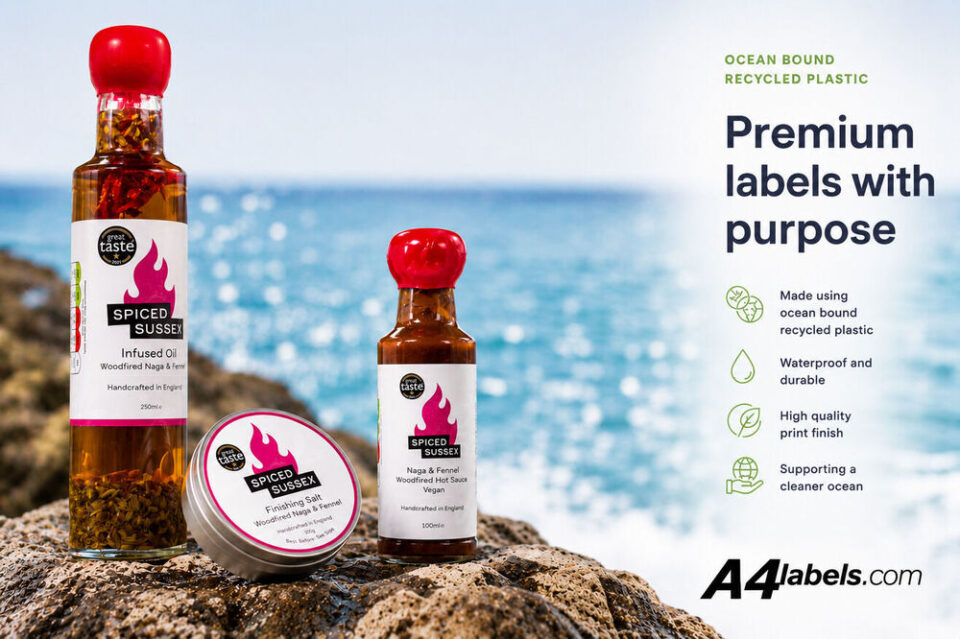
Food and beverage producers aiming to lessen their reliance on virgin fossil-derived plastics now have a new option with the introduction of A4 Labels’ Ocean Action Labels—an innovative collection of polyester labels crafted from chemically recycled ocean-bound plastics.
This fresh lineup serves as a direct substitute for traditional polypropylene film labels, enabling brands to boost their recycled content without necessitating changes to their packaging processes or sacrificing performance.
A4 Labels asserts that the new material performs identically to standard PP film, allowing manufacturers to implement it without the need for equipment requalification, adhesive modifications, or adjustments in application speeds. This alleviates potential disruptions to established manufacturing practices for numerous companies.
Ocean-bound plastic is sourced from coastal areas that lack effective waste management systems, making it susceptible to entering the ocean. By leveraging this waste as feedstock for chemical recycling, Ocean Action Labels assist in diverting plastic from the environment while promoting a more circular approach to packaging. The collection comes with ISCC PLUS certification under the mass-balance method, ensuring both traceability and verified recycled content.
This launch occurs at a crucial juncture, as a minimal fraction of global plastic waste is currently recycled and food and drink manufacturers face mounting pressure to fulfill sustainability targets set by retailers and regulators. Labels represent one of the most straightforward packaging elements to replace, and A4 Labels contends that switching to recycled polyester substrates can yield significant progress on sustainability efforts without necessitating a complete overhaul of packaging designs.
In collaboration with environmental organization Seven Clean Seas, A4 Labels has contributed to the removal of over four tonnes of ocean-bound plastic and the cleanup of nearly 30 kilometers of coastline in Indonesia. This effort highlights how strategic packaging choices can actively aid environmental recovery while minimizing reliance on virgin fossil resources.
Through chemical recycling, waste plastics can be decomposed into their foundational monomers and reconstituted as new, food-grade materials. This process gives manufacturers a high-quality recycled option that is well-suited for stringent applications, including food and beverage labeling, while providing a scalable pathway towards circular packaging solutions.