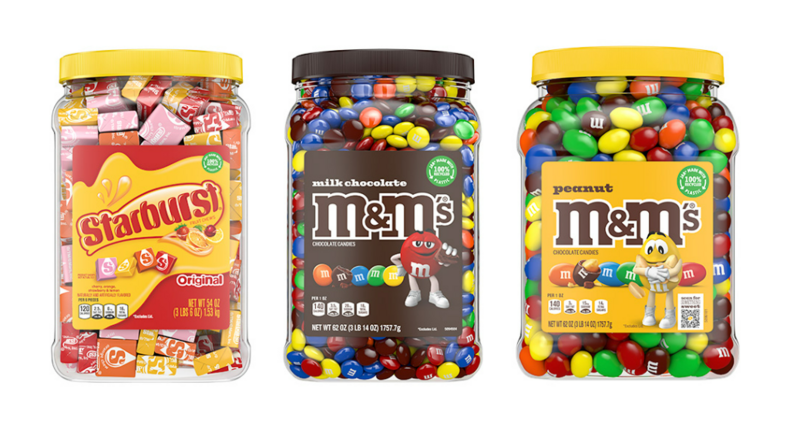
Berry Global Group has entered into a partnership with Mars to transition all pantry jars for the M&M’S, Skittles, and Starburst brands to 100% recycled plastic packaging, excluding the jar lids.
This significant milestone enhances the ongoing collaboration between Berry and Mars aimed at developing sustainable food and beverage packaging with recycled materials. It builds upon the successful launch of pantry jars containing 15% recycled plastic in 2022. The new jars are now being rolled out nationally.
The pantry jars, designed with sustainability in mind, are widely recyclable and are available in three sizes: 60, 81, and 87 ounces. This move to 100% recycled plastic eliminates over 1,300 metric tons of virgin plastic every year—equivalent to the weight of approximately 238 African elephants.
Constructed from post-consumer resin, the jars utilize recycled plastics that have been collected from consumers. This approach not only diverts plastic waste from landfills but also decreases the demand for virgin plastic and reduces emissions, thereby fostering a circular economy. For example, after enjoying their treats, consumers can simply replace the lid on the jar and place it in the recycling bin, allowing the plastic to be transformed into new products.
The easy-grip square jars are manufactured at Berry’s facility, using certified food-grade mechanically recycled resin sourced from curbside collection streams. By harnessing its material science expertise and technical resources, Berry collaborated with Mars to develop a solution that further enhances their shared sustainability objectives without compromising product quality.
“As companies across the globe commit to transitioning to a circular economy, the ability to deliver products made with recycled materials at scale is crucial,” stated Peter Goshorn, vice president of food, beverage & spirits for Berry Global’s consumer packaging North America Division. “That’s why we’re collaborating with leading brands, like Mars, to significantly increase the use of recycled content to drive responsible business growth without compromising performance or aesthetics.”
As part of its Sustainable Packaging Plan, Mars is actively redesigning its packaging portfolio to minimize plastic waste and enhance the reusability, recyclability, or compostability of its packaging solutions. Since 2017, Mars has collaborated with Berry to drive innovation in sustainable packaging.
“In the world we want tomorrow, no packaging becomes waste, but is instead reused, recycled, or composted,” said Allison Lin, global vice president of packaging sustainability at Mars. “That’s why we continue to rethink our approach to packaging and collaborate with companies like Berry. Reducing our virgin plastic usage by investing in recycled content is an important step in our strategy, alongside initiatives to remove unnecessary packaging, explore reuse models, and redesign our packaging for circularity. Using recycled content incentivizes increased collection systems and recycling infrastructure, which is essential for a circular economy.”