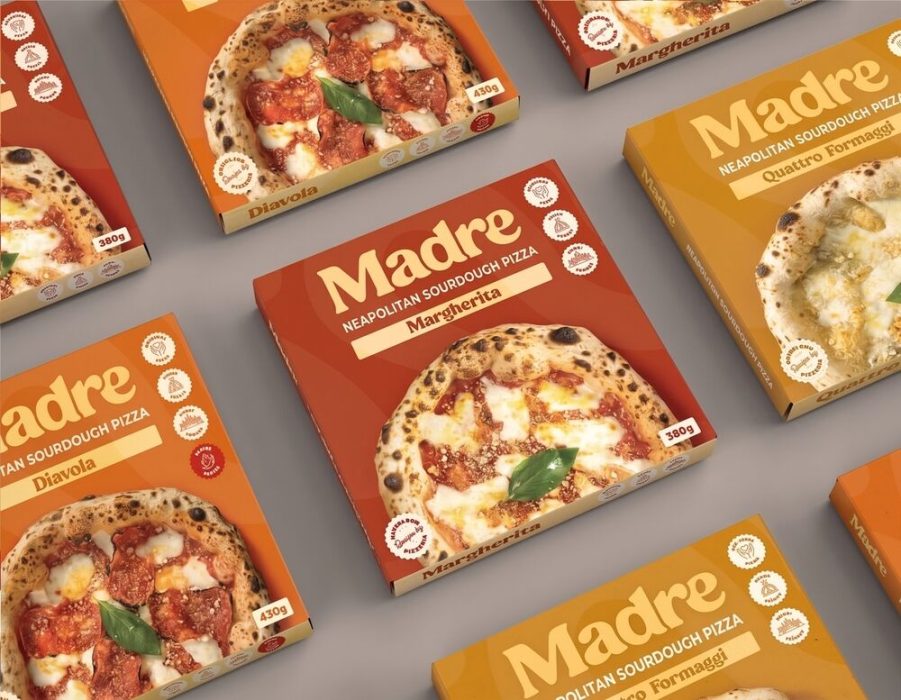
Hungarian pizza manufacturer The DoughLAB is looking to establish relationships with UK distributors, foodservice wholesalers and retail partners for its Madre collection of hand-stretched sourdough pizzas.
The company’s UK expansion comes at a time when hospitality businesses continue to manage high labour costs and a shortage of experienced kitchen professionals. According to the British Chambers of Commerce’s first-quarter 2026 survey, 85% of hospitality businesses regarded labour costs as a significant concern. Chef recruitment has also accelerated: Craft Guild of Chefs reported, based on CV-Library data, that 40,395 chef vacancies were advertised from April to June 2026, representing an 83.4% increase compared with the same period a year earlier.
Madre has been developed to help hospitality operators serve Neapolitan-style pizza without relying on a specialist pizza chef for every service. At its central facility near Budapest, DoughLAB manages the fermentation, hand-stretching, topping and first bake. Restaurant teams then only need to thaw each pizza and complete a brief final bake.
Active sourdough and volcanic-stone baking
Madre differs from products that use inactive sourdough powders. Its dough is made with a live liquid starter that originated in Altamura, southern Italy, and is refreshed every day. The dough ferments for 48 hours and has a hydration level of around 80%.
Workers stretch and top every pizza by hand, using ingredients without additives or preservatives, including DOP San Marzano tomatoes. The pizzas receive an initial bake on volcanic stone at approximately 450°C before moving through a liquid-nitrogen cryogenic freezing tunnel at DoughLAB’s 2,000-square-metre site in Szigetszentmiklós.
By freezing the products at ultra-low temperatures, the process forms smaller ice crystals than standard freezing methods. As a result, the dough’s open structure and the toppings’ texture remain better preserved after thawing.
“We wanted to take the most difficult and unpredictable part of the process out of the restaurant and move it into a controlled environment,” said Josep Zara, co-founder and chief executive of The DoughLAB. “If the fermentation, stretching, ingredients and first bake can be controlled centrally, the restaurant team can concentrate on service instead of reproducing an entire specialist production process during every shift.”
Supporting efficient kitchen service
The frozen format removes the need for operators to manage raw dough or carry out the initial bake on site. After thawing, each pizza can be finished in roughly 2 to 2.5 minutes in an oven heated to between 250°C and 350°C. This rapid preparation time can help hotels and other venues provide hot food beyond their main kitchen operating hours, including during late-night service.
DoughLAB invested approximately 1.5 billion Hungarian forints in its Szigetszentmiklós facility. The site began operations with the capacity to produce 27,000 pizzas each day and has been designed to support output of up to 100,000 units daily. The company plans to retain hand-stretching at both production levels, reflecting wider food manufacturing trends that combine scale with craft-oriented production.
“The easiest way to increase output would be to automate everything,” Zara added. “But if you press this type of dough mechanically, you can destroy the structure that gives a Neapolitan pizza its characteristic rim. Working with living dough at this scale is difficult, but that is exactly why we decided to keep hand-stretching as part of the process.”
Madre is currently sold in Hungary, while the company prepares its UK market entry. DoughLAB is seeking commercial supply arrangements with foodservice wholesalers and distributors serving hospitality operators, as well as direct partnerships with retail groups. The move reflects broader food and beverage industry trends, including demand for convenient premium products, evolving food distribution trends and continued food and drink consumer trends favouring authentic quality. It also highlights the role of food processing technology in supporting food and drink industry innovation, alongside growing attention to food and drink sustainability, food and drink regulations, food and drink packaging and food and drink marketing.