

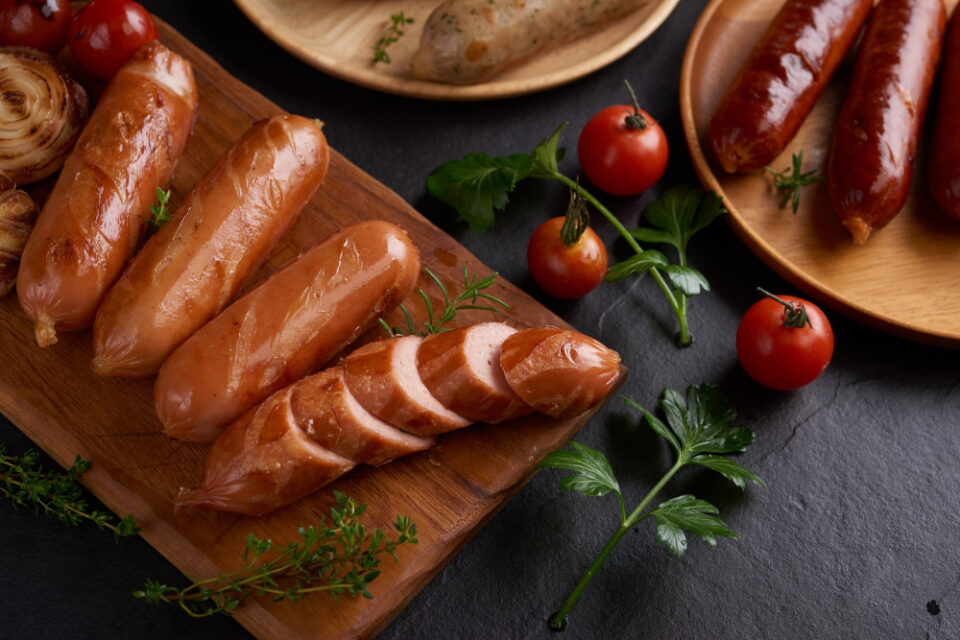
Cranswick, one of the UK’s largest meat groups, has finalized a £32m ($42.8m) acquisition of Blakemans, a foodservice sausage supplier.
In a recent announcement, London-listed Cranswick, known for its pork, poultry, and convenience meat products for major UK retailers, revealed this strategic purchase in its annual results statement dated 20 May.
Blakemans operates from a well-equipped facility in Newcastle-under-Lyme, Staffordshire, employing approximately 290 staff members.
“The acquisition is complementary to our existing added-value gourmet business, adding capacity in raw and cooked sausage production,” Cranswick stated in its results commentary.
CEO Adam Couch characterized Blakemans as “a well-invested, leading foodservice sausage manufacturer.”
He elaborated, “Acquisitions are a core element of our growth strategy, allowing us to consolidate further our core business, expand newer growth categories, or diversify into new sectors and markets.”
Recently, Cranswick also acquired JSR Genetics, a pig genetics and commercial breeding business. In the previous year, the company purchased the pork and poultry processor Froch Foods and made a deal in the pet food sector with Grove Pet Foods.
In 2021, Cranswick expanded its portfolio by adding Ramona’s Kitchen, a producer of houmous, falafels, and dips, as well as Atlantica UK, a private-label Spanish tortilla supplier.
Amid recent concerns regarding animal welfare at a Cranswick pork plant, the company has initiated an independent review of its welfare standards. Footage obtained by the Animal Justice Project earlier in May reportedly showed instances of inhumane treatment of piglets, including ‘piglet thumping.’
In response, Cranswick has announced the suspension of employees at its Northmoor Farm near Market Rasen, Lincolnshire, and pledged to conduct a thorough investigation.
In its results statement, Cranswick emphasized, “We have always placed the highest importance on animal health and wellbeing and continuously aim to have the most stringent standards in the sector. We take seriously any instance, anywhere in our supply chain, where behaviour fails to meet those standards.”
“We are therefore instigating a new, fully independent, expert veterinary review of all our existing animal-welfare policies, together with a comprehensive review of our livestock operations across the UK.”
For the year ending on 29 March, Cranswick reported £2.72bn in revenue, marking a 6.8% increase—6.4% on a like-for-like basis.
The adjusted operating profit surged by 11.8%, reaching £206.9m, while the margin improved to 7.6%, up from 7.1% the previous year.
Additionally, the adjusted operating profit before tax rose by 14.3% to £197.9m, yielding an adjusted EPS of 273.4 pence—an increase of 15.6% compared to the prior period.
Cranswick chairman Tim Smith described the operating environment during the year as “challenging,” citing “wider macroeconomic” pressures.
Smith urged the UK government to enhance support for the local food industry, stating, “We believe that government should provide a clear and coherent framework to facilitate long-term investment and sustained growth across the industry.”
“As a leading UK food producer, we are aligned with others across the sector in our ambition to operate in an environment underpinned by certainty and success. Translating this ambition into action requires a regulatory environment that supports long-term sustainable investment.”
“A more streamlined and responsive planning framework is, therefore, essential to unlocking capital investment, supporting job creation, and growing regional economies.”
Cranswick’s fresh pork segment recorded a 4% revenue growth, making up 24.2% of the group total.
Poultry revenue surged by 20.3%, accounting for 19.6% of the company’s total revenue.
In the convenience category—covering meals, charcuterie, antipasti, and houmous—Cranswick saw a marginal 0.5% revenue increase, representing 36.2% of the group.
Revenue from gourmet products, including meat pies, sausages, and bacon, increased by 8.8%, contributing to 18.7% of Cranswick’s overall revenue.

