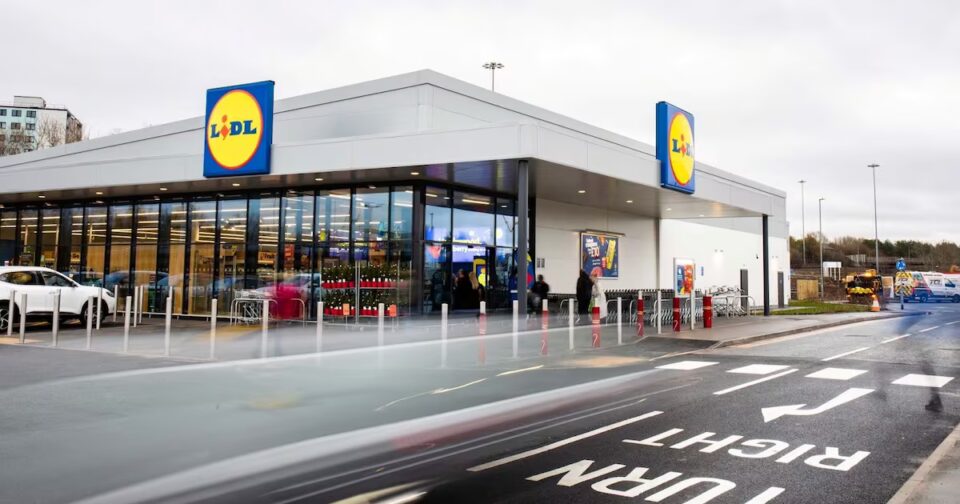
Lidl GB has achieved an 8.6% market share, with an 8.8% increase in sales during the 12 weeks ending on May 17. According to Worldpanel data, this marks the first time Lidl has surpassed Morrisons. Aldi, another discount retailer, holds a larger share at 10.8%, closely followed by Asda.
While Tesco and Sainsbury continue to lead the market with a combined 43%, both Aldi and Lidl now account for nearly 20% of grocery sales in Great Britain. Moreover, Lidl has been recognized as the fastest-growing traditional retailer in the UK for the past 35 months, gaining over £661 million as customers migrate from other brands in the last year.
The growth of Lidl and Aldi aligns with their previously announced UK expansion plans, fueled by substantial investments. This development is occurring against the backdrop of a persistent cost of living crisis that is influencing consumer behavior.
“The cost-of-living crisis is showing no signs of easing and potentially worsening in the short to medium term,” stated Clodagh Sherrard, managing director at food and drink consultancy, Levercliff. As consumer loyalty becomes increasingly crucial, brands must demonstrate that they are “seen to be on the side of the consumer.”
Sherrard emphasized that businesses need to adopt more intelligent promotional strategies, moving away from practices like shrinkflation or excessive multibuys, and utilizing promotions more “tactically to hold shelf space.” He added, “Brands will (or ought to be) better marketeers than private label, so those focused on building loyalty should do so with confidence at the same time as being smart on pricing and promo strategy—consumers have different complex needs that won’t always be met by private label.”
Clive Black, vice chairman of investment bank Shore Capital, revealed that the narrative surrounding discounters is more complex than it seems. Despite Lidl’s rapid growth, its “trading densities” are still below that of Aldi. Recently, Aldi has faced challenges with stagnant sales, leading to “quite weak like for like volumes.” Meanwhile, Marks & Spencer is emerging as the fastest-growing retailer in the UK this spring, and like Aldi and Lidl, it has significant private label offerings.
“Two of the three fastest growing UK supermarkets are private label dominated, which means share gains over proprietary brands continue,” Black explained. As a result, “proprietary brand owners are becoming more dependent on the approximately 77% fuller-service players” like Tesco and Sainsbury, where private labels are also capturing more market share, particularly in the premium segment.
Mash Chiles, managing director at Gourmet Partners, noted, “The pressure on branded food manufacturers has never been greater.”
Mark Field, CEO of Prof Consulting, expressed that the success of Lidl and Aldi signifies a fundamental change in consumer perceptions, as they are increasingly seen as comparable to traditional supermarkets regarding quality rather than merely ‘cheap discounters.’ He pointed out that their business model focuses on high penetration of retailer-owned brands, consistent quality, and cost reduction throughout the supply chain. This presents growth opportunities for food and beverage companies that can scale in private label offerings.
While he acknowledged these opportunities, Field cautioned that competition for shelf space—especially through promotional deals—will intensify.
On the other hand, Mash Chiles cautioned against overly optimistic views on this shift. “The pressure on branded food manufacturers has never been greater. The real risk is not just margin squeeze; it’s the stifling of innovation,” he noted. He added that when major retailers mimic successful specialty food ideas and launch them under their own labels, it undermines the incentive for smaller producers to innovate.
Chiles also expressed concern about UK specialty food distributors collaborating with own-label manufacturers, which might endanger the very startups they initially supported. “In doing so, they are cutting out the very start-ups they once helped build. That is a troubling conflict of interest, and one the industry should be talking about openly,” he stated.
Looking ahead, Ged Futter, director at The Retail Mind, suggested that Lidl’s growth trajectory is set to continue. “Asda is losing 0.6% of market share every 12 weeks, while Lidl grew by 0.5%. This indicates that by late summer, Lidl may surpass Asda, potentially reaching over 11% by Christmas.”