

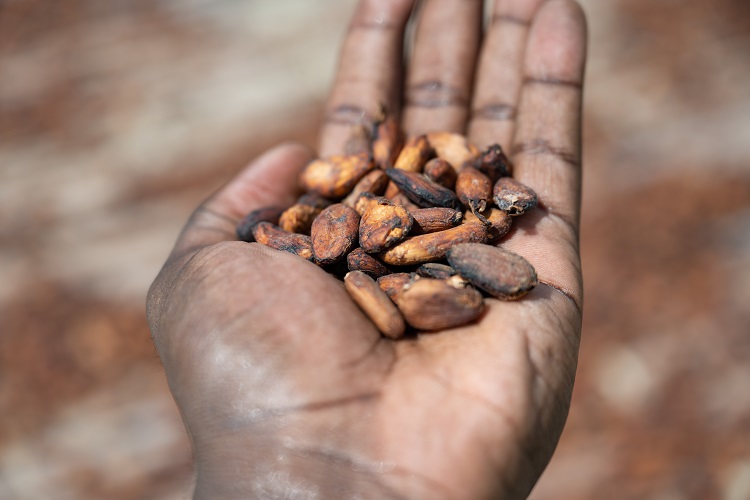
Introducing the Income Accelerator Project, a groundbreaking initiative launched in January 2022. This project sets out to incentivize Ivorian cocoa farmers in Côte d’Ivoire to adopt more productive farming techniques, educate their children, and reduce the risks of child labor. Currently, the program supports 10,000 cocoa-farming families, with a collective incentive payout of €2 million.
The majority of the data in the report is derived from the pilot phase, which involved 1,000 families and took place from 2020 to 2022. In this phase, farmers were provided with €100 incentives for completing four key activities: enrolling their children in school, implementing good agricultural practices, participating in agroforestry schemes, and diversifying their sources of income. By successfully completing all tasks, they had the opportunity to earn up to €500. However, after the first two years, the incentives will be reduced to €250.
To ensure gender equality, families receive payments through a secure ‘mobile money’ transfer, with an equal distribution between the male and female heads of each household. This approach promotes a fair and inclusive environment.
The Income Accelerator Project aims to address the root causes of child labor by tackling the issue of low income within cocoa farming families. At the beginning of the scheme, the average income for a cocoa farming family in Côte d’Ivoire was 3000 Swiss Francs, significantly lower than the living income benchmark of 6500 Swiss Francs. By increasing the overall household income, the project aims to mitigate the risk of child labor.
Education plays a crucial role in this initiative, and parents are incentivized to enroll their children in school. As revealed in the pilot phase, nearly all farming families expressed a desire to educate their children. In fact, 98% of children aged 6 to 16 were enrolled in school, resulting in an 8% increase in enrollment rates. The financial support provided by the project helps cover transportation costs, particularly for secondary education that often requires commuting or accommodations in towns.
Another significant aspect of the program is the promotion of good agricultural practices, with a particular focus on pruning. Nestlé has provided training and equipment to farmers to enhance their pruning techniques. By successfully pruning one hectare of cocoa trees, farmers not only met the target set by Nestlé but also exceeded it in 43% of cases. Pruning has proven to increase productivity by nearly 20% by ensuring optimal utilization of the cocoa trees’ energy for fruit production.
Agroforestry is also encouraged as part of the project. In the pilot phase, each farm received 20 shade tree seedlings, with 92% of families successfully planting all of them. Shade trees play a crucial role in creating a favorable environment for cocoa growth and building overall farm resilience.
Diversification of income sources is another key element of the project. Farmers are urged to explore activities beyond cocoa farming, such as livestock rearing or cultivating other crops. This approach is encouraged through the establishment of Village Savings and Loans Associations (VSLAs), as well as the provision of relevant training programs. In the pilot phase, 24 VSLAs were set up, benefiting 55 communities, with 86% of families having at least one member participating. VSLA members reported having 0.4 times more income sources than non-members, and they actively engaged in income-generating activities like running businesses and selling livestock.
While the project has made significant strides, there are challenges that need addressing. For instance, some women attending Income Generating Activities (IGA) trainings reported lacking the financial capability to put their newly acquired skills into practice. However, the overall aim is to promote gender equality within households, with women taking an active role in decision-making regarding household budgets. Training programs specifically designed for couples have been well-received, as nearly half of the households participated in such initiatives.
Looking ahead, Nestlé has ambitious plans for the Income Accelerator Project. Following the completion of the current phase in 2024, the project will enter its test at scale phase. Eventually, Nestlé aims to expand the project to Ghana, with the ultimate goal of reaching 160,000 farming families globally within its cocoa supply chain by 2030.
By implementing innovative agricultural practices, emphasizing education, fostering income diversification, and promoting gender equality, the Income Accelerator Project is transforming the lives of cocoa farmers and the sustainability of the industry. Relying on active involvement and continuous support, this initiative paves the way for a brighter future in the food and beverage industry.

