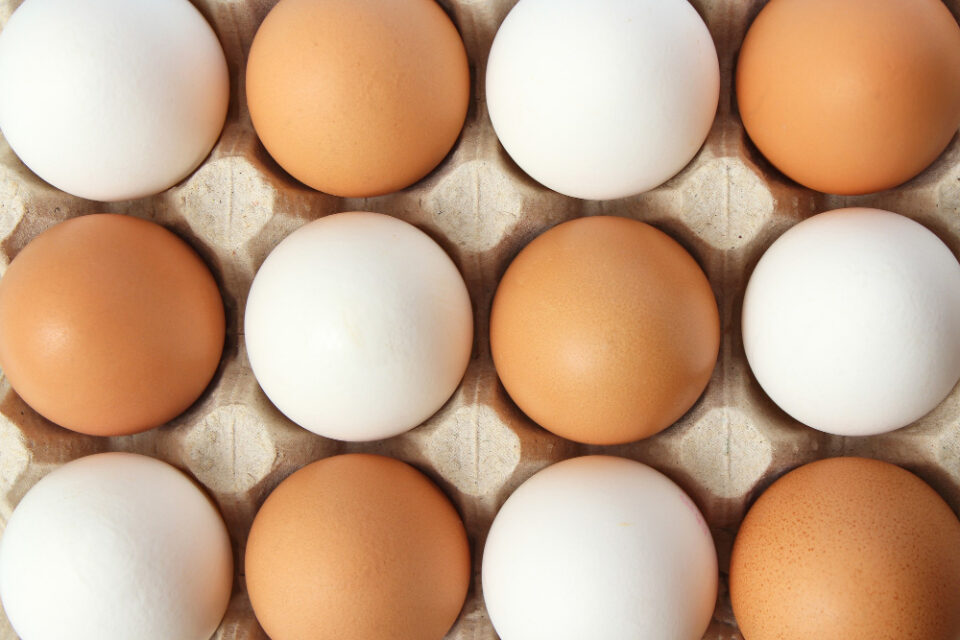
Britain’s appetite for eggs remains strong, with more than 14 billion consumed each year. However, a new report has raised concerns over the safety and sourcing of imported eggs, highlighting potential risks to both consumer health and animal welfare linked to gaps in border inspection controls.
The report, titled Shell Shocked, points to a sharp rise in egg imports into the UK, which have increased by around 60% over the past five years — climbing from approximately one billion to 1.6 billion eggs annually.
Much of this growth has been driven by increased supply from countries such as Ukraine and Poland, with Ukrainian exports to the UK alone rising by 65.6% in 2025.
According to the findings, a significant proportion of these imports are produced using conventional battery cage systems — a method banned in the UK since 2012. These products are entering the market in competition with domestically produced eggs that comply with the British Lion Code of Practice, a scheme recognised for its stringent food safety and welfare standards that exceed both UK and retained EU legislation.
In addition to animal welfare concerns, the British Egg Industry Council (BEIC) has also highlighted a rise in egg-related food safety incidents across Europe.
Recent cases include 123 confirmed illnesses in the UK in late 2025 linked to a single imported egg distributor, the detection of banned antibiotic residues in Ukrainian eggs entering European markets, ongoing Salmonella investigations in Sweden connected to Ukrainian imports, and more than 200 UK cases in 2024 associated with eggs imported from Poland.
In response, the BEIC is calling on the UK Government to introduce stricter controls, including aligning import standards with domestic food safety and welfare requirements. The organisation is also urging the implementation of more consistent testing regimes and stronger inspection processes at the border to ensure imported eggs meet the same standards required under the Lion Code.
The council has further advised retailers, manufacturers and foodservice operators to review their sourcing strategies and strengthen traceability requirements across their supply chains.
“This report highlights the real and urgent risks that inferior imports pose for consumers and the wider food industry,” said Nick Allen, chief executive of the BEIC.
“Any consumer would be appalled at what the Government is doing to undermine their safety. More than 90% of eggs produced in the UK are covered by the British Lion Code of Practice, one of the most comprehensive food safety schemes in the world. British farmers have invested hundreds of millions of pounds to meet these standards, including vaccination against Salmonella and not using conventional battery cages.
“Allowing lower-standard imports to undercut UK egg producers is not protectionism, it risks undermining consumer safety, public confidence in eggs and the resilience of our domestic food supply.
“It is time for the Government to act in the interests of consumers and ensure that any eggs and egg products entering the UK meet our standards, starting with stronger controls at the border.”
Food safety specialist Dr Lisa Ackerley, who reviewed import controls as part of the report, warned that current inspection systems may not be robust enough.
“Most consignments are not physically inspected, testing is risk-triggered rather than systematic, and sampling frequencies are not publicly disclosed. As a result, contamination or residues may only be identified once illness occurs or overseas alerts are issued, meaning product may already be in kitchens, factories or on shelves,” she said.
“It is also worth noting that British Lion eggs are Food Standards Agency approved for vulnerable groups to consume runny, while imports are not. That is a serious food safety risk for imports.”
While the report focuses primarily on European supply chains, it also cautions that future trade agreements could further increase the UK’s exposure to eggs and egg products produced using conventional cage systems.