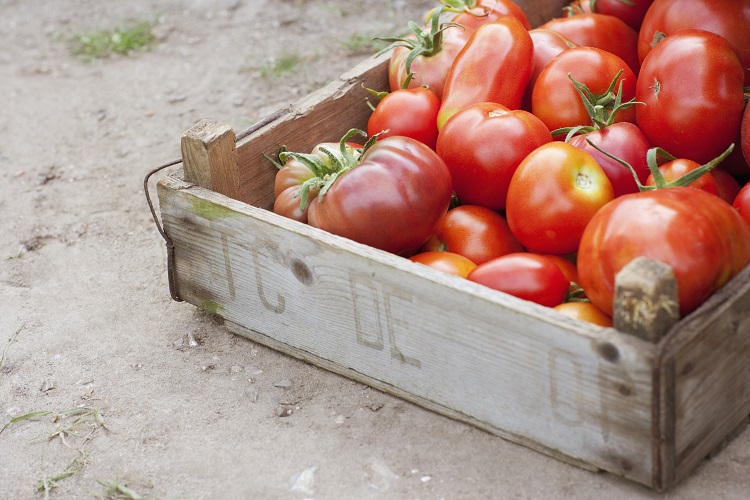
Tomatoes are commonly susceptible to blossom-end rot (BER). However, recent research has unveiled that a mutation known as “adpressa” can make these mutated tomatoes resistant to rot without significantly impeding their growth. This groundbreaking finding was published in the Journal of Experimental Botany, shedding light on the distinctive traits of adpressa mutants compared to other tomato varieties.
The adpressa mutation causes tomatoes to grow closer to the ground as they lose their ability to sense gravity. This mutation also leads to the suppression of starch synthesis, resulting in significant transcriptional and metabolic remodeling. One of the notable changes caused by this mutation is the increase in soluble sugars during fruit growth, leading to enhanced growth overall.
Moreover, adpressa tomatoes demonstrate complete resistance to blossom-end rot. Unlike rot caused by pests, blossom-end rot occurs due to insufficient calcium in the fruit, leading to greenish brown or black spots at the opposite end of the fruit from the plant. Phillipe Nicolas, one of the researchers, remarked, “Our findings with the adpressa mutant are quite promising. Contrary to previous assumptions, the lack of starch did not alter fruit development and ripening. In fact, adpressa fruits were slightly larger and accumulated more sugars during growth. The most remarkable discovery is the resistance to blossom-end rot. These findings open new avenues for improving fruit yield and quality, especially in challenging environmental conditions.”
In another study published in Nature Machine Intelligence, engineers utilized the large language model Chat-GPT-3 to design an efficient robotic tomato harvester. Through a process called ideation, the researchers discussed the purpose, design parameters, and specifications of the robot with the AI. Drawing from its extensive knowledge gathered from technical manuals, academic papers, books, and media sources, Chat-GPT-3 was able to provide insights on the necessary features for a robot harvester, thus initiating the first phase of the design process.
In the subsequent phase, Chat-GPT-3 generated code for fabricating the device and troubleshooting any potential functionality issues. The researchers were able to guide the AI’s input more specifically, refining their questions about the materials to be used in the grabber, ultimately narrowing down the required code.
While there are challenges associated with using large language models in creating physical objects, such as ensuring originality and avoiding biases, the researchers expressed enthusiasm about the future potential of human-large language model collaborations.
“Even though Chat-GPT is a language model and its code generation is text-based, it provided significant insights and intuition for physical design, and showed great potential as a sounding board to stimulate human creativity,” stated Josie Hughes, one of the researchers.
These studies shed light on innovative advancements in tomato cultivation, offering promising solutions for disease resistance and improved harvesting techniques. By harnessing the potential of mutations like adpressa and leveraging AI-powered tools like Chat-GPT-3, the agricultural industry can achieve greater yields and enhance the quality of crops.