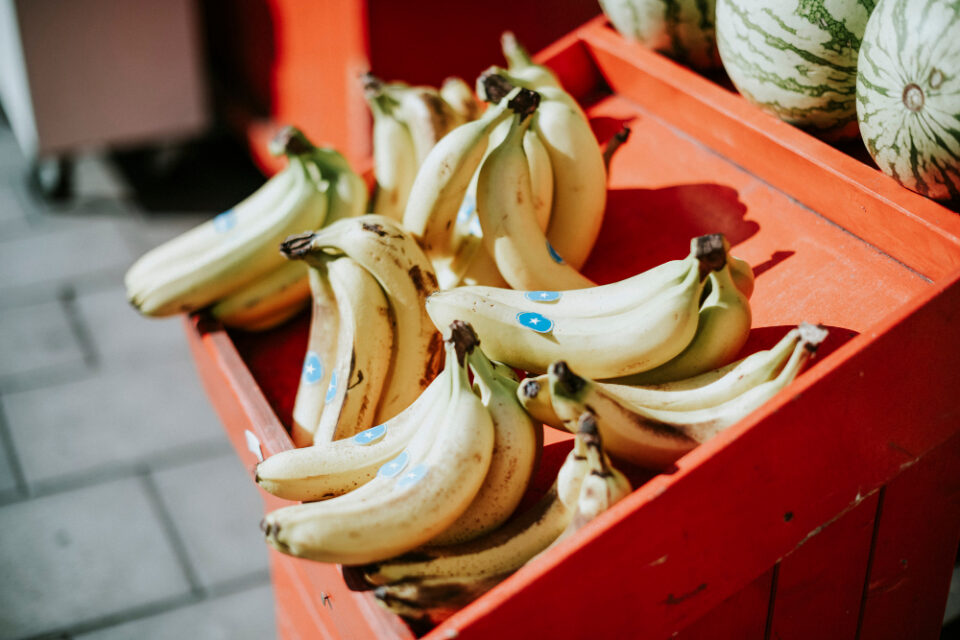
Fresh produce industry stakeholders and composting organizations have united to advance the creation of “certified” compostable stickers for fruits and vegetables. This collaborative move aims to address pressing environmental concerns in the food and beverage industry by enhancing organic recycling quality.
The Canadian Produce Marketing Association (CPMA) announced a strategic agreement to fast-track the transition to certified compostable Price Look Up (PLU) stickers. This initiative, supported by the Compost Council of Canada and other composting entities, aims to establish a comprehensive action plan by the end of 2024.
Currently, the predominance of non-compostable PLU stickers poses significant obstacles to recycling efforts, resulting in decreased compost quality and value. The European Union has set a directive to adopt certified compostable PLUs by 2028, highlighting the urgency of this initiative.
Susan Antler, the executive director at the Compost Council of Canada and a member of the International Compost Alliance (ICA), emphasized the issue: “The current plasticized format is not compatible with producing quality compost, nor can the stickers be easily removed during the organics recycling process. This can lead to organic waste being sent to landfills or incinerated, thereby contributing to climate change and undermining essential resources for soil health.”
Earlier this month, a meeting took place in Canada, convening representatives from the fresh produce and composting sectors, including the CPMA, ICA, and the International Federation of Produce Standards. Participants acknowledged the necessity for a cohesive global standard that aligns with international compost standards and improves the recycling of organic materials. Such standards are pivotal in reducing food loss and waste, which are critical issues in the food and drink consumer trends landscape.
During the meeting, a draft framework outlining a multi-phased roadmap and elements of a global compostable PLU standard was presented. Participants are committed to introducing these eco-friendly stickers next year.
CPMA President Ron Lemaire expressed enthusiasm about this collaboration, stating, “CPMA is delighted to see the fresh produce and composting industries work together towards a global standard for compostable PLU stickers. Given that PLUs are integral to global fresh produce supply chains, this dialogue is essential. Accelerating the adoption of compostable PLUs is a global priority, particularly as requirements may increasingly diverge from one country to another.”
In a related development, last week, the kiwifruit group Zespri and the labeling company Sinclair unveiled a new compostable fruit label. They described this label as being “safely compostable,” decomposing entirely without leaving any harmful residues. This innovation allows consumers to dispose of the label in their home compost bins, further supporting sustainable practices in the food and drink business.
As the food and beverage industry continues to evolve, initiatives like these demonstrate a commitment to enhancing sustainability. By moving towards certified compostable solutions, stakeholders in the fresh produce sector are not only addressing environmental challenges but also complying with emerging regulations and consumer expectations.