Industry Insight : The environmental conversation across food and beverage manufacturing is changing. For years, sustainability strategies were largely built around long-term carbon reduction, renewable energy commitments, packaging targets and corporate reporting. Those objectives remain important, but increasingly they are being joined by something much more immediate: operational resilience. Extreme weather is affecting agricultural output and raw material availability. Water constraints are exposing vulnerable supply chains. Energy efficiency remains directly connected to manufacturing costs. Packaging regulation is turning recyclability into a financial calculation. Waste separation requirements are changing how materials move through factories, while environmental data is increasingly required by customers, investors and supply-chain partners. The result is a more commercially focused phase of environmental investment.
Climate volatility, rising environmental costs and tougher resource requirements are changing the sustainability equation. For food and beverage manufacturers, environmental performance is becoming less about distant targets and more about protecting production, controlling costs and securing future supply.
Manufacturers are increasingly asking not simply whether a project reduces emissions, waste or resource consumption, but whether it also reduces exposure to energy prices, secures ingredient supply, improves process efficiency, avoids regulatory costs or strengthens relationships with major customers.
Environmental performance is moving closer to the production line — and closer to the balance sheet.
Climate Becomes Operational: Extreme Weather Moves From Forecast to Factory Risk
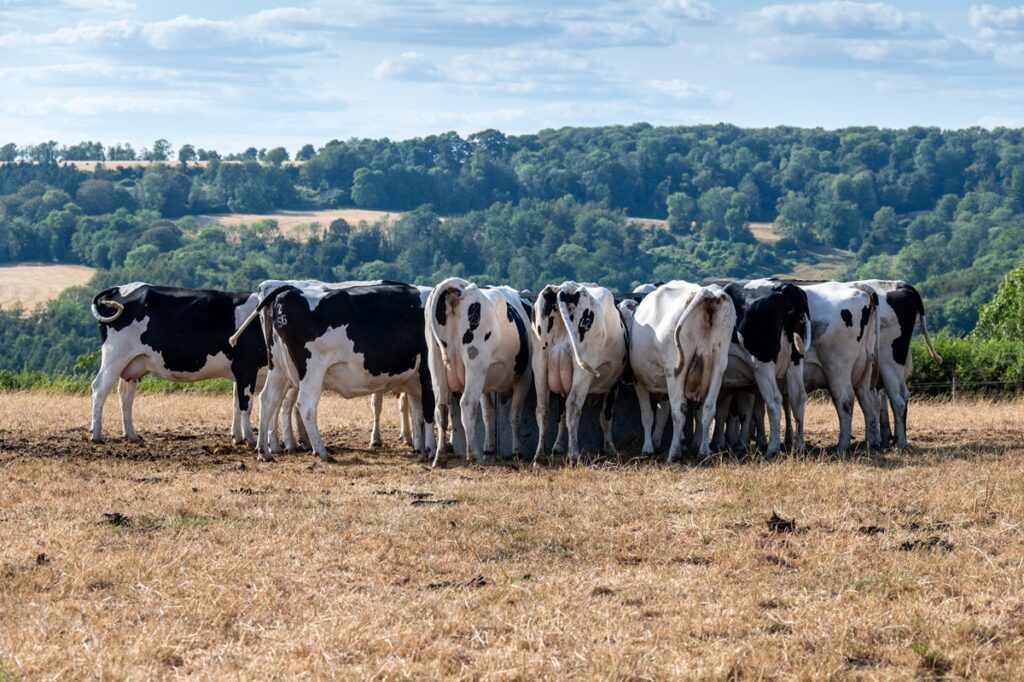
The extraordinary dry conditions experienced across England this summer provide a stark indication of how quickly environmental risk can become a food production issue.
July became the driest on record for England, leaving river flows, soil moisture and reservoir levels under severe pressure. Agricultural businesses reported earlier harvesting, concerns over cereal yields, reduced grass growth and increasing pressure on irrigation supplies.
For food manufacturers, these conditions matter even when the factory itself has no immediate shortage of water.
Reduced agricultural yields can tighten ingredient availability and push up prices. Livestock producers using winter forage during summer may face additional costs later in the year. Restrictions on abstraction can affect growers supplying processors, while weather-related variation in crop size, quality and composition can influence everything from sorting and grading to cooking performance and production yield.
Climate adaptation therefore extends beyond flood defences, water tanks and emergency plans.
Manufacturers increasingly need to understand where environmental vulnerability sits within their ingredient portfolio. A raw material sourced reliably for decades may become less predictable as temperature, rainfall and growing conditions change.
Dual sourcing, longer-term grower relationships, alternative specifications, improved forecasting and investment in agricultural resilience are consequently becoming part of environmental strategy.
The strongest businesses will increasingly treat climate resilience in the same way they treat energy, labour and logistics: as a measurable operational risk.
Efficiency Pays First: Environmental Investment Starts Inside the Factory
One of the most important changes in industrial sustainability is also one of the least glamorous.
The environmental business case is moving away from headline-grabbing technology towards detailed improvements in how factories actually consume energy and resources.
Refrigeration systems, boilers, ovens, compressors, pumps, motors, steam systems and cleaning operations all create opportunities where comparatively small efficiency improvements can be multiplied across thousands of operating hours.
That makes measurement crucial.
Installing additional sub-metering can expose the difference between theoretical and actual energy consumption. Monitoring refrigeration loads can identify deteriorating performance. Variable-speed drives can reduce unnecessary motor consumption, while heat recovery can capture energy previously rejected from refrigeration, compressed air or thermal processes.
For manufacturers with significant hot-water demand, recovering heat from one part of a process and cascading it into another can reduce both energy consumption and operating cost.
The same principle applies to compressed air. Leaks, excessive operating pressures and inappropriate use can quietly consume large amounts of electricity without contributing to production.
Increasingly, the environmental question is therefore not simply: How do we decarbonise this factory?
It is: Where are we paying for energy that creates no saleable product?
That distinction matters because efficiency projects frequently provide something that larger decarbonisation projects can struggle to demonstrate immediately — a visible financial return.
Only after those losses are understood does investment in electrification, renewable generation, battery storage, alternative fuels or larger heat-recovery systems become easier to specify accurately.
Packaging Hits the P&L: Recyclability Becomes a Financial Variable
Packaging sustainability has also entered a much more commercial phase.
Extended Producer Responsibility for packaging changes the economics by transferring more of the cost of managing household packaging waste onto producers.
For food and beverage companies, that creates a direct connection between packaging decisions and operating cost.
The next stage is particularly significant.
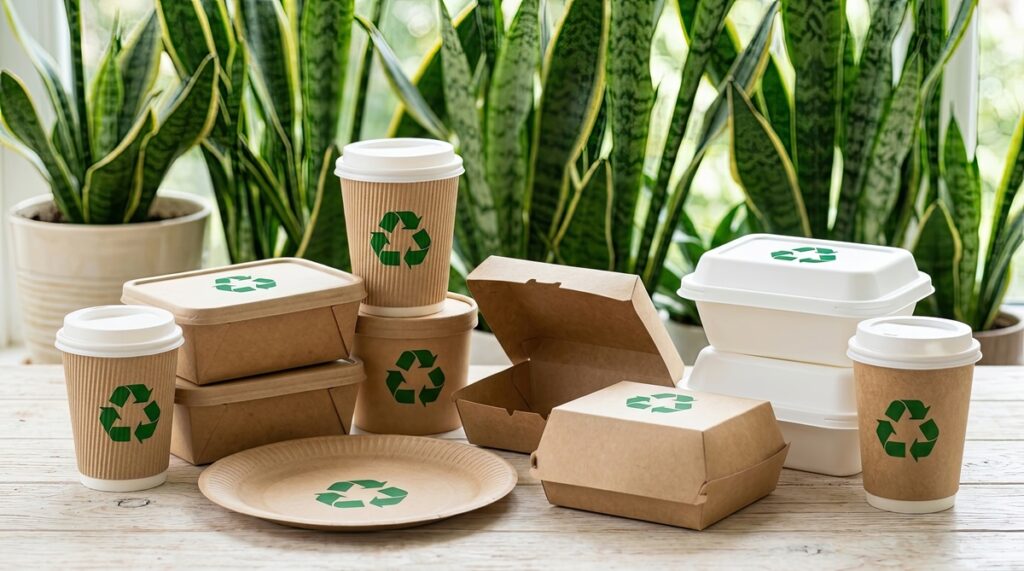
From the 2026/27 assessment year, producer disposal fees are being modulated according to packaging recyclability. Packaging assessed through the Recyclability Assessment Methodology is categorised as red, amber or green, with less recyclable packaging attracting higher costs and highly recyclable formats benefiting from lower charges.
That alters the conversation between packaging, procurement, technical, engineering and marketing teams.
A material can no longer be judged simply by its purchase price.
Its filling performance, barrier properties, shelf-life protection, weight, transport efficiency, recyclability and potential producer responsibility cost all become part of its total commercial impact.
For food businesses, this makes redesign particularly complex.
Changing a laminate, tray, bottle or closure may improve recyclability but reduce shelf life. Reducing material weight may cut packaging consumption but increase damage or food waste. Moving to an apparently simpler mono-material structure may require changes to sealing equipment or process conditions.
Environmental optimisation therefore requires whole-system thinking.
The lowest-impact package is not necessarily the package containing the least material. It is the format that performs its primary function, protects the product, works efficiently through production and distribution, and reaches the end of its useful life through a viable recycling route.
Increasingly, getting that equation wrong will cost money as well as environmental credibility.
Waste Gains Value: Circularity Moves Onto the Production Floor
Waste is undergoing a similar reassessment.
England’s Simpler Recycling requirements already require most workplaces to separate dry recyclable materials, food waste and residual waste before collection, bringing waste segregation further into day-to-day operational management.
For food manufacturers, however, compliance should represent the starting point rather than the ambition.
The greater opportunity lies in preventing material from becoming waste at all.
Production data can reveal where giveaway, start-up losses, rejected product, trimming, changeovers or inaccurate filling are creating avoidable losses. Vision systems and automated inspection can identify defects earlier. Better production scheduling can reduce cleaning and changeover waste, while improved forecasting can prevent overproduction.
Where unavoidable side streams remain, manufacturers are increasingly looking for the highest-value route available.
Food surplus may be redistributed. Suitable materials can potentially become animal feed or ingredients for other processes. Other organic streams can be used for biomaterials, anaerobic digestion or energy recovery.
The commercial principle is simple: every tonne leaving the site as waste originally entered the business as something that had value.
That value may include ingredients, water, energy, labour, packaging and production capacity.
Reducing waste therefore delivers more than lower disposal costs. It can improve yield, reduce purchasing requirements and increase the amount of finished product generated from the same resource input.
That makes waste reduction one of the clearest areas where environmental and manufacturing efficiency converge.
Biology Joins Engineering: Resilience Begins Before Ingredients Reach the Factory
Technology supporting environmental performance is also moving further upstream.
England’s precision-breeding framework became operational for plants in late 2025, creating a regulatory pathway for crops developed using techniques such as gene editing.
In March, a gene-edited barley developed by Rothamsted Research became the first crop to receive confirmation of a Precision Bred Organism marketing notice under the new framework.
The development is significant because environmental innovation does not necessarily have to happen inside the factory.
Future crop varieties could potentially provide improved disease resistance, greater resilience to environmental stress, altered nutritional characteristics or more efficient use of agricultural inputs.
Rothamsted’s barley, for example, has been developed with increased lipid content as a higher-energy forage crop, with the potential to improve feed efficiency and reduce methane emissions from ruminants.
For processors, the longer-term implications could be substantial.
A crop that requires fewer inputs, experiences lower losses or performs more consistently under difficult growing conditions could influence upstream emissions while also improving supply resilience.
Precision breeding will not remove climate risk, nor will every new trait become commercially successful. Consumer acceptance, food authorisation, agronomic performance and economics will all influence adoption.
But it illustrates a broader shift.
Environmental innovation is moving beyond simply improving how existing ingredients are processed. Increasingly, science and technology may change the characteristics of the ingredients entering the factory in the first place.
Controlled Growing Gets Real: Environmental Technology Has to Prove Its Economics
Controlled environment agriculture illustrates another important change in thinking.
Indoor and vertical farming attracted considerable attention because of its potential to reduce land requirements, shorten supply chains and dramatically reduce agricultural water consumption.
The difficult issue has always been energy.
Lighting, heating, cooling and environmental control can create a significant energy requirement, meaning the environmental performance of a system depends heavily on its design, energy source, crop selection and location.
That is pushing the sector towards a more pragmatic model.
Rather than viewing vertical farming as a universal replacement for conventional agriculture, controlled growing increasingly makes most sense where the economics and infrastructure align.
Locating production alongside sources of renewable electricity, surplus heat or industrial carbon dioxide can improve the equation. Greenhouses combined with supplemental lighting may offer a different balance from fully enclosed vertical farms. High-value crops can support economics that would be impossible for lower-value commodities.
For food manufacturers, the interesting opportunity may therefore lie in integration.
A processing facility producing recoverable heat, organic nutrients or other usable side streams could potentially become part of a wider production ecosystem rather than operating as an isolated factory.
The environmental benefit then comes not from one technology, but from connecting systems that previously operated separately.
Data Becomes the Proof: Sustainability Moves From Claims to Evidence
Perhaps the least visible environmental technology is also becoming one of the most important.
Data.
Businesses have spent years collecting production information for efficiency, quality, traceability and food safety. Increasingly, the same principle is being applied to environmental performance.
Energy use can be measured by line or process. Waste can be attributed to individual products or changeovers. Packaging can be assessed against recyclability criteria. Carbon information can increasingly be linked to suppliers, ingredients and logistics.
This matters because sustainability claims are becoming harder to separate from evidence.
Retail customers want information from suppliers. Manufacturers need information from growers and ingredient businesses. Packaging suppliers need to provide data about material composition and recyclability.
That creates a chain of environmental information running alongside the physical supply chain.
For manufacturers, the danger is creating another reporting system detached from operations.
The more valuable approach is to combine environmental and production data.
Energy per tonne produced is more useful operationally than a factory-wide electricity figure. Waste percentage by SKU can expose inefficient products. Water consumption per production run can identify abnormal cleaning or processing conditions.
Environmental KPIs become powerful when engineers and production managers can use them to make decisions.
Artificial intelligence and advanced analytics will increasingly help identify patterns within this information, but the fundamental requirement remains reliable measurement.
A sophisticated dashboard cannot compensate for poor underlying data.
Resilience Wins: Sustainability Becomes a Productivity Strategy
Food and beverage businesses have not suddenly stopped caring about carbon emissions, biodiversity or environmental impact.
What is changing is the context in which those ambitions are being pursued.
Climate disruption is making ingredient resilience more valuable. Energy prices have strengthened the case for efficiency. Packaging regulation is attaching financial consequences to material choices. Waste rules are increasing the importance of segregation and resource recovery. New biological technologies are opening additional routes to agricultural resilience.
The environmental strategy is therefore becoming closely connected to the productivity strategy.
That changes how investments should be assessed.
A heat-recovery project can reduce emissions and energy costs. Better production control can reduce food waste and increase yield. More recyclable packaging can reduce environmental impact while limiting future producer responsibility costs. Improved supplier data can strengthen environmental reporting while identifying supply-chain vulnerabilities.
The strongest projects increasingly solve several problems at once.
For senior decision-makers, that may be the most important environmental development of all.
Sustainability is no longer sitting alongside manufacturing strategy.
It is becoming part of how resilient manufacturing businesses are designed.
How can food manufacturers improve environmental data?
Businesses can connect environmental measurements with existing production data. Monitoring indicators such as energy per tonne, waste by product, packaging recyclability and resource consumption by process provides information that engineering and production teams can use to identify inefficiency and verify improvements.
What is precision breeding and why does it matter to food manufacturers?
Precision breeding uses technologies including gene editing to make targeted genetic changes that could also occur naturally or through traditional breeding. Potential applications include crop resilience, disease resistance, improved nutritional characteristics and more efficient agricultural production, which could ultimately affect ingredient availability and upstream environmental impact.
What environmental improvements can food factories make quickly?
Energy monitoring, refrigeration optimisation, compressed-air management, heat recovery, waste reduction and improved process control can often provide relatively rapid environmental and financial gains because they reduce resources consumed without increasing saleable production.
How will Extended Producer Responsibility affect food packaging?
Extended Producer Responsibility transfers more of the cost of managing household packaging waste to producers. From the 2026/27 assessment year, disposal fees are modulated according to recyclability, creating a stronger financial incentive to design packaging that can be effectively recycled.
Why is environmental resilience becoming important for food manufacturers?
Extreme weather can affect crop yields, ingredient availability, livestock production, logistics and costs. Manufacturers therefore need to consider climate exposure across their supply chains as well as environmental performance within their own factories.