Industry Insight: In 2026, meat, poultry, and seafood processing is being reshaped by high-moisture extrusion (HME) for hybrid proteins, hyperspectral imaging for contaminant detection, and tighter regulatory oversight like the EU’s 2026 Listeria amendments. Manufacturers are shifting toward predictive yield management using AI-driven robotic cutting lines and blockchain-enabled traceability platforms. These innovations allow processors to adapt to the rheology of plant-meat blends while meeting escalating transparency and ESG reporting requirements.
For decades, meat, poultry and seafood have formed the backbone of the global food system. Yet by 2026 the sector is navigating one of the most complex transitions in its history. Environmental pressure, regulatory scrutiny, supply chain volatility and changing consumer expectations are forcing producers to rethink how protein is sourced, processed, packaged and distributed. The result is not a retreat from animal protein, but a profound technological and operational transformation across the industry.
The Flexitarian Reality: Demand Is Changing Shape
Contrary to some predictions earlier in the decade, meat consumption has not collapsed. Instead, it has become more nuanced. A growing proportion of consumers now identify as flexitarian, balancing traditional animal proteins with plant-based foods rather than abandoning meat entirely.
For producers, this shift has changed how protein products are designed and marketed. Instead of focusing solely on high-volume commodity cuts, manufacturers are investing more heavily in portion-controlled products, hybrid protein formats and ready-to-cook meal components that fit modern lifestyles.
Hybrid protein products — blending animal protein with plant ingredients or cultivated fats — have gained particular attention. These products help maintain the flavour and texture consumers expect while reducing production costs and environmental impact.
At the same time, the broader plant-based sector has entered a phase of recalibration. Sales of highly processed meat analogues declined in several major markets during 2023 and 2024, but demand for whole-food plant proteins such as tofu, tempeh and pulses continues to grow. For meat processors, this shift is opening opportunities to diversify portfolios without abandoning traditional protein production.
Rather than replacing meat, alternative proteins are increasingly being integrated into a wider protein ecosystem where manufacturers balance cost, nutrition and sustainability.

Tackling Methane and Emissions in Livestock Production
Environmental pressure remains one of the defining challenges for the meat sector, particularly in beef and dairy supply chains where methane emissions attract intense scrutiny.
Feed additives such as Bovaer®, which can reduce methane emissions from cattle by around 30 percent, are already being adopted by producers in Europe and North America. These technologies are becoming increasingly important as governments move toward stricter greenhouse gas accounting for agricultural supply chains.
The UK government’s emerging methane strategy is expected to introduce stronger monitoring and reporting expectations for livestock producers, particularly those supplying international markets. For companies exporting into the European Union, new emissions transparency requirements are also creating additional compliance obligations.
Meanwhile, research into methane-reducing vaccines and microbiome technologies is gaining momentum. Early trials suggest that targeting methane-producing microbes in the rumen could reduce emissions dramatically, potentially transforming how livestock sustainability is managed over the coming decade.
For meat processors and retailers, these developments signal a future where environmental performance becomes as critical to supply contracts as price or quality.

Cultivated Meat and the Regulatory Sandbox
Perhaps the most closely watched development in the protein sector is the gradual emergence of cultivated meat.
While the technology has been discussed for more than a decade, the regulatory landscape is now beginning to evolve. The UK’s Food Standards Agency launched a regulatory sandbox for cultivated meat products in 2025, allowing companies to work directly with regulators to accelerate safety assessments.
Several international companies are now participating in the programme, including firms developing cultivated beef, poultry and seafood ingredients. The aim is to streamline approval processes that previously took several years.
The UK has already taken a small but symbolic step by approving cultivated chicken cells for use in pet food, marking the first commercial application of the technology in Europe.
For manufacturers, the early commercial opportunity may not lie in whole cultivated steaks but in blended products, where cultivated fats or proteins enhance flavour and texture in hybrid meat formulations. This approach could allow cultivated ingredients to enter the market sooner while production costs continue to fall.
Traceability, Transparency and the Greenwashing Risk
While technological innovation continues to reshape protein production, regulatory pressure is simultaneously intensifying.
One of the most significant developments for food manufacturers is the UK’s Digital Markets, Competition and Consumers Act, which came into force in April 2025. The legislation gives the Competition and Markets Authority new powers to fine companies up to ten percent of global turnover for misleading environmental claims.
For meat, poultry and seafood producers — industries where sustainability messaging is increasingly prominent — this represents a major compliance risk.
Companies must now ensure that claims relating to carbon reduction, animal welfare, regenerative farming or sustainable fisheries are supported by verifiable evidence. Vague marketing language is rapidly becoming a liability.
Traceability technologies are therefore gaining strategic importance. Blockchain-based systems, advanced QR codes and digital product passports are allowing producers to track protein products from farm or fishing vessel through processing and distribution.
Beyond regulatory compliance, these systems also help protect brand integrity in a market where provenance and transparency have become critical purchasing factors.
Fisheries Under Pressure: Sustainability and Stock Management
Seafood producers face a distinct but equally complex set of challenges.
Global fish stocks remain under intense scientific scrutiny, with many fisheries subject to tighter catch limits and sustainability management frameworks. Governments across Europe are developing increasingly detailed fisheries management plans designed to balance environmental protection with economic viability for fishing communities.
In the UK alone, more than forty fisheries management plans are being developed or implemented under the Fisheries Act framework. These plans introduce new monitoring requirements, stock recovery targets and data collection standards.
For seafood processors and distributors, these changes reinforce the importance of supply chain diversification and traceability. Technologies such as satellite vessel tracking, digital catch documentation and AI-powered stock monitoring are becoming essential tools in managing sustainable seafood supply.
As with livestock production, the long-term challenge is not simply maintaining production volumes but ensuring that harvesting practices remain environmentally sustainable.
Processing Technology and the Rise of Smart Protein Production
While public debate often focuses on farming and sustainability, some of the most important innovations are taking place inside processing facilities.
Automation and intelligent machinery are increasingly helping processors deal with one of the industry’s biggest challenges: natural variability in raw materials.
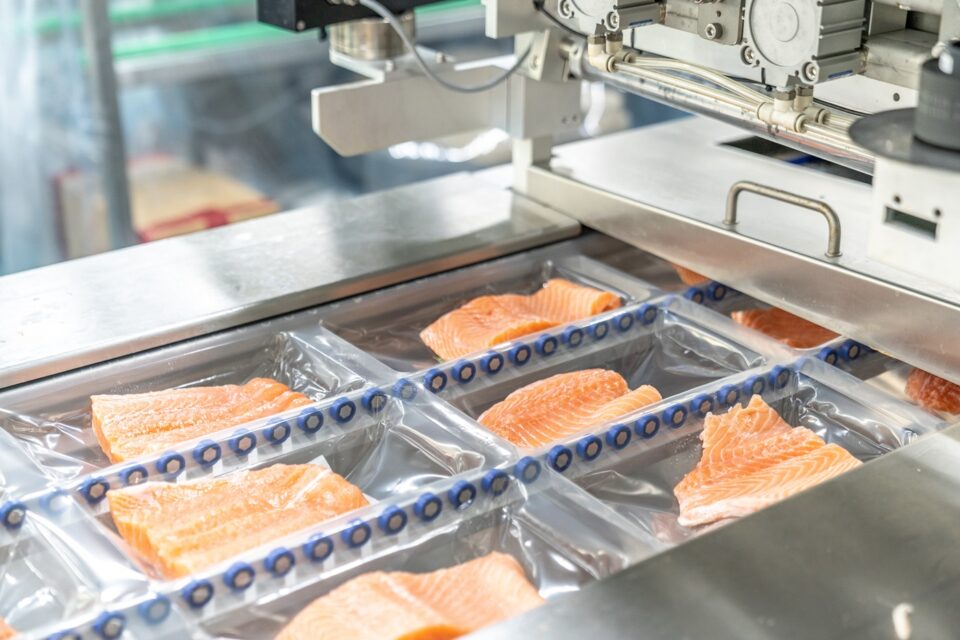
Advanced imaging systems, AI-assisted grading equipment and automated trimming technologies allow processors to maximise yield from each carcass or fish while maintaining consistent product quality.
In poultry processing, hyperspectral imaging systems can detect contamination or defects that traditional inspection systems might miss. In seafood processing, robotic filleting systems are adapting cutting patterns in real time to match the size and shape of individual fish.
These technologies not only improve efficiency but also address labour shortages that continue to affect food manufacturing across Europe and North America.
For processors operating in a high-margin, high-compliance industry, automation is increasingly less about replacing workers and more about ensuring consistent food safety and quality standards.
Packaging Innovation for Fresh Protein
Packaging is also undergoing rapid evolution in response to sustainability legislation and food waste concerns.
Fresh protein products require highly protective packaging to maintain hygiene and shelf life, but the pressure to reduce plastic use is forcing manufacturers to explore new material solutions.
Developments in mono-material barrier films, recyclable trays and antimicrobial packaging coatings are helping producers reduce environmental impact without compromising food safety.
At the same time, intelligent packaging technologies are emerging that can monitor temperature exposure or spoilage indicators throughout the supply chain.
For meat, poultry and seafood producers, these packaging innovations are becoming a crucial part of product strategy, particularly as retailers demand lower environmental footprints while maintaining strict shelf-life requirements.
A Sector Refining Rather Than Reinventing
Despite the rapid pace of change, the future of meat, poultry and seafood is unlikely to involve a dramatic replacement of animal protein.
Instead, the industry is entering a phase of refinement. Producers are adopting smarter technologies, strengthening supply chain transparency and integrating new protein formats alongside traditional products.
For manufacturers, the priority is resilience — building systems capable of adapting to regulatory change, environmental pressure and evolving consumer expectations without compromising efficiency.
Meat, poultry and seafood remain central to global diets. The challenge for the sector is not whether these foods will remain relevant, but how intelligently the industry can evolve the systems that produce them.
What technologies are transforming meat and poultry processing in 2026?
In 2026, processing is defined by hyperspectral imaging for millimeter-level contaminant detection and AI-driven robotic deboning that adjusts in real-time to carcass variability. These systems integrate with plant-wide Digital Twins to optimize yield and provide predictive maintenance, shifting the industry from reactive repairs to proactive infrastructure management.
What are hybrid proteins in the meat industry?
Hybrid proteins blend traditional animal meat with plant-based fibers or cultivated fats to create a "middle ground" for flexitarian consumers. In 2026, manufacturers use High-Moisture Extrusion (HME) to ensure these blends maintain the sensory profile of whole-muscle meat while significantly reducing the carbon footprint and cholesterol content per SKU.
Why is traceability becoming more important in meat and seafood supply chains?
As of January 10, 2026, the EU’s Revised Fisheries Control Regulation requires fully digital "net-to-plate" traceability. Paper-based records are no longer sufficient; processors must now use digital catch certificates (via systems like CATCH) that document unique vessel IDs, gear types, and GPS catch locations to combat IUU fishing and meet retail transparency audits.
How is automation improving efficiency in meat processing plants?
Automation in 2026 has moved beyond simple conveyors to intelligent portioning and robotic butchery. These systems use laser scanning to maximize "high-value" cuts from every carcass, reducing reliance on manual labor in hazardous environments while increasing food safety by minimizing human contact with raw proteins.
What sustainability pressures are affecting the global meat industry?
The primary pressure in 2026 is Scope 3 emissions reporting and "Environmental Performance" as a procurement metric. Under new ESG mandates, retailers are increasingly choosing suppliers based on their energy-per-kilo metrics. Consequently, producers are investing in Variable Frequency Drives (VFDs) and waste-to-energy systems to turn side-streams into secondary revenue or fuel.