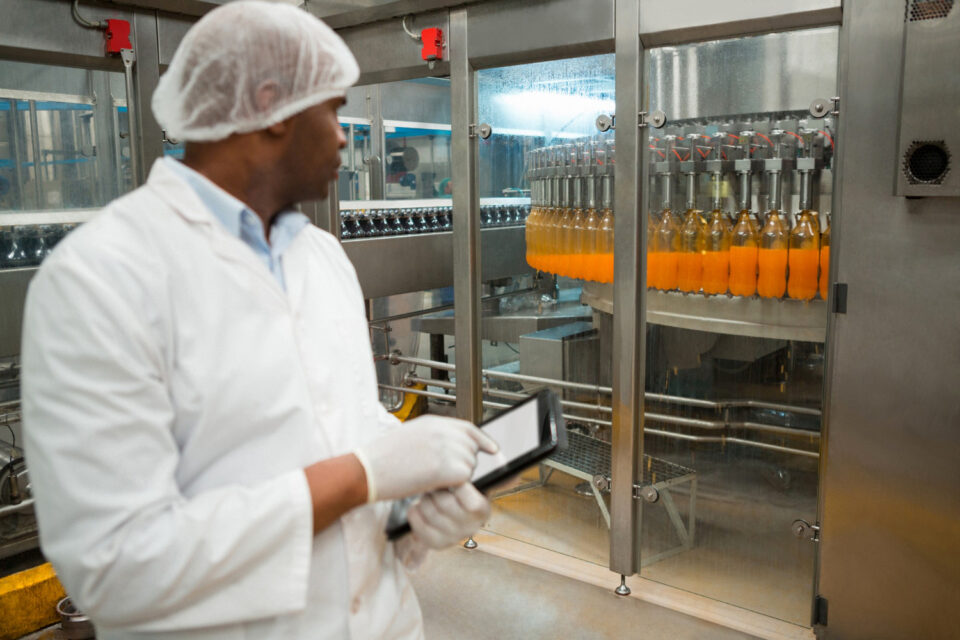
The pumps and fluids industry is experiencing rapid growth, largely driven by the increasing demand for heightened automation in manufacturing processes. For medium and large-scale food and drink manufacturers, the efficient movement of products during processing is a critical aspect. Among the various options available, pumps have emerged as a convenient choice due to their adaptability to different product types, including solids, and their space-saving design in warehouses. However, choosing the right pumping system involves considering multiple factors, with viscosity being a primary quality parameter that significantly impacts the production and processing of fluids.
When selecting pumping systems, it is essential to assess the viscosity of the product. Viscosity measures the resistance to flow and plays a crucial role in determining the behavior of materials during production. Not all pumps are suitable for every product, and an evaluation of viscosity is necessary before investing in pumping equipment. While the processing and packaging stages of the manufacturing chain are already efficient, accounting for only around 4% of wastage, there is always room for optimization to enhance operations.
Materials to be pumped can generally be categorized into those that can be transported through pipes and those requiring other mechanical systems for conveyance. The viscosity of the material often determines its category, but various types of products, including powders, pastes, liquids, and solid particles suspended in liquids, can be effectively pumped. Therefore, it is crucial to select a pump specifically designed to handle the characteristics of the material in question.
Using pumps beyond their intended purpose can lead to product damage, which is particularly critical in the food industry. High-viscosity items such as treacle, honey, custards, and creams operate on narrow profit margins. Any damage during processing can result in significant financial losses. A key indicator of using an incorrect pump is a change in viscosity, leading to runny or separated fluids. Moreover, pumps may damage or remove solid fractions if suspended within the material, undermining the integrity of the final product.
Prior to choosing a pump, several key factors should be evaluated. Apart from viscosity, particle size analysis should be conducted to ensure the pump is appropriately sized for the material being processed. Chemical composition is another vital consideration, as it affects the choice of materials used to manufacture the pump. Achieving cost-effectiveness while meeting specific requirements is crucial when customizing pumps. Additionally, the temperature of the product during processing impacts its physical properties, and analyzing the vapor pressure helps prevent issues like flashing or cavitation.
These physical characteristics determine the sensitivity of the fluid and its susceptibility to damage by the pump’s impeller. Exposure to high shear stresses can alter the properties of the material, which may not be desirable for all product types. By purchasing pumping systems tailored to specific purposes, manufacturers can ensure compliance with required sanitation standards. Rotary lobe, rotary piston, reciprocating positive displacement, progressing cavity, peristaltic hose, and air-operated double diaphragm pumps are commonly used in the food and cosmetic production sectors. In this article, we will focus on rotary volumetric pumps, highlighting the challenges that arise when products are not well-suited to them.
Progressive cavity pumps feature a helical rotor turning inside a helical stator, creating a honeycomb effect. This design enables materials to spiral along the pump’s axis, from suction to discharge. These pumps provide a steady flow of liquid at any viscosity without pulsation and can handle high pressures up to 24 bars. With their specific design for the food sector, they preserve the integrity of products such as milk, eggs, and yogurts. The helical nature of these pumps facilitates easy cleaning without disassembling parts, allowing production to continue uninterrupted. Furthermore, progressive cavity pumps are reversible, enabling adaptation to meet specific production requirements.
However, progressive cavity pumps are susceptible to chemical attack. Certain chemical compositions can be incompatible with the materials used to manufacture the pump, leading to the wearing away of chrome plating. This compromises both the pump’s sanitization and the product’s quality, as it may cause abrasion. An alternative to progressive cavity pumps is the reciprocating positive displacement pump, which is ideal for delicate products with low viscosity, such as creamy foods or pharmaceutical items. These pumps maintain high pressure to ensure a consistent flow of product while minimizing the risk of separation.
Implementing a well-suited pumping system can have a positive impact on product quality and manufacturing efficiency. However, choosing the correct pump for specific products is crucial to avoid potential damage or slowdowns in the production process. Conducting a thorough analysis before purchasing pumps is highly recommended, with a particular focus on viscosity, chemical composition, and temperature. Progressive cavity pumps are better suited for high-viscosity products, while reciprocating positive displacement pumps may be more beneficial for low-viscosity products. Gaining a deeper understanding of your product’s characteristics can also uncover other ways to improve production processes and enhance overall efficiency.
In conclusion, as the food and drink industry continues to embrace automation, the demand for efficient fluid transfer through pumping systems is on the rise. Selecting the right pump tailored to the specific characteristics of the product is essential for maintaining product integrity, optimizing operations, and minimizing wastage. By considering factors such as viscosity, particle size, chemical composition, and temperature, manufacturers can ensure the successful implementation of pumping systems that enhance productivity and product quality.