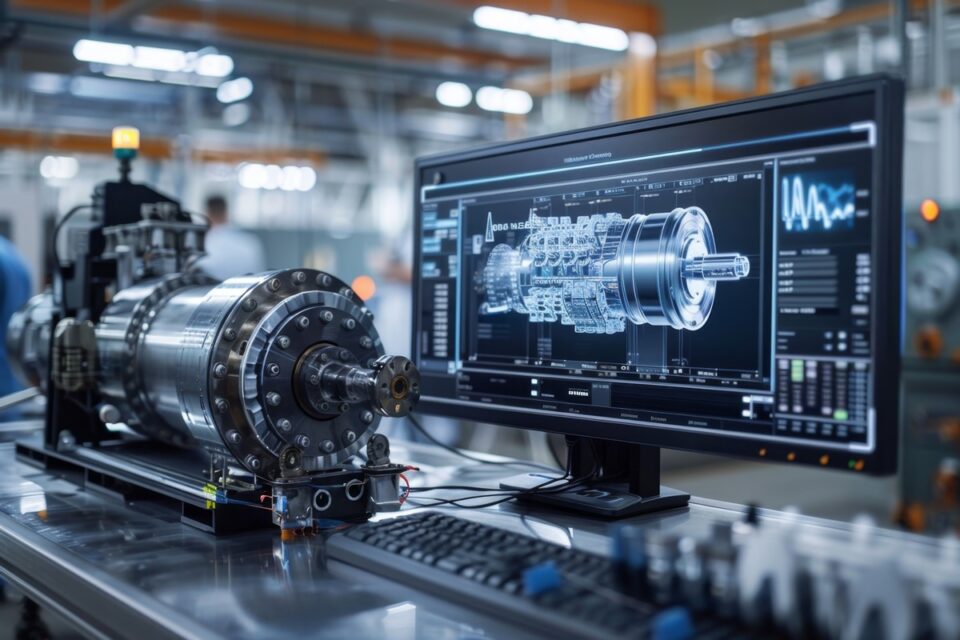
Industry Insight: Motion Control & Smart Infrastructure 2026 In 2026, gears, motors, and drives have evolved from passive mechanical components into intelligent data nodes within the smart factory. Driven by the EU Energy Efficiency Directive and the 2026 rollout of Digital Product Passports (DPP), manufacturers are shifting toward IE5 Ultra-Premium Efficiency motors and synchronous reluctance (SynRM) technology to slash energy losses by up to 40%. Beyond power, the integration of Digital Twin modeling and AI-driven motion analytics is enabling autonomous process control—where drives automatically adjust torque and speed to compensate for ingredient variability, reducing unplanned downtime by 30% and securing 2026 compliance for digital traceability.
For decades, gears, motors and drives have quietly powered the food industry’s production lines. From conveyor belts and mixers to high-speed packaging equipment, motion systems form the mechanical backbone of modern factories.
In 2026, however, these systems are undergoing a profound transformation. Advances in AI-driven control platforms, digital twins, ultra-efficient motors and connected industrial networks mean gears and drives are no longer passive mechanical components. Instead, they are becoming intelligent nodes within a fully digitalised manufacturing ecosystem.
For food manufacturers facing rising energy costs, labour shortages and tightening regulatory oversight, this shift is turning motion control infrastructure into a strategic investment capable of improving efficiency, compliance and operational resilience.
From Mechanical Motion to Intelligent Systems
Traditional drive systems were designed to deliver consistent mechanical performance. Engineers focused on torque, speed control and durability.
Today’s systems go far beyond those fundamentals.
Modern servo drives and gearboxes are increasingly integrated with real-time monitoring platforms that track vibration, temperature, lubrication levels and load fluctuations. This data feeds into AI-powered analytics platforms capable of identifying performance anomalies before they become operational failures.
The result is the rise of what many manufacturers now describe as autonomous process control.
Rather than relying on operators to manually adjust line speeds or torque levels, AI models can interpret production data in real time and automatically optimise motion parameters. If viscosity changes during sauce production or packaging materials behave differently under heat, the system can adapt drive speeds or sealing pressure without human intervention.
For high-volume food processors, this ability to continuously optimise production conditions can significantly reduce waste, improve consistency and minimise downtime.
Predictive Maintenance and the Rise of Digital Twins
One of the most significant developments in motion technology is the rapid adoption of digital twin modelling.
A digital twin is a virtual representation of a physical machine or component that continuously receives data from sensors embedded within equipment. For drives and gearboxes, this means every bearing load, temperature change and vibration pattern can be analysed in real time.
These models allow engineers to predict the remaining useful life of components with remarkable accuracy.
If a gearbox begins to show abnormal vibration patterns or heat signatures, the system can flag the issue weeks before a failure occurs. Maintenance teams can then replace parts during planned downtime rather than dealing with unexpected breakdowns.
Major manufacturers have already demonstrated the impact of this approach. Predictive maintenance programmes using digital twins have reduced unplanned downtime by as much as 30% in some large food processing operations.
As the cost of sensor networks and analytics platforms continues to fall, digital twin technology is now becoming accessible to mid-sized manufacturers rather than just multinational food companies.
Energy Efficiency Moves Centre Stage
Energy efficiency has always been a concern for food processors, but regulatory pressure is pushing the issue to the top of engineering agendas.
Electric motors typically account for up to 97% of a motor’s total lifecycle cost, meaning efficiency improvements can deliver substantial financial savings.
Across Europe, manufacturers are increasingly upgrading to IE4 and IE5 efficiency motors, with IE5 synchronous reluctance motors offering significantly reduced energy losses compared to earlier generations.
This shift is being accelerated by the revised EU Energy Efficiency Directive, which is placing greater responsibility on industrial users to prioritise efficiency upgrades and document energy management strategies.
For energy-intensive food production environments — such as dairy processing, freezing operations or large-scale baking facilities — replacing older drive systems with high-efficiency motors and variable frequency drives can significantly reduce electricity consumption.
In some cases, modern regenerative drive systems are also capable of capturing energy generated during braking or deceleration and feeding it back into the factory’s power system.
AI Vision Systems and Automated Quality Control
Motion control technology is increasingly linked to AI-powered vision systems that monitor product quality and food safety.
Advanced machine vision tools can now inspect products at high speed while simultaneously controlling motion systems that remove defective items from production lines.
More sophisticated systems are even being deployed to verify sanitation procedures. AI-powered inspection cameras can detect residues after cleaning-in-place (CIP) processes, identifying contamination risks that may be invisible to human operators.
This integration between vision systems and motion control enables automated responses — slowing conveyor speeds, isolating product batches or triggering alerts for maintenance teams.
However, the growing use of AI in production environments is also introducing new regulatory considerations.
The EU AI Act, which is beginning to shape industrial applications of artificial intelligence, classifies many AI-powered inspection systems as “high-risk”. Manufacturers will increasingly need to demonstrate transparency in how these systems make decisions and ensure that human oversight remains possible at all times.
Motion Systems as Data Infrastructure
Beyond operational efficiency, gears and drives are now playing an unexpected role in digital traceability.
Connected motion systems can capture production data at critical points across the manufacturing process. Conveyor speeds, batch timings and machine parameters can all be logged automatically and linked to product identifiers.
This capability is becoming particularly valuable as global traceability regulations expand.
For example, the U.S. Food Safety Modernization Act (FSMA) Rule 204 requires companies exporting certain food products to maintain detailed digital records of critical tracking events. Production equipment is increasingly becoming the most reliable source of this data.
At the same time, emerging initiatives such as Digital Product Passports are expected to require manufacturers to capture detailed information about the environmental footprint of products, including energy use during manufacturing.
Motion systems connected to factory-wide analytics platforms can help generate this data automatically, enabling companies to support sustainability reporting and compliance requirements.
Designing for Hygiene and Extreme Environments
While digitalisation is transforming motion systems, traditional engineering priorities remain crucial in food production environments.
Gearboxes and drives must still withstand frequent washdowns, corrosive cleaning agents and extreme temperature conditions.
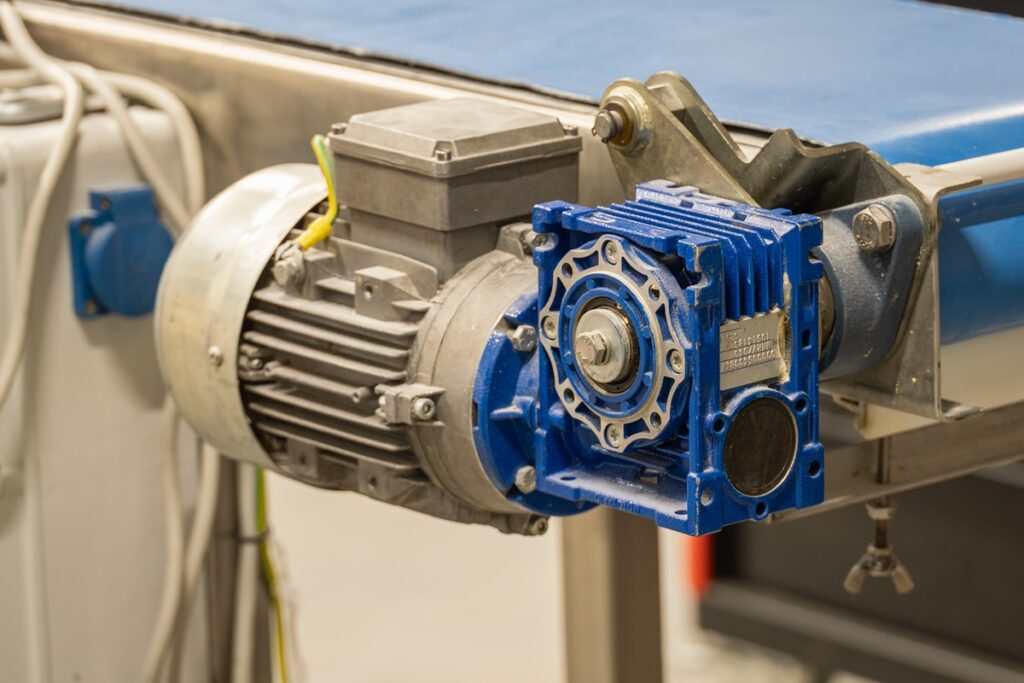
To meet these demands, equipment manufacturers are increasingly offering hygienically designed drives built with stainless steel housings, smooth surfaces and sealed lubrication systems that prevent contamination risks.
In addition, robotics systems equipped with compact planetary drives are being deployed in environments that are difficult or hazardous for human workers — including frozen food lines operating below zero degrees and high-pressure sanitation areas.
This trend reflects a broader shift toward automation in areas where labour availability remains a challenge.
The Strategic Role of Motion Control
For food manufacturers, the role of gears and drives has evolved far beyond simply keeping production lines moving.
Modern motion systems now sit at the intersection of automation, sustainability, regulatory compliance and digital transformation.
By combining AI-driven optimisation, digital twin modelling and high-efficiency motors, manufacturers can reduce energy consumption, improve reliability and generate the operational data needed for modern compliance frameworks.
In an increasingly complex manufacturing environment, intelligent motion control is becoming one of the most important foundations of the smart factory.
For the food industry, the machines that once quietly powered production lines are now becoming some of the most valuable sources of intelligence within the entire factory.
How does the EU Energy Efficiency Directive affect motor selection in 2026?
As of 2026, the revised Directive mandates stricter energy management for industrial users. This is driving a rapid shift toward IE5 "Ultra-Premium" efficiency motors, which offer significantly lower lifecycle costs than traditional IE3 models. For food processors, upgrading to IE5 synchronous reluctance motors (SynRM) is now a primary strategy for meeting corporate carbon reduction targets and qualifying for energy-related tax incentives.
What is the role of Digital Twins in predictive maintenance for 2026?
A Digital Twin is a virtual replica of a physical drive or gearbox that uses real-time sensor data (vibration, heat, load) to simulate performance. In 2026, these models allow maintenance teams to move from "scheduled" to "actual-need" repairs. By predicting component failure weeks in advance, food processors can reduce unplanned line stoppages by up to 30%, ensuring high-volume production remains resilient.
How do AI vision systems interact with motion control for food safety?
In 2026, motion systems are no longer "blind." They are increasingly integrated with AI-powered hyperspectral vision systems that detect invisible residues after Cleaning-in-Place (CIP). When a contaminant is detected, the vision system communicates directly with the servo drives to automatically isolate the batch or adjust conveyor speeds, ensuring that food safety is enforced in real-time without human error.
Is AI-driven motion control considered "High-Risk" under the EU AI Act?
While most production optimization AI is considered "low-risk," the EU AI Act (fully applicable to machinery from August 2026) classifies systems as "High-Risk" if they serve as critical safety components. Manufacturers using AI for automated quality decisions or safety-critical motion must ensure their systems allow for human oversight and maintain detailed technical documentation to meet the new legal transparency standards.
How do connected drives support the new Digital Product Passport (DPP) requirements?
The EU Digital Product Passport (DPP) and U.S. FSMA Rule 204 both require manufacturers to provide detailed digital records of a product’s lifecycle. Connected drives act as "data anchors," automatically logging energy-per-SKU, batch timing, and machine parameters. This "machine-level data" is becoming the most reliable way for food manufacturers to generate the environmental and traceability metrics required for 2026 retail audits and regulatory compliance.