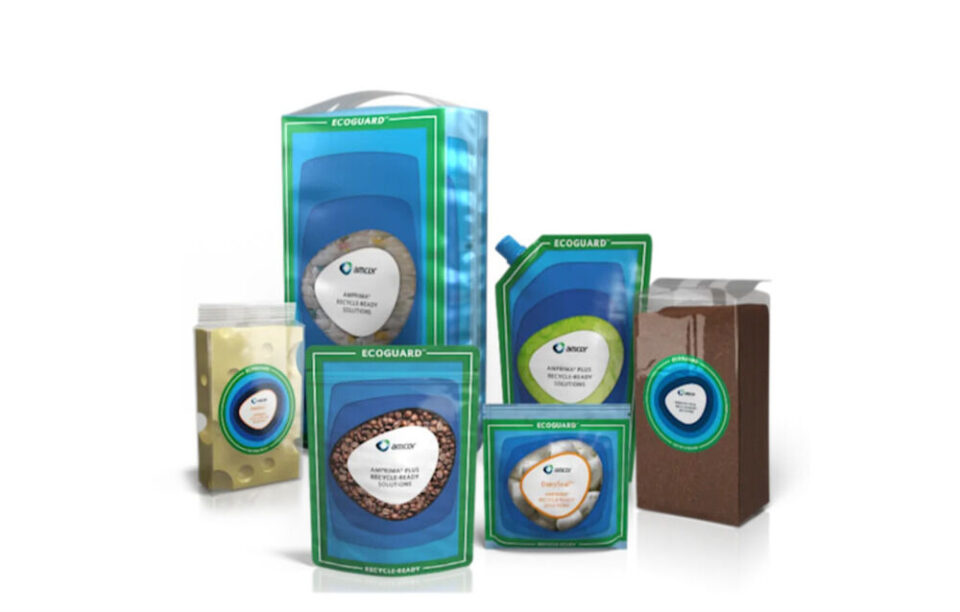
Amcor and materials science specialist Dow are working together to help consumer brands and retailers bring lower-carbon packaging to market more quickly. The initiative reflects the growing focus on food and beverage industry trends, including measurable emissions reduction and more sustainable product development.
The collaboration combines Amcor’s packaging development capabilities, production expertise, and international footprint with Dow’s low-carbon polyethylene, materials science knowledge, and carbon accounting solutions. The companies intend to support commercial partners as they introduce and expand next-generation packaging formats that preserve essential performance, quality, and functionality while helping address Scope 3 greenhouse gas (GHG) reduction objectives.
Reducing obstacles to commercial decarbonisation
Scope 3 emissions arise indirectly throughout a business’s upstream and downstream value chain. For many organisations, they account for the majority of the total carbon footprint, making them a central challenge in corporate sustainability programmes. Although numerous brands have announced ambitious climate targets, implementation can be slowed by financial uncertainty and the complexity of redesigning established packaging systems.
Amcor and Dow are responding with a new commercial approach based on market mechanisms. The model is intended to lower the risks associated with adoption, strengthen demand signals, and simplify how consumer goods companies assess lower-carbon packaging options. It also aligns with wider food manufacturing trends, food processing technology developments, and the increasing importance of food and drink sustainability.
“One of the biggest barriers to decarbonisation is the gap between consumer interest and commercial commitment,” said Keith Cleason, business president of packaging & specialty plastics at Dow. “Together with Amcor, we are testing a new commercial model through market-based mechanisms to reduce adoption risk, create clearer demand signals and help accelerate commercialisation of low-carbon packaging solutions across the value chain. We are making it easier for brands and retailers to evaluate and integrate low-carbon packaging options that support both business growth and sustainability objectives.”
Existing-format integration and independently assured carbon data
The initiative’s key benefit is the availability of a “drop-in solution.” Brands can use low-carbon polyethylene within established packaging formats, limiting the need for extensive redesign work or investment in new production equipment. This approach can support food and drink industry innovation while helping companies respond to evolving food and drink consumer trends, food and drink regulations, and expectations around food and drink packaging.
“Scope 3 emissions occur upstream and downstream in the value chain, making it difficult to reduce,” said David Clark, chief sustainability officer at Amcor. “Bringing low carbon polyethylene to market in packaging that meets the same technical and design standards is one of the simplest ways to help shrink a product’s carbon footprint. Because it’s truly a drop-in solution for brands, we see this collaboration as an exciting opportunity for them to translate climate commitments into action.”
Transparency is supported through the Carbon Footprint Ledger (CFL) methodology, which the partners are applying to emissions reporting. Using mass balance principles for GHG accounting, CFL delivers independently assured product carbon footprint information that follows recognised international frameworks, including ISO 14067 and the Greenhouse Gas Protocol Product Standard. As a result, brands and retailers gain a clearer understanding of the environmental consequences associated with their packaging choices, supporting informed food and drink marketing, procurement, and food distribution trends.