Robust, safe, and circular by design, the food can represents one of the most dependable packaging solutions globally. Its durable tinplate structure effectively shields food from light, oxygen, and moisture, ensuring an exceptionally long shelf life. This preservation method safeguards essential vitamins, minerals, and flavor. Beyond its protective qualities, the food can is pivotal in the circular economy. Highly recyclable, it significantly contributes to the conservation of natural resources. These attributes gain further relevance with the implementation of the new European Packaging and Packaging Waste Regulation (PPWR).
The PPWR takes effect on February 11, 2025, with binding requirements for all EU member states starting August 12, 2026. This regulation aims to mitigate the environmental impact of packaging, reduce packaging waste, and bolster the circular economy throughout Europe, particularly emphasizing recyclability standards.
Introducing a New Recycling Rating System: Tinplate Packaging Excels in Recyclability
Beginning in 2030, the new regulation will establish a three-tier assessment system. Grade A packaging must achieve at least 95 percent recyclability, grade B requires 80 percent, and grade C mandates at least 70 percent. Packaging that falls below the 80 percent benchmark will be prohibited from the market after 2038. Today, food cans already exceed 95 percent recyclability due to their predominantly tinplate composition, with minimal weight attributed to lacquer or paper sleeves.
In addition to these recyclability standards, the PPWR outlines clear recycling quotas: starting December 31, 2025, 65 percent of all EU packaging must be recycled. Specific targets are set for various materials: 50 percent for plastic and aluminum, 70 percent for tinplate and glass, and 75 percent for paper and cardboard. By 2030, these rates will increase by an additional five to ten percentage points. “The good news is that tinplate already more than meets the recycling rate targets. In the EU, 82 percent of all tinplate packaging is already recycled. The PPWR targets from 2030 are therefore already being exceeded,” states Carmen Tschage, Head of Communications and Market Development at thyssenkrupp Rasselstein.
Strengthening Circularity and Consumer Awareness through New EU Regulation
Europe continues to grapple with excessive packaging waste that is either poorly recycled or not recycled at all. For Carmen Tschage, the PPWR serves as a crucial signal for the entire packaging industry: “The new Packaging Regulation creates uniform standards across the EU. It raises awareness of resource conservation and provides clear guidance for manufacturers and consumers. Packaging such as the tinplate food can demonstrates that effective solutions for a recyclable packaging industry are available today.” She adds: “Some other packaging does not yet meet the new recyclability requirements—especially those made from multi-layer composite materials, which typically consist of several difficult-to-separate layers such as paper, aluminum, or various plastics.”
Tinplate: Ideal for Multi-Recycling
Recycling remains a critical factor for consumers, as sustainability significantly influences purchasing decisions. A representative survey conducted by thyssenkrupp Rasselstein in Germany in 2020 with YouGov revealed that 41 percent of respondents said the sustainability of packaging notably impacts their consumer behavior.
A sustainable recycling process must allow materials to be recycled multiple times without any quality loss. Tinplate excels in this regard due to its multi-recycling capability. Its magnetic properties facilitate efficient separation from other materials, enhancing the sorting process. This means that even recycled packaging steel can be repetitively utilized as raw material. “Tinplate is a permanent material in a closed material cycle that is almost 100 percent recyclable. It can be recycled continuously without downcycling—meaning no reduction in quality,” emphasizes Tschage. “In contrast, many other packaging materials decline in quality with each recycling cycle and are therefore only recyclable a limited number of times, inevitably becoming waste. Around 84 percent of all steel ever produced remains in use today, showcasing its recyclability and durability.”
However, consumers play a vital role in the recycling process. Tinplate packaging can only be effectively sorted and recycled if disposed of correctly in recycling bins. Once processed, the clean tinplate scrap is sent to steel mills, where it can be melted down with other steel scrap without any quality loss, transformed together with pig iron from blast furnaces into crude steel. Following specific processing steps, this transforms into new high-quality steel products, ranging from automotive sheet metal to additional packaging solutions. Every steel mill thus functions as a recycling hub, completing the material cycle.
This process conserves resources and positions the food can as a robust and sustainable packaging alternative. Recycling one ton of steel and iron scrap saves 1.6 tons of iron ore, 0.65 tons of coal, and 0.3 tons of limestone. Moreover, utilizing scrap in steel production can consume up to 70 percent less energy compared to primary production.
Rasselstein’s Packaging Steel: Innovations for CO₂ Reduction
With bluemint® Steel, thyssenkrupp Rasselstein produces packaging steel that shares the properties of conventionally manufactured tinplate but generates up to 69 percent fewer CO₂ emissions during production. Additional CO₂ savings are achievable through innovative products such as rasselstein® D&I Solid and rasselstein® Solidflex, along with options for reducing material thickness.
Awareness Campaigns Highlight the Advantages of Tinplate Cans
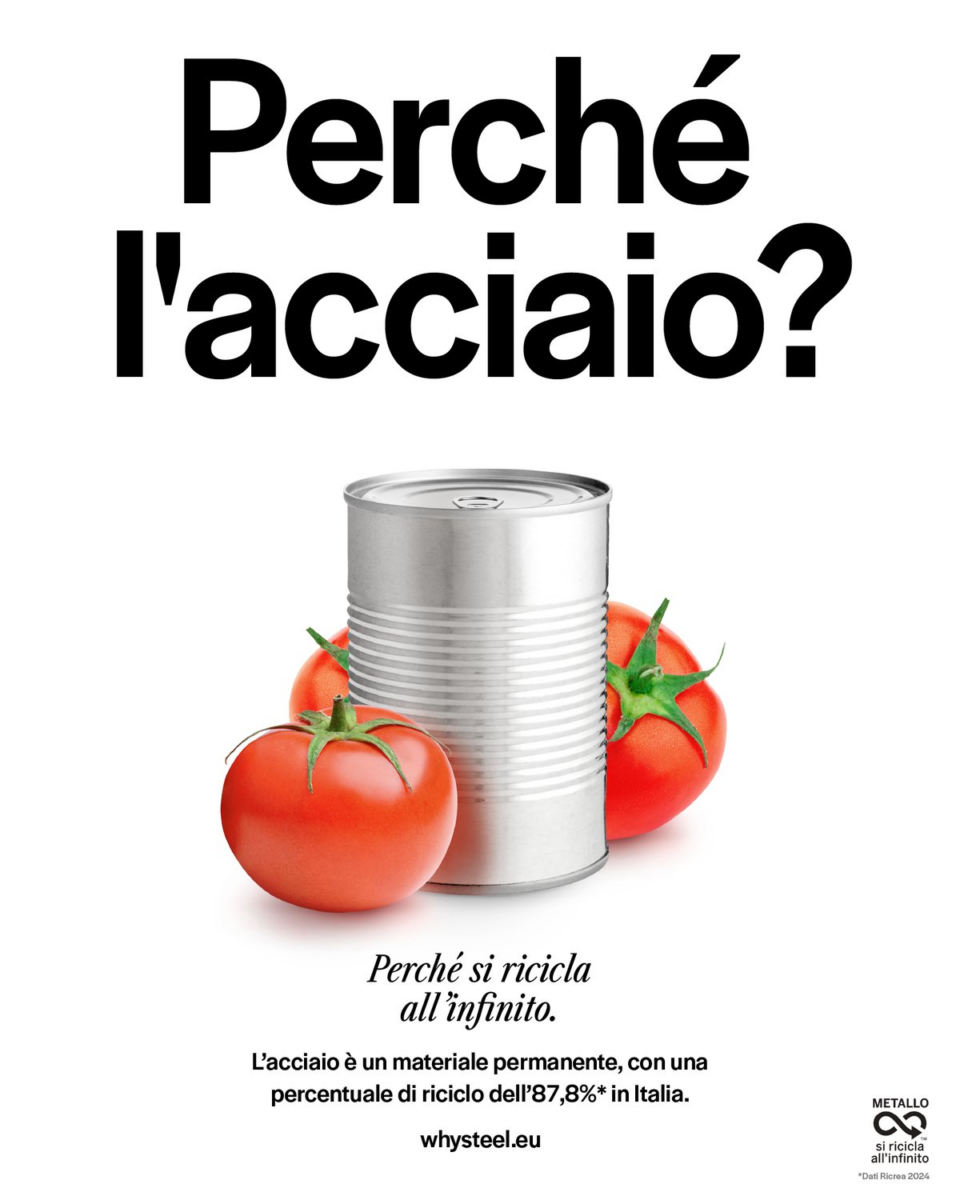
A striking campaign by the Metal Packaging Europe (MPE) association in Italy currently illustrates the future-ready nature of tinplate packaging. Centered around the question “Why steel?”, the campaign highlights tuna cans, tomato cans, and buckets with high-quality visuals while addressing the important inquiry: “why?” Tinplate effectively helps reduce food waste, as products like tomatoes are canned immediately after harvesting. Furthermore, the can reliably safeguards its contents and boasts a notably long shelf life.
Through this initiative, packaging steel confidently asserts itself as the leading recyclable packaging material. “The positive properties of tinplate packaging are continuously being improved, and this can and must be communicated,” emphasizes Carmen Tschage. Campaigns like these demonstrate that the food can aligns with contemporary values. It is not only part of an efficient recycling loop but also merges cross-generational reliability with modern expectations surrounding design, convenience, and sustainability. MPE’s initiative sends a powerful message for the future of the can as a sustainable packaging solution that rightly earns a spot in consumers’ shopping carts.
Thyssenkrupp Rasselstein also aims to educate consumers on packaging. For over four years, the company has successfully operated a platform specifically targeting end consumers: weissblech-kommt-weiter.de. On this platform, consumers can find everything they need to know about food cans. “While interest in the production and recycling of packaging has surged among consumers, many remain unaware of the crucial differences between various materials. That’s where we step in. We provide information, facts, figures, and engaging content to illustrate how sustainable food cans truly are. We ensure consumers are not left with unanswered questions,” states Carmen Tschage.