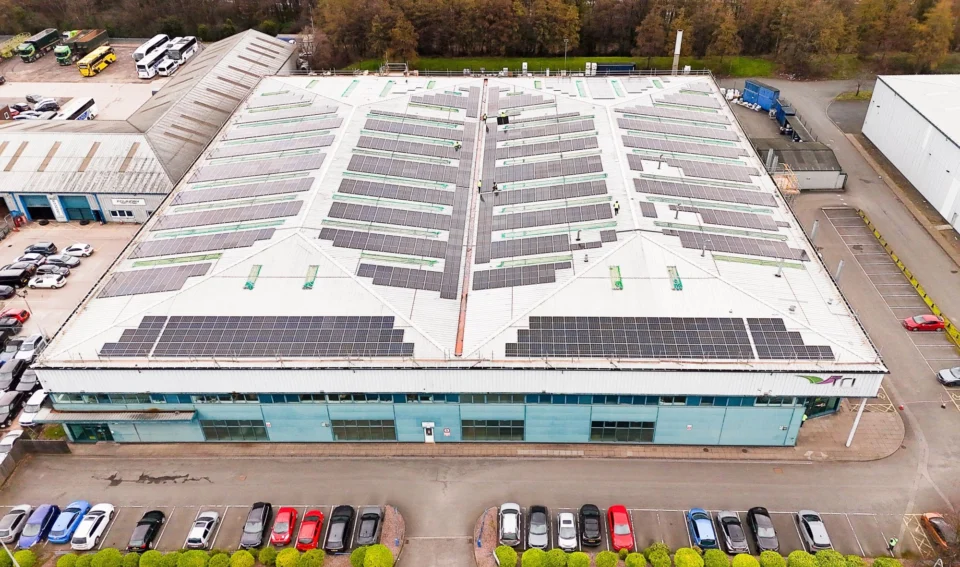
TCL Packaging, a prominent UK producer of flexible plastic packaging catering to both food and non-food sectors, has recently implemented a substantial rooftop solar installation comprising 1,176 panels at its Telford facility. Utilizing advanced DC-optimised inverter technology, this system is designed to adhere to stringent safety standards mandated by insurers and is projected to reduce carbon emissions by approximately 95 tonnes annually.
This initiative represents a significant step towards TCL Packaging’s commitment to addressing the increasing demand for sustainable packaging solutions while managing rising energy expenses. The Telford facility’s annual electricity consumption is around 1.4GWh, largely due to the energy-intensive nature of flexible plastic packaging manufacturing.
“We support clients in several key fast-moving consumer goods sectors, where sustainability is paramount. Transitioning to solar energy will enable us to create a more eco-friendly supply chain, enhancing our competitive edge,” states John Hallett, Compliance Manager at TCL Packaging. “Initially, when we explored solar energy a few years back, we estimated a seven-year payback period. Given that electricity prices have nearly tripled, we anticipate a much quicker return on our investment, making this an opportune moment for the transition.”
Safety considerations played a vital role in the project’s development, particularly due to the presence of numerous flammable solvents in the manufacturing process. The tender for this project specifically required the use of SolarEdge DC-optimised inverter technology to comply with the strict safety guidelines established by TCL’s insurers, landlord surveyors, and fire-risk assessors. Mypower secured the installation contract due to its comprehensive experience with SolarEdge systems and a demonstrated commitment to safety.
“We’re pleased to have executed this project for TCL Packaging. SolarEdge technology is central to our operations because of its reliability, energy efficiency, and leading-edge safety features,” remarks Ben Harrison, Managing Director at Mypower. “These attributes were critical in designing a rooftop system that not only meets stringent safety criteria but also optimises energy output, providing both cost and carbon savings for the facility.”
The SolarEdge solution incorporates numerous safety measures that ensure effective protection without relying on extra hardware. Features such as Sense Connect™ arc-fault detection and prevention technology, and SafeDC™, which automatically reduces panel voltage to safe levels, facilitate safer maintenance and emergency response access. Mypower also integrated a SolarEdge Firefighter Gateway with the building’s alarm system, enabling swift, comprehensive shutdown procedures in case of a fire alert.
Furthermore, the DC-optimised technology is tailored to maximise energy production even on intricate rooftop configurations like that of TCL’s facility, which includes east-, west-, and south-facing sections, heavily obstructed by chimneys and other elements. Traditional systems require all panels to have identical angles and orientations, so shading on one panel adversely impacts the entire series. In contrast, SolarEdge utilises Power Optimizers beneath paired panels, allowing each to function independently. Consequently, while shading may affect certain panels, the rest of the installation can operate at full performance, and the diverse angles enhance the overall design flexibility.
“Thanks to the adaptability afforded by this technology, we managed to install panels over 80% of the factory’s roof area,” explains Harrison at Mypower. “As a result, we project that the system will offset roughly 26% of TCL’s electricity usage—a remarkable achievement for a facility with such high energy demands.”
To explore more about SolarEdge, visit their website at www.solaredge.com/uk. Additional information can be found at www.mypoweruk.com.