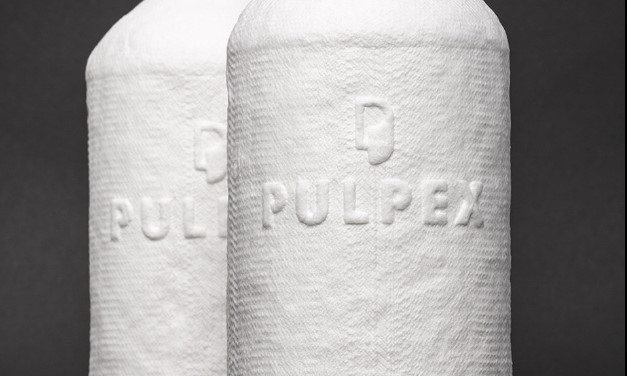
Pulpex has commissioned its first commercial fibre-bottle plant near Glasgow, taking the UK packaging company’s paper bottle technology from pilot production to full-scale manufacturing. The move marks a significant development in food and drink packaging and reflects wider food and beverage industry trends focused on lower-impact formats.
The facility can initially produce up to 40 million bottles annually and has generated approximately 39 skilled positions, based on company information and reporting from Packaging Reporter and Packaging Europe.
Pulpex plans to use the Scottish operation as the reference site for its global Manufacture Under Licence model. Under this approach, regional manufacturing partners would produce bottles closer to brand owners and their markets, supporting emerging food distribution trends and reducing the need to transport finished packaging over long distances.
Purely Scottish Natural Mineral Water is expected to become the first UK natural mineral water brand to launch in a paper bottle after an 18-month development programme. Pulpex has also identified licensing opportunities across Europe, Asia and the Middle East as it works to extend the model beyond Scotland.
The Glasgow facility represents the opening phase of Pulpex’s longer-term goal of producing one billion units each year. That ambition forms part of the company’s wider contribution to food and drink industry innovation and the evolving food manufacturing trends shaping packaging supply chains.
Pulpex positions its bottles as a lower-impact option compared with traditional plastic and glass containers. The company and the Scottish National Investment Bank say the bottles use sustainably sourced wood pulp, avoid concealed plastic layers and are suitable for recycling through established household paper and cardboard collection systems.
The Scottish National Investment Bank has invested £10 million in Pulpex, supporting a platform it characterises as scalable and biodegradable. The investment also highlights the growing commercial importance of food and drink sustainability as brands respond to customer expectations and changing food and drink regulations.
According to Pulpex, the bottles have been engineered to work with existing supply infrastructure, including standard liquid-filling equipment and established pulp supply markets. This compatibility could make it easier for large consumer goods companies to adopt the format without extensive changes to their operations or investment in new food processing technology.
The company also says brands can print directly onto the bottle to create strong shelf presence. In addition, licensed manufacturers would gain access to an approved network of suppliers for key production materials, helping support consistent quality and reliable output.
Market demand is already showing signs of momentum. Packaging Reporter reported that over 90% of the plant’s capacity available during the current financial year had been allocated. Initial customers include Purely Scottish Natural Mineral Water and household cleaning brand smol, indicating potential applications extending beyond food and drink packaging into adjacent consumer product categories.
As the business expands, the technology could influence food and drink consumer trends, food and drink marketing strategies and the broader transition toward more circular packaging systems. Its progress will also be watched closely across food and drink sustainability, food and drink regulations and the wider landscape of food manufacturing trends.