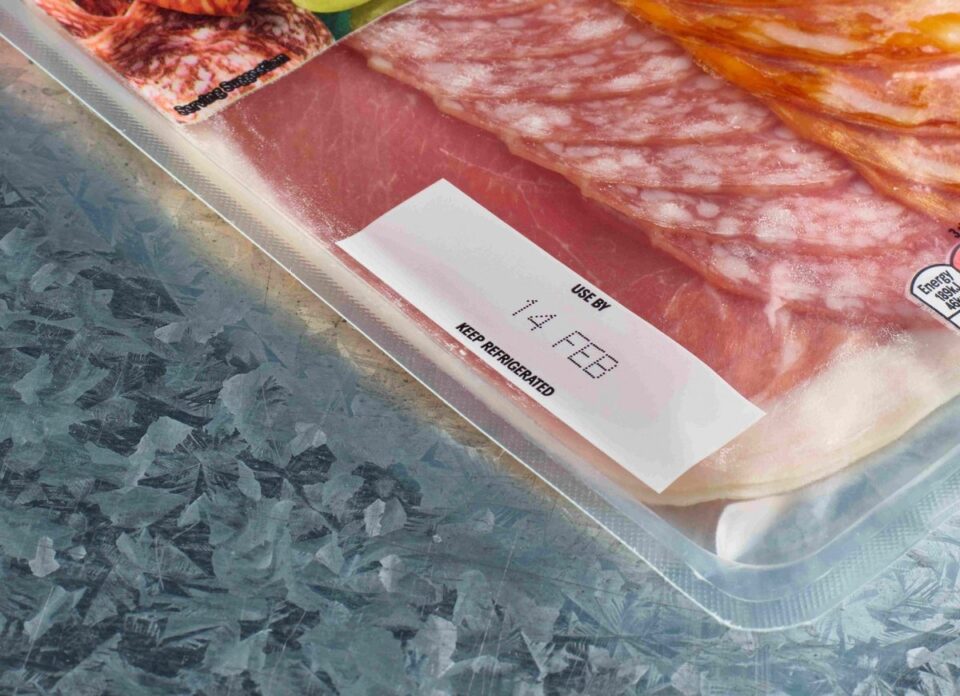
Domino Printing Sciences (Domino) has introduced a full portfolio of high-performance, methyl ethyl ketone-free (MEK-free), low-VOC inks for its Ax-Series continuous inkjet (CIJ) printers, including the recently launched Ax560i.
The new formulations respond to ongoing industry concerns about ink adhesion and drying speeds as manufacturers look for practical alternatives to MEK-based solvents. Domino’s MEK-free range is designed to deliver drying performance comparable to conventional MEK inks and includes solutions for diverse product and packaging applications. As a result, manufacturers can reduce MEK consumption without compromising coding performance.
“Our new MEK-free ink range has been developed to help ease the compliance burden for our manufacturing customers,” says Karen Davey, Product Manager – Fluids, Domino. “While there is currently no globally unified regulation imposing restrictions on the use of MEK, in some regions the use of MEK-based inks comes with additional administrative and monitoring requirements. Choosing alternative solvent bases can alleviate this workload, but historically alternatives have often included performance trade-offs.”
For many years, some MEK-free formulations have struggled to match the rapid drying and dependable print quality associated with MEK-based inks. This has been particularly true of products that rely heavily on ethanol as a solvent. Domino’s latest formulations use alternative, lower-impact pentanone-based solvents to provide strong adhesion, consistent print quality, and drying times close to those of traditional MEK inks.
The range covers a broad selection of industrial and packaging requirements, including direct and non-direct food packaging applications. Certain formulations have been developed to support compliance with the German Printing Ink Ordinance, subject to final migration testing on the completed packaging. These capabilities reflect key food and drink regulations that manufacturers must consider when selecting coding and marking technologies.
Available products include:
1BK112 – A general-purpose black ink offering good adhesion to metal, glass, and selected plastics.
7CL103 – A clear fluorescent ink that provides resistance to retort processing and alcohol.
7BK107 – A black ink formulated for demanding food packaging environments, with oil and alcohol resistance and strong adhesion across metal, glass, and plastics.
Field testing with customers has demonstrated the suitability of the new inks in a variety of manufacturing conditions. These trials provide practical evidence for manufacturers assessing food processing technology, packaging line performance, and broader food manufacturing trends.
“Across our recent customer field trials our new MEK-free formulations have been found to offer excellent adhesion, reliable print performance, and dry times close to that of traditional MEK-based inks,” says Rajesh Saini, Deputy General Manager – Technical Services, Domino Printech India. “Food packaging trials with the new 1BK112 resulted in top-tier adhesion and fast-drying performance – even in demanding freezer-grade flow-wrap environments.”
Regulatory compliance remains an important reason for moving away from MEK, but the change can also contribute to wider food and drink sustainability targets. Conventional MEK inks are linked to elevated volatile organic compound (VOC) emissions and may require substantial quantities of make-up fluid. Domino’s MEK-free solutions can help reduce VOC emissions and lower make-up consumption by as much as 35%.
Manufacturers can achieve further reductions by pairing the printer with Domino’s Green Pack solvent recovery system. Available for Ax350i and Ax550i models, the add-on captures and reuses condensed solvent that could otherwise be lost, reducing make-up consumption by up to 50%. On the Ax560i, Enhanced Solvent Recovery can provide additional savings. The printer also features CleanAssist, an automated printhead cleaning function that recycles make-up within the ink system and reduces the amount of wash solvent required.
These improvements align with wider food and beverage industry trends, including the adoption of more efficient production systems, lower-emission consumables, and resource-conscious manufacturing practices. They also support food and drink industry innovation by helping processors improve operational control while addressing environmental and regulatory priorities.
“At Domino, we are committed to helping our manufacturing customers improve sustainability, reduce waste, and remain compliant, so they can continue serving consumers worldwide,” says Jill Woods, Product Compliance Training Manager, Domino. “Our in-house product compliance team closely monitors the global regulatory landscape and works with our ink development team to anticipate changing requirements. This helps ensure we can continue to provide compliant, reliable solutions that also support our customers’ sustainability goals.”
As food and drink packaging requirements continue to evolve alongside food and drink consumer trends, reliable coding and marking remain essential across production, distribution, and retail. The new ink range gives manufacturers additional flexibility as they respond to food distribution trends, changing food and drink packaging expectations, and the increasing importance of sustainable food and drink marketing.
Domino’s MEK-free ink portfolio is now available for its Ax-Series CIJ printers.