

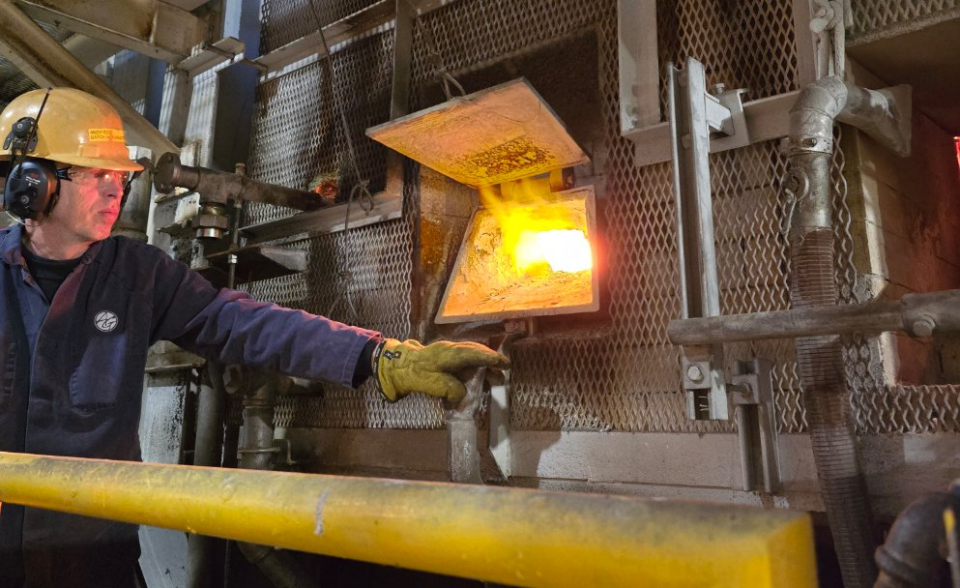
Ardagh Glass Packaging-Europe (AGP-Europe), a division of Ardagh Group, has successfully conducted an industrial fuel switching trial, utilizing biofuel in the furnace to produce glass packaging at its Knottingley, UK facility. This initiative underscores our commitment to advancing sustainable food and drink packaging solutions.
Funded by the UK Government’s Net Zero Innovation Portfolio programme and spearheaded by Glass Futures— the UK-based Global Centre of Excellence for glass R&D, Innovation, and Training—this £6 million trial gathered several manufacturers from the glass and ceramics sectors. Participants included AGP-Europe, Encirc, O-I Glass, Pilkington UK, and DSF Refractories & Minerals. The project’s primary objective was to assess the feasibility of utilizing alternative liquid bio-derived fuels in the glass melting process, aiming to fully replace natural gas with lower-carbon biofuels.
Over a span of seven days, the AGP-Europe trial successfully replaced 100% of natural gas with liquid bio-derived fuels, resulting in the production of 4.1 million glass containers and a reduction of CO2 emissions by 242 tonnes[1]. This accomplishment showcased that lower-carbon glass packaging can be produced on a commercial scale without compromising glass quality or operational efficiency.
Dean Butler, Business Development Director at Ardagh Group, remarked:
“This trial validated and supported our existing knowledge and proved that liquid bio-derived fuels can effectively replace natural gas in glass packaging production over an extended period.”
“This is an exciting development for the glass industry as we continue to seek innovative solutions to reduce carbon emissions. The trial provides a clear example of how adopting liquid bio-derived fuels has the potential to help the industry meet its ambitious sustainability goals.”
This trial emphasizes the potential of biofuels as a viable pathway toward decarbonization in the glass sector, a crucial area currently being advanced within AGP-Europe. As we align with the growing demand for sustainable food and drink packaging, this initiative sets a benchmark for future innovations.
AGP-Europe remains committed to exploring additional innovative technologies that can further our CO2 reduction targets for 2030, ultimately contributing to a low-carbon future for the glass industry.
[1] Compared to carbon emissions from the same furnace using 100% natural gas.

