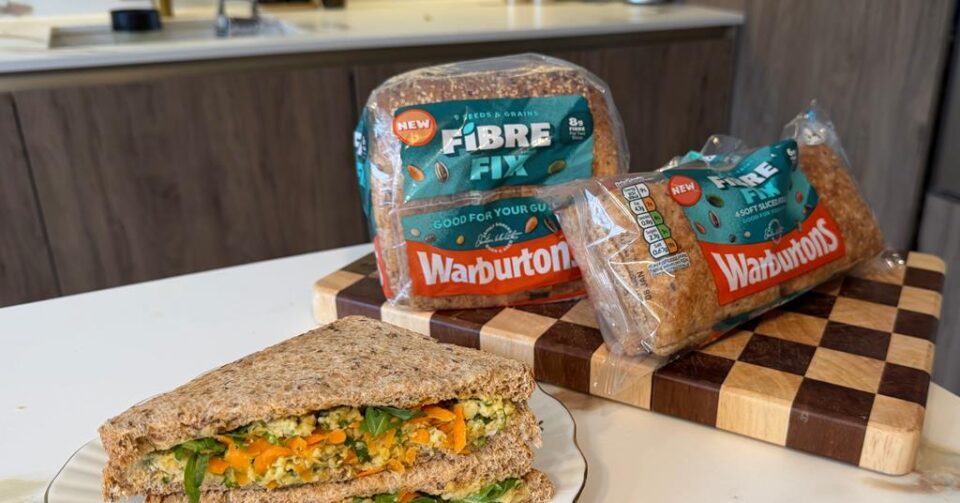
Warburtons has withdrawn its Fibre Fix range, which launched earlier this year, while continuing to identify fibre as a “key priority”.
The short-lived range included two products: a loaf providing 4g of fibre per slice and rolls containing 6g each. Both recipes combined wheat bran with a mixture of seeds and grains.
In a statement issued to British Baker, Warburtons acknowledged the important contribution bakery products make to consumers’ fibre intake. The company also noted that awareness of the need to consume more fibre is increasing among shoppers, reflecting wider food and drink consumer trends.
“However, we have found that products already in their bakery repertoire, such as our Protein range, which are also high in fibre, are more likely to be chosen as a way of getting more fibre in their diet,” said a spokesperson.
Warburtons launched its Protein range in 2016. The portfolio has since expanded to include bagels, thin bagels, soft pittas, flatbreads and the 500g Protein Power loaf. The loaf carries a ‘High Fibre’ claim because it delivers almost 16g of protein and 6.9g of fibre per 100g.
British Nutritional Foundation guidance states that products may use a ‘high in fibre’ declaration when they contain at least 6g of fibre per 100g. Items providing more than 3g per 100g can carry a ‘source of fibre’ claim. Adults are advised to consume 30g of fibre each day, although average intake in the UK currently stands at approximately 19g.
“Fibre remains a key priority for Warburtons, as we recognise the role we play in closing the UK’s fibre gap,” added the spokesperson. “This means looking at how we make more of our existing ranges offer more fibre, while also innovating to launch new high fibre products to market.”
Warburtons’ spring product development programme also included an 800g Seven Seeds loaf. The recipe contains toasted linseeds and sunflower seeds, together with pumpkin, millet, poppy, chia and sesame seeds. It supplies 5.5g of fibre and 10.7g of protein per 100g and carries a ‘Source of Fibre’ claim on its packaging.
The move forms part of broader food and beverage industry trends, as manufacturers respond to demand for products with stronger nutritional credentials. Jason’s Sourdough has introduced its Seeded Fibre Loaf and Every Day Seeded Fibre Rolls. Biona has launched a trio of new sliced organic loaves, while Abel & Cole has brought out its 30 Plants Diversity Bread.
These launches highlight how food manufacturing trends, food processing technology and food and drink industry innovation are shaping the bakery category. At the same time, food and drink sustainability, evolving food and drink regulations and changing food and drink marketing strategies continue to influence product development and positioning.
In June, Sainsbury’s introduced ‘High in Fibre’ claims across more than 500 own-label products. The updated food and drink packaging covers products including loaves, rolls, baguettes, flatbreads and wraps, underlining the growing commercial focus on communicating fibre content clearly to shoppers.