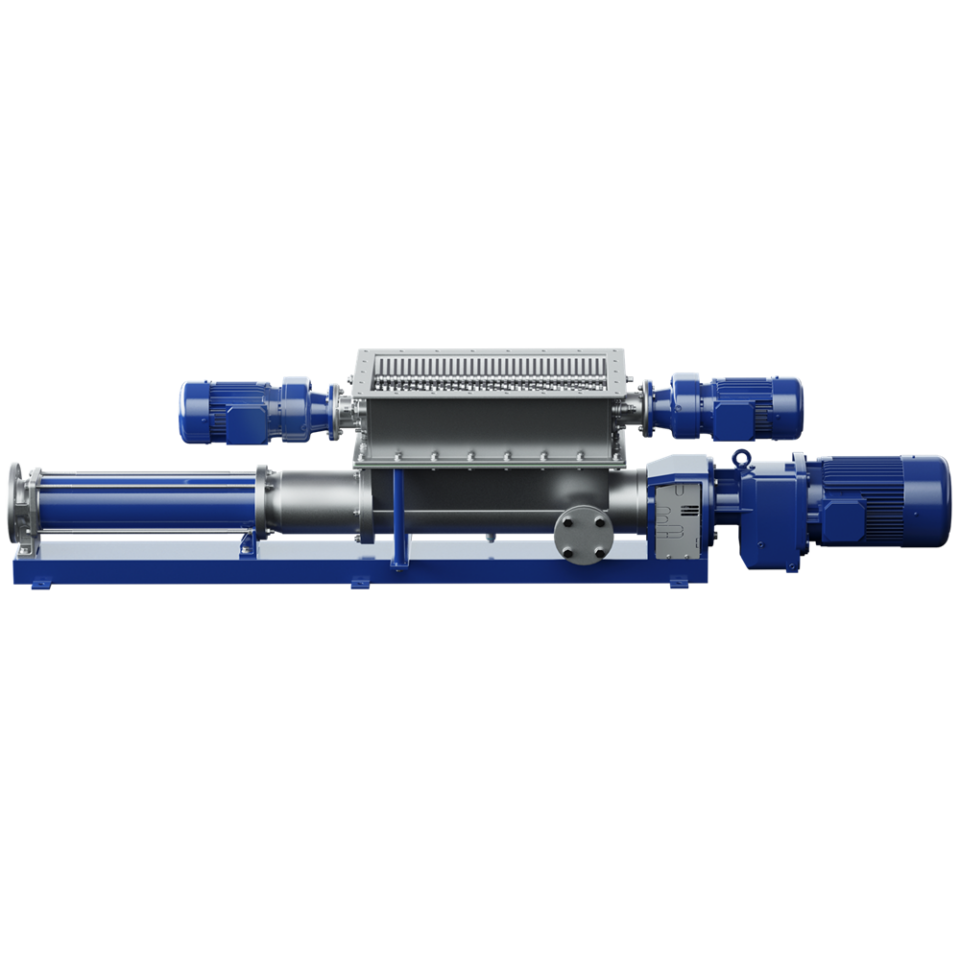
SEEPEX introduces FlowShred, an efficient system for the conditioning of solids that consistently shreds organic food waste, transforming it into a pumpable form. This innovative solution merges a twin-shaft grinder with a progressive cavity pump within a streamlined unit, facilitating the seamless and regulated removal of organic waste generated during food production. FlowShred is particularly tailored for operations that require effective management of diverse food waste types.
During the food manufacturing process, significant amounts of organic by-products are created, such as peels from fruits and vegetables, leftovers from meat and fish processing, dough remnants, and inedible frozen products. These discarded materials vary substantially in size, moisture levels, and texture, posing numerous challenges for conveyors, pumps, and disposal systems. Oversized or fibrous materials can obstruct conveyors, jam augers, or even lead to pump malfunctions. Such issues not only result in downtime but also escalate maintenance costs and operational expenses.
FlowShred employs a comprehensive system design. Food waste is introduced through a hopper, where the twin-shaft grinder initially reduces the waste to a size range of 10–20 mm. Below this, the progressive cavity pump continuously moves the processed material into silos, collection containers, or tanks, facilitating easy retrieval by external disposal services or further treatment in biogas facilities. The outcome is a consistent, pumpable suspension, which can be transported reliably and with precise process management.
“With FlowShred, we provide the first fully integrated system that combines shredding and transporting of food waste,” states Bernd-Guntram Schulz, SEEPEX’s Product and Market Manager. “Our goal is to process diverse organic waste efficiently, ensuring safe and stable transport.”
The twin-shaft grinder features two counter-rotating shafts equipped with hardened cutting tools, yielding a consistent particle size that guarantees reliable pump operation. SEEPEX employs a unique spiral design in the grinder, consisting of cutting segments arranged in spirals with varying radii and dental profiles that incrementally break down bulky or fibrous materials. Items such as pressed oranges, mango seeds, whole melons, or bones are efficiently pulled in, preventing issues like bridging and reducing peak loads. This design enhances system reliability, minimizes pump strain, and optimally prepares waste for subsequent procedures such as separation, storage, or energy recovery.
The cutting tools are crafted from martensitic stainless steel, providing exceptional hardness and resistance to corrosion, ensuring longevity even when processing abrasive or fibrous materials. The robust construction also lowers maintenance demands and fosters system dependability.
FlowShred functions with high torque and low speed, achieving efficient size reduction even with substantial or fibrous materials. This operation minimizes mechanical wear, reduces energy consumption, and keeps noise levels low, promoting economical and effective functionality.
The progressive cavity pump, located beneath the twin-shaft grinder, is responsible for the continuous movement of materials, specifically designed for media with elevated solid content, ensuring a stable, low-pulsation flow. For extended transportation distances, optional SEEPEX Smart Air Injection (SAI) further optimizes efficiency.
FlowShred’s enclosed system is designed to minimize odor emissions and maintain cleanliness in the workspace. Moreover, its compact and pre-assembled structure allows for seamless integration into existing production lines or waste management systems, without needing additional space.
FlowShred’s versatility makes it suitable for both consistent and sporadic waste streams. Typical use cases include:
– Food manufacturing enterprises of varying scales
– Meat processing plants and slaughterhouses
– Fish processing facilities
– The frozen food sector
– Sites with on-site biogas facilities
By shredding waste, the system reduces volume, therefore cutting down on storage, transportation, and disposal costs while also increasing the material’s surface area to speed up biogas fermentation. Ensuring a steady flow of material prevents clogs and allows flexibility in handling fluctuating production and waste flows.
FlowShred seamlessly integrates shredding and pumping into a singular, well-coordinated ecosystem. The twin-shaft grinder and progressive cavity pump work in harmony to guarantee stable, regulated transport from the outset, further enhancing reliability and operational efficacy.
“FlowShred proficiently shreds food waste, turning it into a medium ready for pumping,” adds Bernd-Guntram Schulz. “It contributes to heightened process reliability, diminished downtimes, and decreased planning and installation efforts, as the shredding and pumping systems are perfectly aligned.”