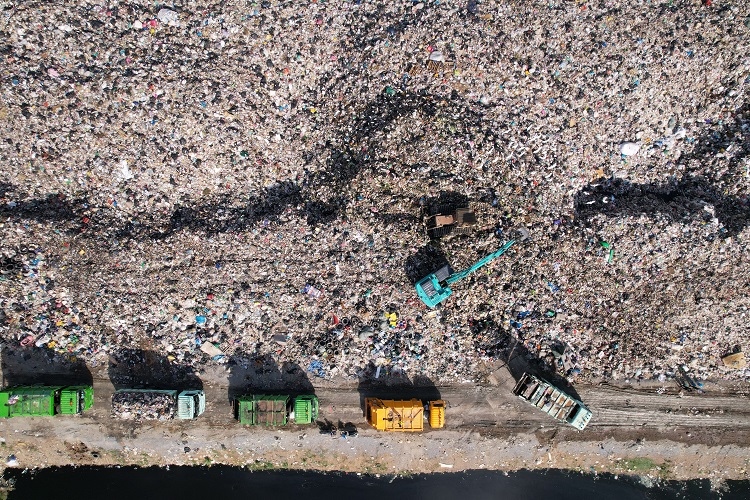
Plastic packaging is a significant contributor to global greenhouse gas emissions. The majority of plastic is derived from fossil fuels, and the extraction, transportation, and manufacturing processes involved result in billions of tonnes of greenhouse gas emissions.
According to research, approximately 4% of global petroleum production is directed towards plastic production, with an additional 4% burned during the refining process. However, the environmental impact doesn’t end with production. When plastic in the oceans breaks down, it releases greenhouse gases due to exposure to heat and sunlight. Incinerating plastic waste on land also releases greenhouse gases.
Experts predict that by 2050, the incineration of plastic waste will have emitted a staggering 2.8 billion tonnes of greenhouse gases into the atmosphere. Moreover, the formation of microplastics, which occur when larger plastics fragment over time, poses additional problems. These microplastics are harmful to marine life, such as plankton, which plays a vital role in absorbing carbon dioxide.
In order to address the decarbonization of the packaging system, both innovation and policy interventions are necessary. Tetra Pak’s Henriksen emphasized the need for collaboration between legislation, innovation, and consumer education. In a recent panel discussion, experts explored strategies to decarbonize food systems, highlighting the importance of sustainable sourcing, production, and distribution methods.
Tetra Pak’s cartons, in particular, play a pivotal role in reducing emissions. These cartons are predominantly made from renewable materials, with an average of 70% paperboard sourced from responsibly managed forests. Caps and plastic layers are increasingly made from plant-based materials derived from sugarcane, which absorb carbon dioxide as they grow and are naturally replenished over time. Life cycle assessments have shown that plant-based beverage cartons have a climate impact that is approximately 40% lower compared to standard beverage cartons.
Additionally, packaging can contribute to the reduction of greenhouse gas emissions by addressing food waste. It is estimated that 8-10% of these emissions are linked to wasted food. Ensuring the safety and freshness of food is crucial, and advancements in packaging materials, such as the use of polymer-based barriers, can protect food from spoiling while reducing the carbon footprint.
To sum up, plastic packaging is a significant contributor to greenhouse gas emissions. However, through the implementation of sustainable materials, consumer education, and collaborative efforts, we can work towards decarbonizing the packaging system and reducing the environmental impact of plastic waste.